Moshi AI vs MyVocal.ai
When comparing Moshi AI vs MyVocal.ai, which AI Audio Generation tool shines brighter? We look at pricing, alternatives, upvotes, features, reviews, and more.
In a comparison between Moshi AI and MyVocal.ai, which one comes out on top?
When we put Moshi AI and MyVocal.ai side by side, both being AI-powered audio generation tools, The upvote count reveals a draw, with both tools earning the same number of upvotes. Join the aitools.fyi users in deciding the winner by casting your vote.
Not your cup of tea? Upvote your preferred tool and stir things up!
Moshi AI
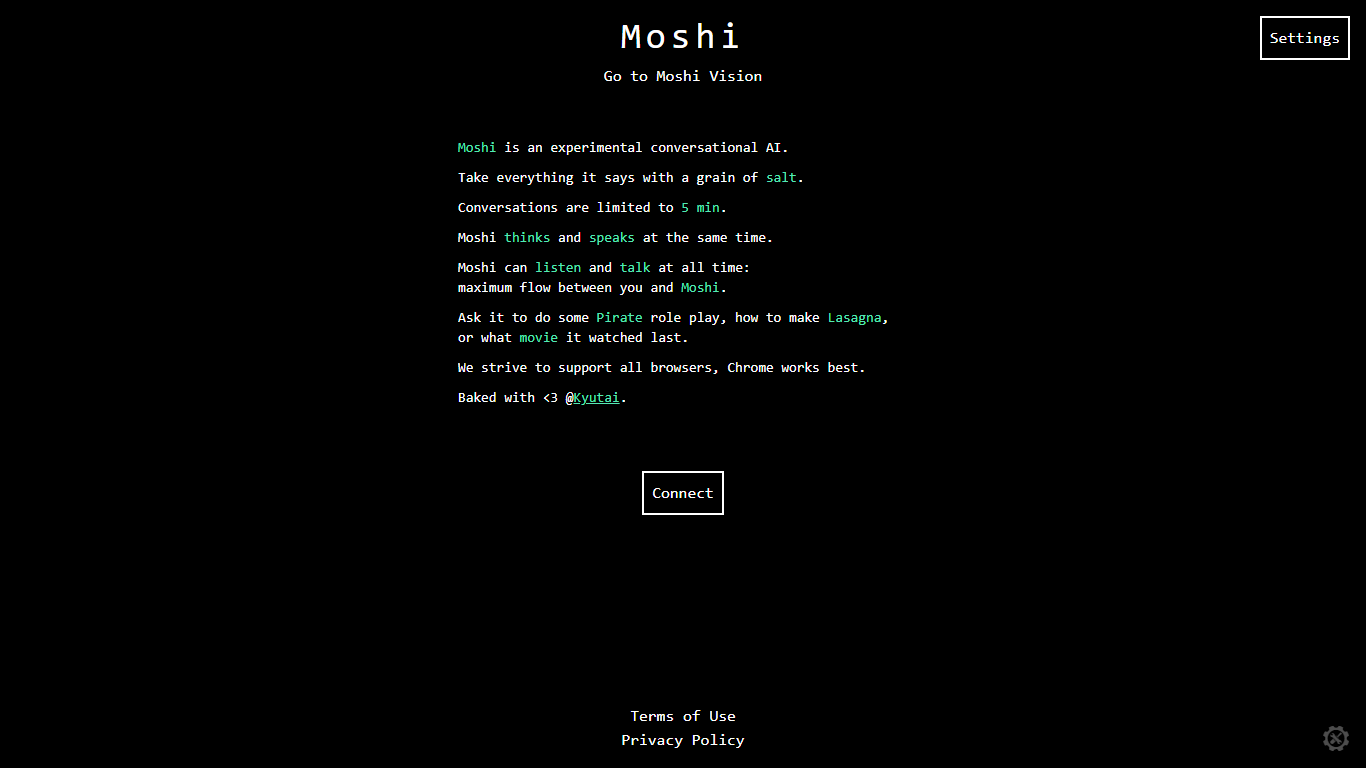

What is Moshi AI?
Moshi AI is a speech-native conversational model from Kyutai, a Paris-based open-science research lab. Instead of chaining speech recognition, text generation, and text-to-speech, Moshi processes audio directly and holds full-duplex voice conversations with minimal latency.
Its multi-stream design runs separate channels for the user, Moshi's spoken output, and an Inner Monologue text stream that improves coherence. That setup lets Moshi listen and talk at the same time, handle overlaps, interruptions, and backchanneling like a real conversation rather than rigid speaker turns.
Moshi is built on Helium, a 7B language model, and Mimi, Kyutai's neural audio codec. Weights and inference code ship for PyTorch, Rust, and MLX, and you can try it in the browser at moshi-chat.kyutai.org. Researchers, voice AI developers, and anyone building real-time spoken interfaces will find the most value here.
MyVocal.ai
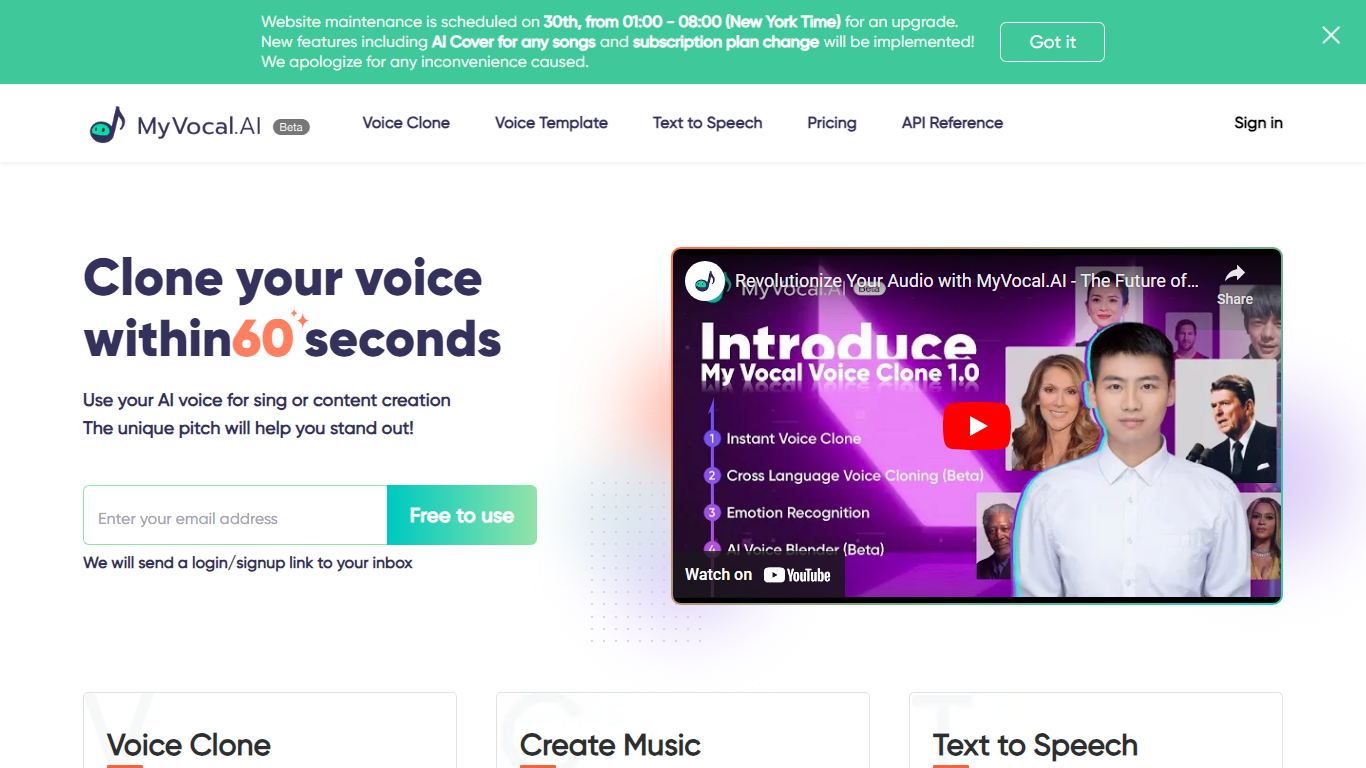
What is MyVocal.ai?
MyVocal.ai lets you clone a voice from a short recording, then generate speech, narration, or singing in that voice across Voice Clone, Text To Speech, and AI Cover workflows. The homepage tagline is Speak. Sing. Create., and the site runs on the MyVocal V3 model with 100+ languages and automatic language detection.
Most voice tools split cloning, TTS, and music covers into separate products. MyVocal.ai bundles all three, plus a developer API documented at docs.myvocal.ai. The voice-clone page says one cloned voice can speak 100+ languages, and the TTS page adds emotion tags, non-speech sounds like laughter and sighs, and a daily free pool of 50,000 characters for guests with two requests per day. AI Cover supports both speech-clone and singing-clone workflows for TikTok and YouTube content.
MyVocal.ai targets YouTubers, podcasters, game developers, and AI assistant builders who need scalable voice output. ProVisionary Intelligence Limited acquired the service in 2024 per the privacy policy, and support runs through [email protected]. New accounts start on a free plan with optional paid subscriptions for faster generation and higher character quotas.
Moshi AI Upvotes
MyVocal.ai Upvotes
Moshi AI Top Features
Processes speech directly without a text pipeline in the middle
Listens and talks simultaneously with overlap and interruption support
Inner Monologue text stream improves speech quality and reasoning
Runs real-time on an L4 GPU or M3 MacBook Pro via the Mimi codec
Open weights on Hugging Face with PyTorch, Rust, and MLX inference code
MyVocal.ai Top Features
MyVocal V3 model supports 100+ languages with automatic language detection
Voice cloning workflow creates a model from roughly 30 seconds to a few minutes of audio
Text-to-speech page offers a daily free pool of 50,000 characters for generation
Emotion tags include Happy, Excited, Relaxed, Sad, Angry, Confident, and Surprised
AI Cover supports speech-clone and singing-clone modes for song covers
Developer API documented at docs.myvocal.ai for assistants, games, and automation
FAQ states 100,000 characters synthesize approximately two hours of audio
Moshi AI Category
- Audio Generation
MyVocal.ai Category
- Audio Generation
Moshi AI Pricing Type
- Free
MyVocal.ai Pricing Type
- Freemium