Moshi AI vs SteosVoice
In the contest of Moshi AI vs SteosVoice, which AI Audio Generation tool is the champion? We evaluate pricing, alternatives, upvotes, features, reviews, and more.
If you had to choose between Moshi AI and SteosVoice, which one would you go for?
When we examine Moshi AI and SteosVoice, both of which are AI-enabled audio generation tools, what unique characteristics do we discover? There's no clear winner in terms of upvotes, as both tools have received the same number. Your vote matters! Help us decide the winner among aitools.fyi users by casting your vote.
Want to flip the script? Upvote your favorite tool and change the game!
Moshi AI
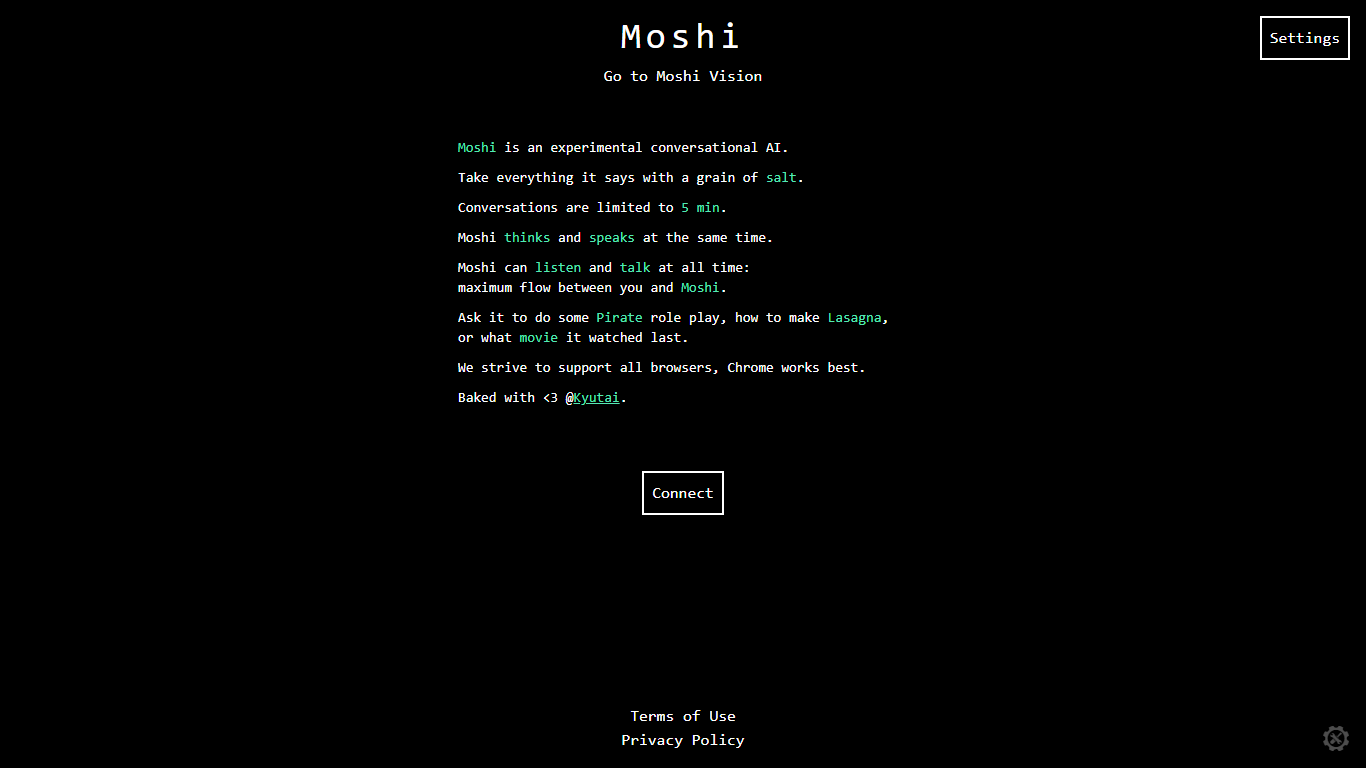

What is Moshi AI?
Moshi AI is a speech-native conversational model from Kyutai, a Paris-based open-science research lab. Instead of chaining speech recognition, text generation, and text-to-speech, Moshi processes audio directly and holds full-duplex voice conversations with minimal latency.
Its multi-stream design runs separate channels for the user, Moshi's spoken output, and an Inner Monologue text stream that improves coherence. That setup lets Moshi listen and talk at the same time, handle overlaps, interruptions, and backchanneling like a real conversation rather than rigid speaker turns.
Moshi is built on Helium, a 7B language model, and Mimi, Kyutai's neural audio codec. Weights and inference code ship for PyTorch, Rust, and MLX, and you can try it in the browser at moshi-chat.kyutai.org. Researchers, voice AI developers, and anyone building real-time spoken interfaces will find the most value here.
SteosVoice

What is SteosVoice?
SteosVoice turns written text into studio-style voice audio using 800+ neural voices. You can dub videos, game mods, podcasts, articles, and stream donations, then download files up to 44.1 kHz WAV quality.
Unlike generic TTS tools that ship a small preset voice list, SteosVoice built a marketplace where voice actors license likenesses and earn royalties per synthesis. A free Telegram bot gives daily symbol limits for quick tests, while paid web plans unlock commercial use, longer passages, speed and pitch controls, and MP3 or WAV export.
Creators, indie game studios, YouTubers, and media teams use it when they need character voices or multilingual dubbing without booking a recording booth. Mind Simulation, an AGI research lab, develops the underlying speech models.
Moshi AI Upvotes
SteosVoice Upvotes
Moshi AI Top Features
Processes speech directly without a text pipeline in the middle
Listens and talks simultaneously with overlap and interruption support
Inner Monologue text stream improves speech quality and reasoning
Runs real-time on an L4 GPU or M3 MacBook Pro via the Mimi codec
Open weights on Hugging Face with PyTorch, Rust, and MLX inference code
SteosVoice Top Features
Library of 800+ neural voices with new options added regularly
Paid plans from $2 per month include roughly 1,222 to 6,650 minutes of speech
Exports studio-quality 44.1 kHz WAV files, with MP3 or WAV format choice on paid tiers
Free Telegram bot at @steosvoice_bot includes 1,000 symbols per day for testing
Voice actors can publish voices on console.cybervoice.io and earn royalties per synthesis
Stress control via '+' before a vowel and pause control with commas and periods in text
Moshi AI Category
- Audio Generation
SteosVoice Category
- Audio Generation
Moshi AI Pricing Type
- Free
SteosVoice Pricing Type
- Freemium