Moshi AI vs Transvribe
In the face-off between Moshi AI vs Transvribe, which AI Audio Generation tool takes the crown? We scrutinize features, alternatives, upvotes, reviews, pricing, and more.
In a face-off between Moshi AI and Transvribe, which one takes the crown?
If we were to analyze Moshi AI and Transvribe, both of which are AI-powered audio generation tools, what would we find? Neither tool takes the lead, as they both have the same upvote count. Be a part of the decision-making process. Your vote could determine the winner.
Think we got it wrong? Cast your vote and show us who's boss!
Moshi AI

What is Moshi AI?
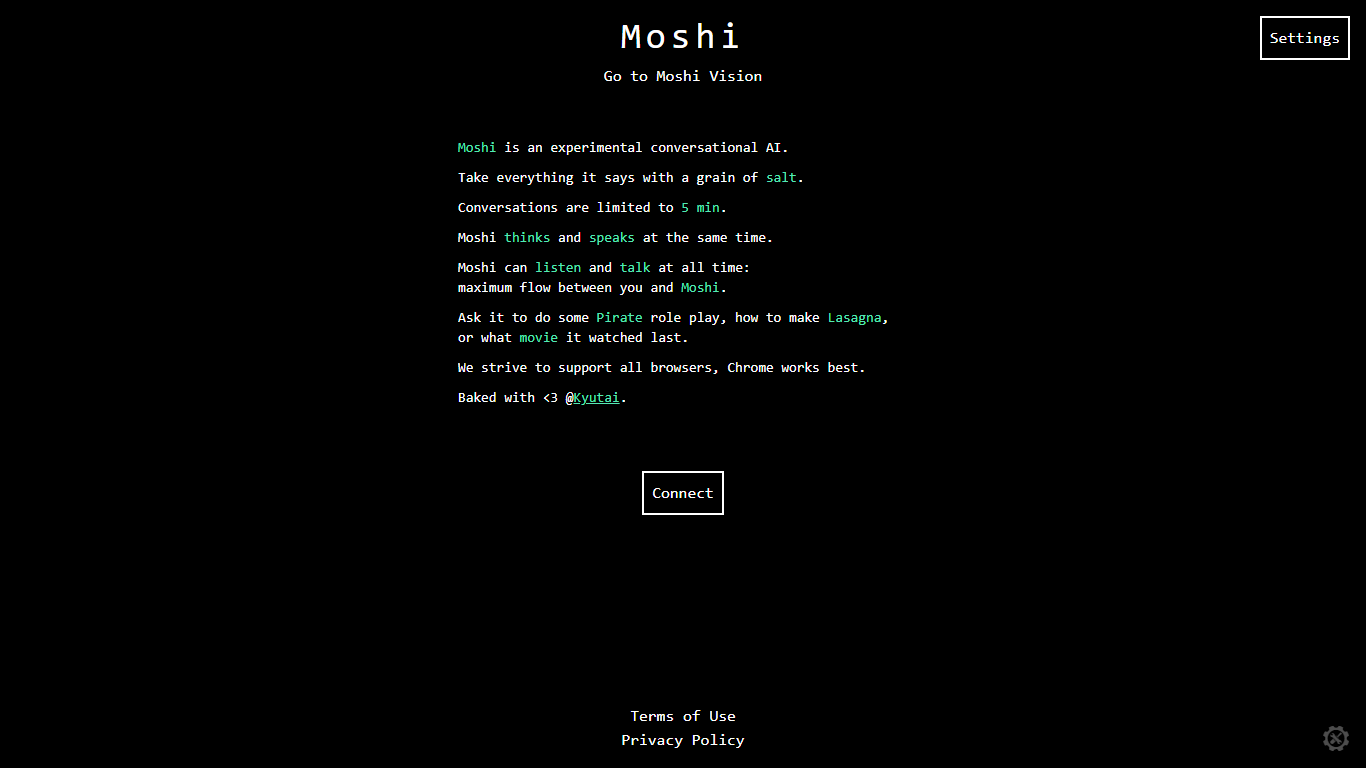
Moshi AI is a speech-native conversational model from Kyutai, a Paris-based open-science research lab. Instead of chaining speech recognition, text generation, and text-to-speech, Moshi processes audio directly and holds full-duplex voice conversations with minimal latency.
Its multi-stream design runs separate channels for the user, Moshi's spoken output, and an Inner Monologue text stream that improves coherence. That setup lets Moshi listen and talk at the same time, handle overlaps, interruptions, and backchanneling like a real conversation rather than rigid speaker turns.
Moshi is built on Helium, a 7B language model, and Mimi, Kyutai's neural audio codec. Weights and inference code ship for PyTorch, Rust, and MLX, and you can try it in the browser at moshi-chat.kyutai.org. Researchers, voice AI developers, and anyone building real-time spoken interfaces will find the most value here.
Transvribe
What is Transvribe?
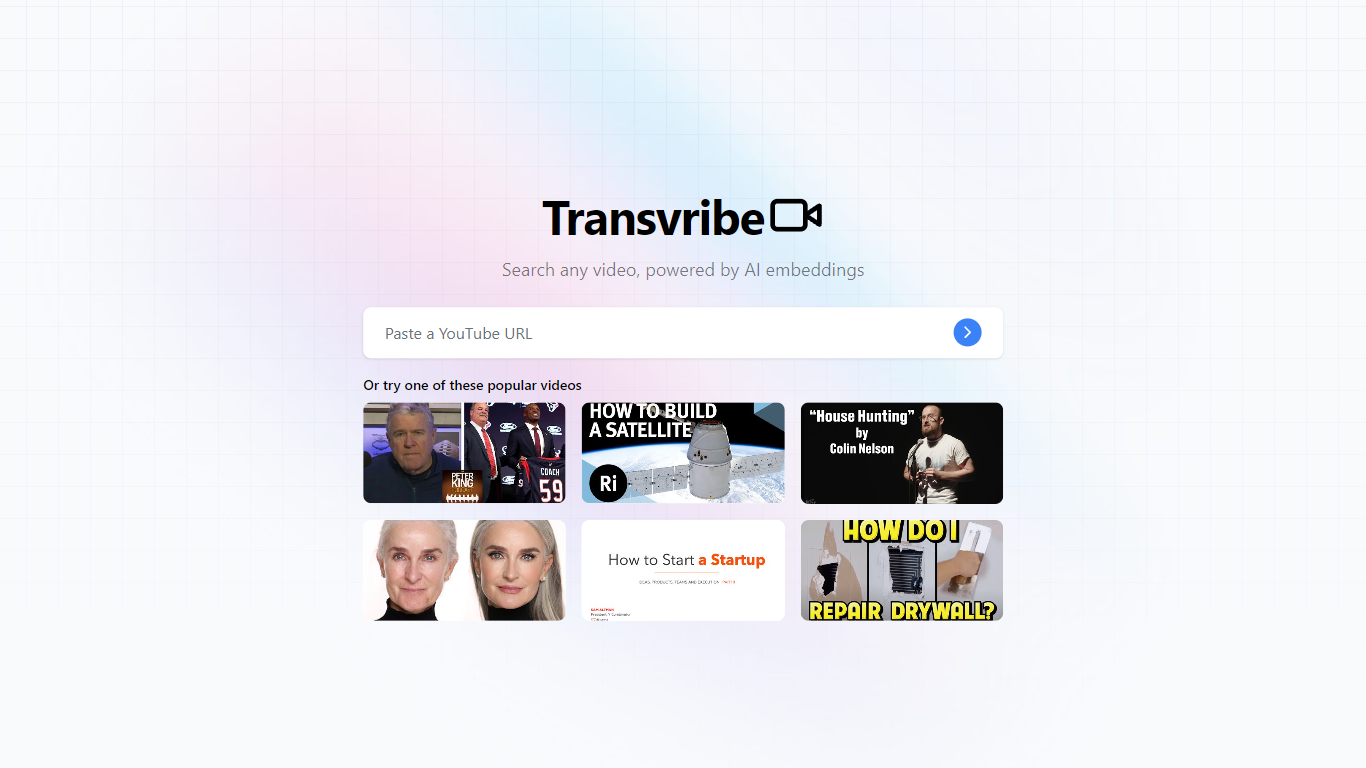
Transvribe was a YouTube video Q&A web app that let you paste a link and ask natural-language questions about the spoken content. It used AI embeddings over transcript text, built with Next.js, Tailwind CSS, and LangChain, to surface answers without scrubbing the timeline manually.
Unlike generic chatbots, Transvribe focused on a single workflow: turn one YouTube video into a searchable knowledge base. That narrow scope worked until YouTube tightened get_transcript API checks requiring per-session visitorData and configInfo tokens validated against browser fingerprints.
The homepage now states the service is no longer functional, and developer Zahid open-sourced the project on GitHub at zaarheed/transvribe. Students and self-directed learners were the intended audience, but the hosted product no longer processes URLs.
Moshi AI Upvotes
Transvribe Upvotes
Moshi AI Top Features
Processes speech directly without a text pipeline in the middle
Listens and talks simultaneously with overlap and interruption support
Inner Monologue text stream improves speech quality and reasoning
Runs real-time on an L4 GPU or M3 MacBook Pro via the Mimi codec
Open weights on Hugging Face with PyTorch, Rust, and MLX inference code
Transvribe Top Features
Pasted a YouTube URL to query video transcript content with AI embeddings
Built with Next.js, Tailwind CSS, LangChain, and GPT-backed search
Open-source repository zaarheed/transvribe on GitHub with 85 stars
Homepage shutdown notice documents YouTube get_transcript API blocker
Example video links on the landing page showed the prior search workflow
Moshi AI Category
- Audio Generation
Transvribe Category
- Audio Generation
Moshi AI Pricing Type
- Free
Transvribe Pricing Type
- Free