Moshi AI vs Typecast
In the face-off between Moshi AI vs Typecast, which AI Audio Generation tool takes the crown? We scrutinize features, alternatives, upvotes, reviews, pricing, and more.
In a face-off between Moshi AI and Typecast, which one takes the crown?
If we were to analyze Moshi AI and Typecast, both of which are AI-powered audio generation tools, what would we find? Neither tool takes the lead, as they both have the same upvote count. Your vote matters! Help us decide the winner among aitools.fyi users by casting your vote.
Feeling rebellious? Cast your vote and shake things up!
Moshi AI
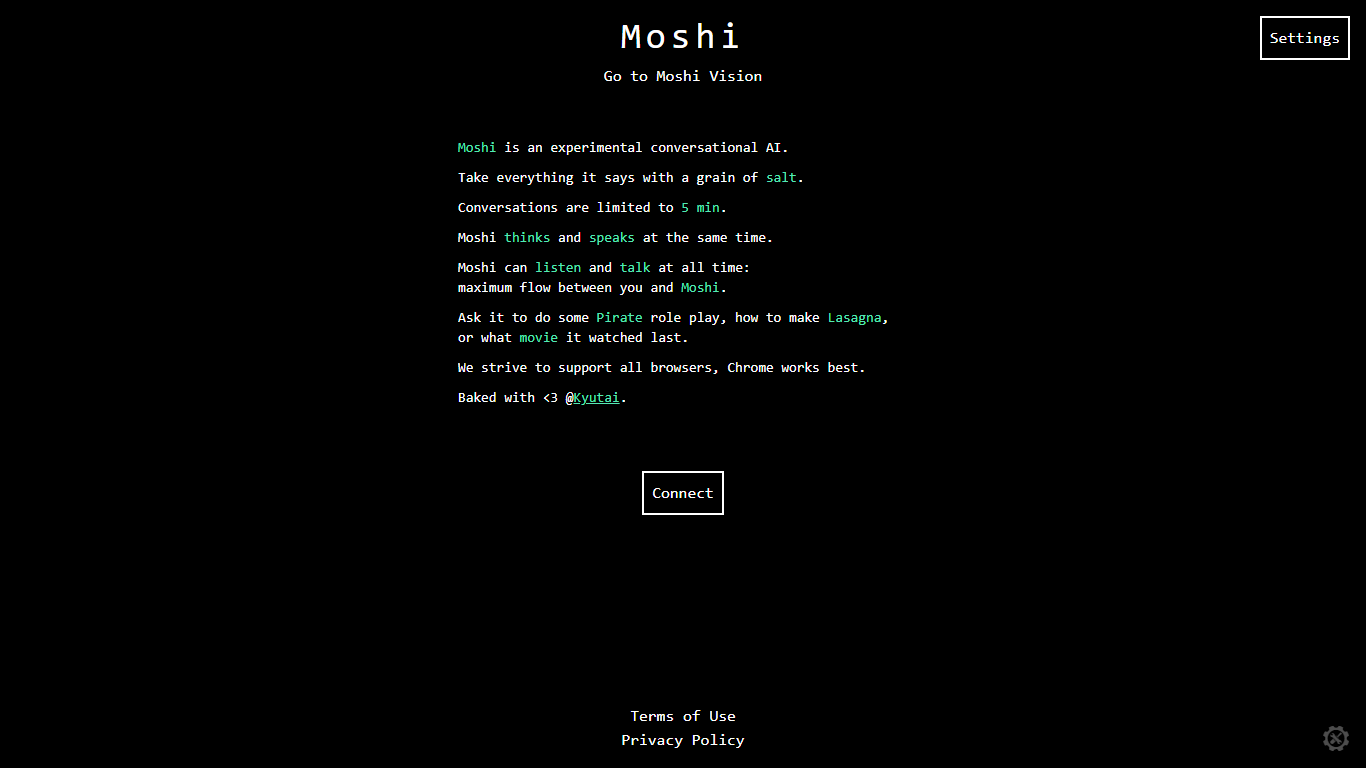

What is Moshi AI?
Moshi AI is a speech-native conversational model from Kyutai, a Paris-based open-science research lab. Instead of chaining speech recognition, text generation, and text-to-speech, Moshi processes audio directly and holds full-duplex voice conversations with minimal latency.
Its multi-stream design runs separate channels for the user, Moshi's spoken output, and an Inner Monologue text stream that improves coherence. That setup lets Moshi listen and talk at the same time, handle overlaps, interruptions, and backchanneling like a real conversation rather than rigid speaker turns.
Moshi is built on Helium, a 7B language model, and Mimi, Kyutai's neural audio codec. Weights and inference code ship for PyTorch, Rust, and MLX, and you can try it in the browser at moshi-chat.kyutai.org. Researchers, voice AI developers, and anyone building real-time spoken interfaces will find the most value here.
Typecast
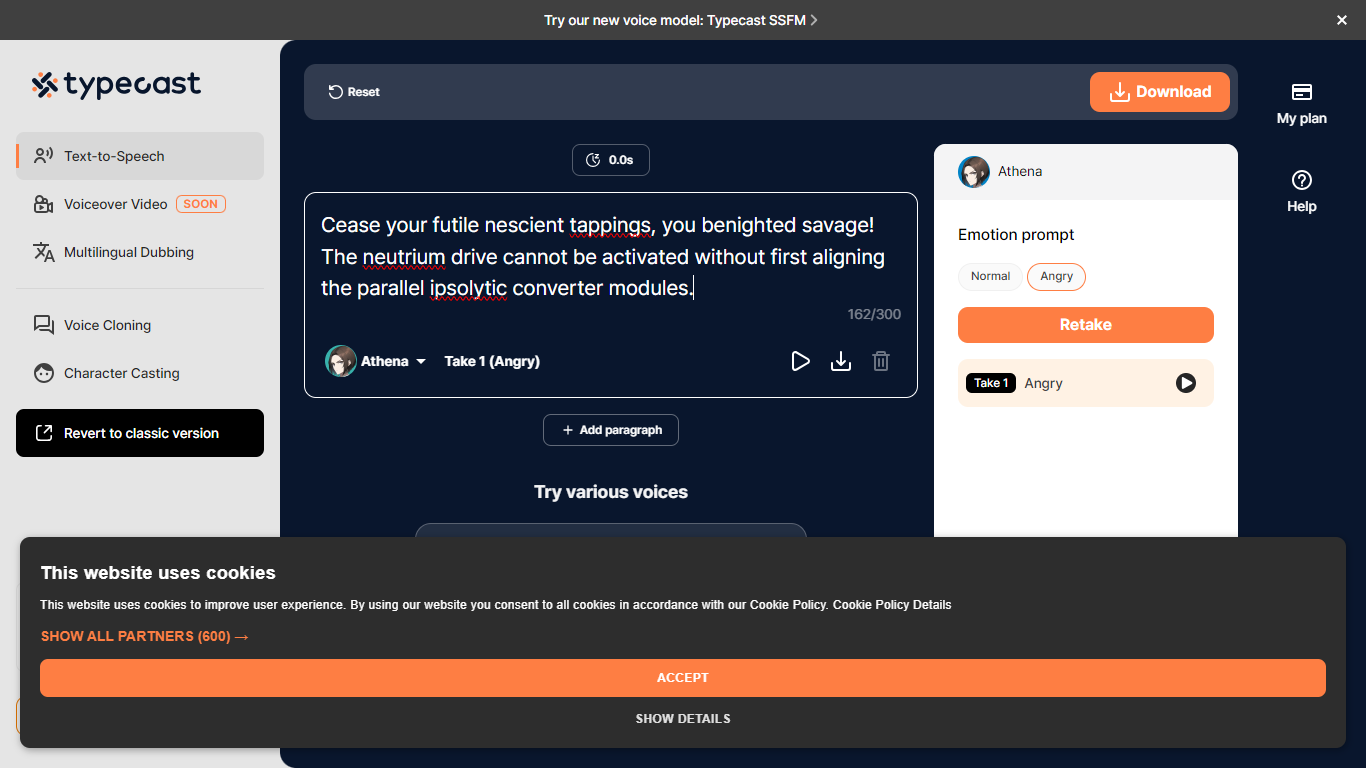
What is Typecast?
Typecast is an AI voice generator built for creators, developers, and enterprises who need speech that sounds natural and carries real emotion. You type a script, pick from 700+ voices recorded by professional voice actors, and get audio you can fine-tune for pitch, speed, and delivery.
What sets Typecast apart is Smart Emotion, which reads your script's context and adjusts tone automatically. The platform runs on the SSFM model, developed over nine years of speech research, with support for 35+ languages and voice cloning from short audio samples.
Beyond the web editor, Typecast offers a text-to-speech API, a mobile app for iOS and Android, and a video editor for turning scripts into finished content. Brands like Hyundai, LG, and Krafton use it for ads, audiobooks, podcasts, training videos, and conversational AI.
Moshi AI Upvotes
Typecast Upvotes
Moshi AI Top Features
Processes speech directly without a text pipeline in the middle
Listens and talks simultaneously with overlap and interruption support
Inner Monologue text stream improves speech quality and reasoning
Runs real-time on an L4 GPU or M3 MacBook Pro via the Mimi codec
Open weights on Hugging Face with PyTorch, Rust, and MLX inference code
Typecast Top Features
700+ AI voices from real voice actors, each with its own personality and tone
Smart Emotion reads your script and adjusts tone, speed, and delivery in one click
Clone your voice from a 5-second sample and use it across 35+ languages
Fine-tune pitch, speed, intonation, and intensity on every line of your script
Text-to-speech API with 200ms streaming latency and SDKs for Python, JavaScript, and Go
Moshi AI Category
- Audio Generation
Typecast Category
- Audio Generation
Moshi AI Pricing Type
- Free
Typecast Pricing Type
- Freemium