Moshi AI vs Voiceful
In the battle of Moshi AI vs Voiceful, which AI Audio Generation tool comes out on top? We compare reviews, pricing, alternatives, upvotes, features, and more.
Between Moshi AI and Voiceful, which one is superior?
Upon comparing Moshi AI with Voiceful, which are both AI-powered audio generation tools, With more upvotes, Voiceful is the preferred choice. Voiceful has received 7 upvotes from aitools.fyi users, while Moshi AI has received 6 upvotes.
Not your cup of tea? Upvote your preferred tool and stir things up!
Moshi AI
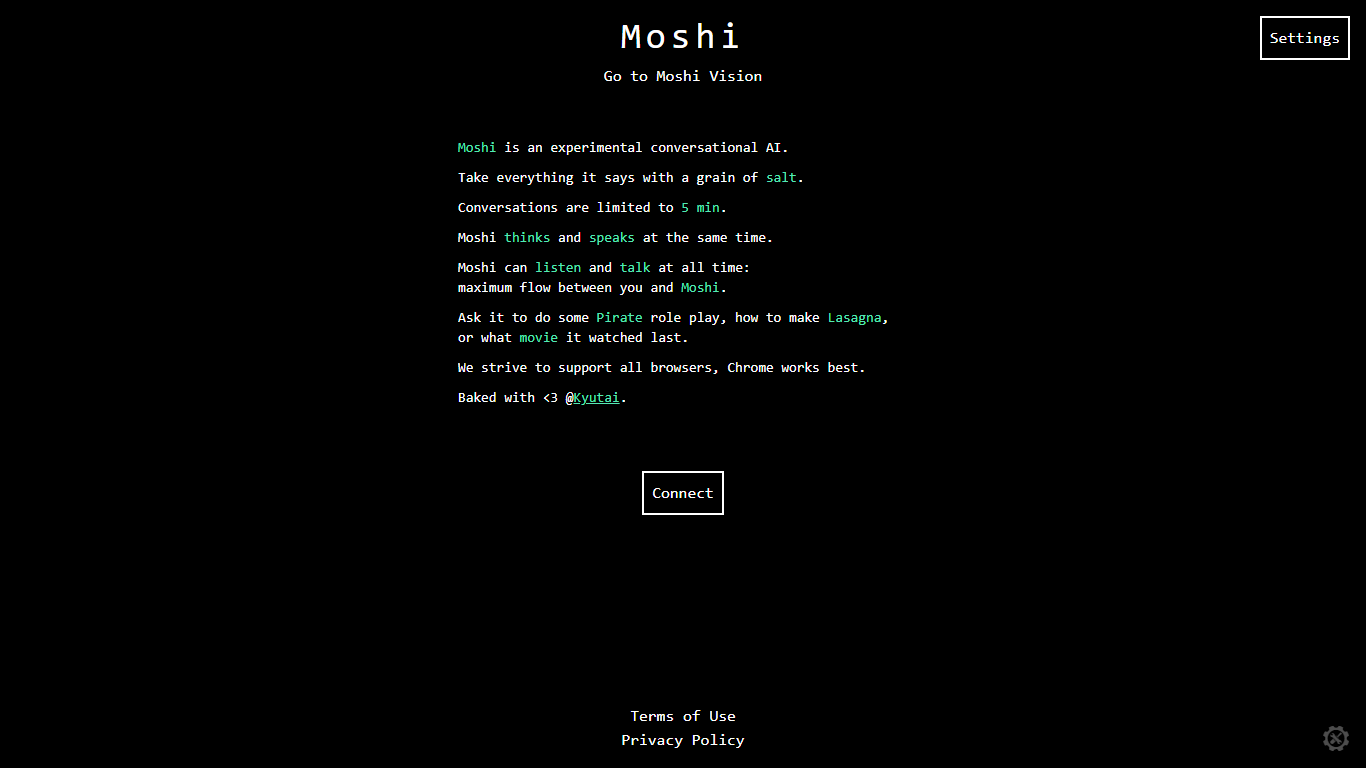

What is Moshi AI?
Moshi AI is a speech-native conversational model from Kyutai, a Paris-based open-science research lab. Instead of chaining speech recognition, text generation, and text-to-speech, Moshi processes audio directly and holds full-duplex voice conversations with minimal latency.
Its multi-stream design runs separate channels for the user, Moshi's spoken output, and an Inner Monologue text stream that improves coherence. That setup lets Moshi listen and talk at the same time, handle overlaps, interruptions, and backchanneling like a real conversation rather than rigid speaker turns.
Moshi is built on Helium, a 7B language model, and Mimi, Kyutai's neural audio codec. Weights and inference code ship for PyTorch, Rust, and MLX, and you can try it in the browser at moshi-chat.kyutai.org. Researchers, voice AI developers, and anyone building real-time spoken interfaces will find the most value here.
Voiceful
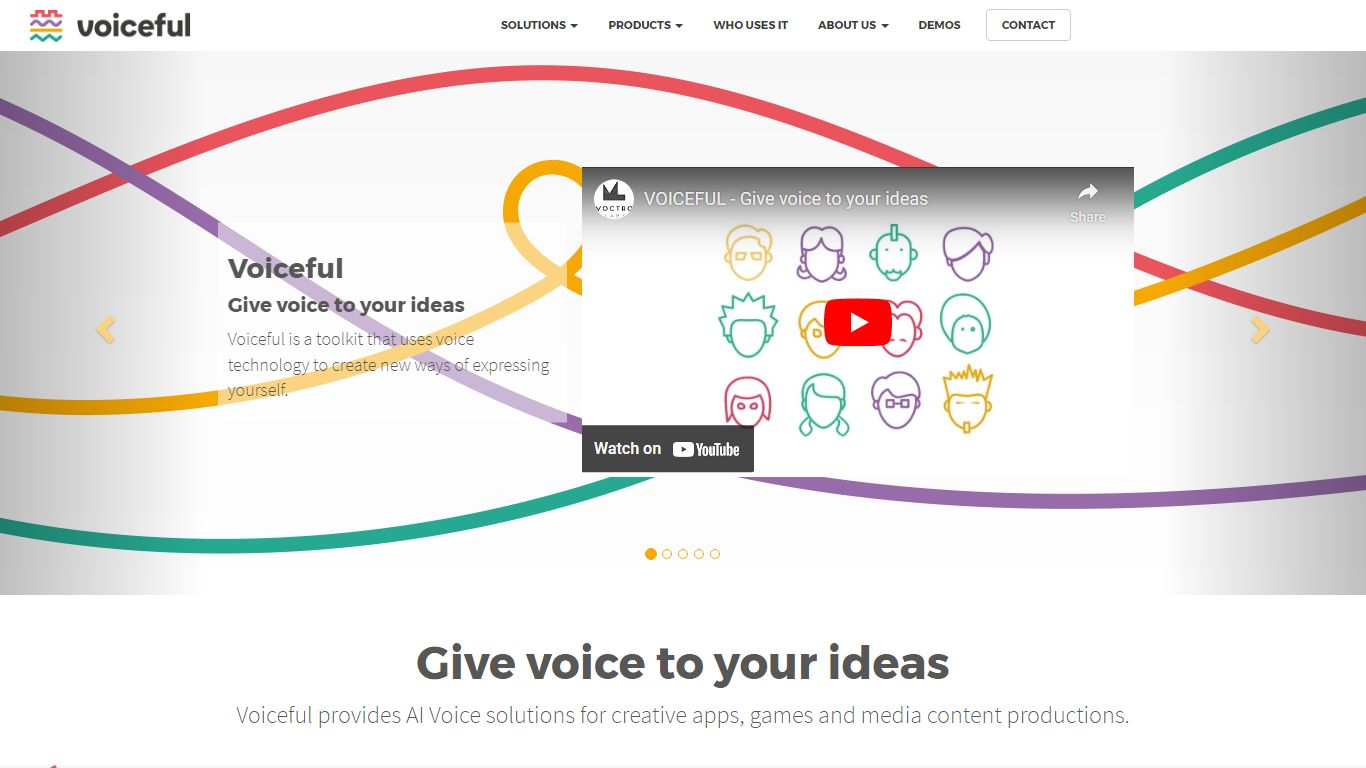
What is Voiceful?
Voiceful lets game and media teams generate, morph, and process character voices inside their own apps. You can license a cross-platform C++ SDK, plug a Unity package into a game, or call a Cloud API when you want hosted processing instead of on-device synthesis.
Most consumer text-to-speech sites stop at a browser demo. Voiceful is built for integration: the Unity Characters plugin runs synthesis locally with no internet connection, and the wider toolkit covers real-time voice transformation (VoTrans), pitch correction (VoAlign), tempo and pitch shifting (VoScale), and a virtual DAW-style mixer (VoMix). That breadth matters when you need character voices, singing, or post-production fixes in the same pipeline.
Game studios, app developers, and media producers are the core buyers. Spotify, Soundtrap, Voicemod, and Yamaha Vocaloid appear on the client list, which signals use in music, social voice apps, and professional audio workflows rather than casual note dictation.
Moshi AI Upvotes
Voiceful Upvotes
Moshi AI Top Features
Processes speech directly without a text pipeline in the middle
Listens and talks simultaneously with overlap and interruption support
Inner Monologue text stream improves speech quality and reasoning
Runs real-time on an L4 GPU or M3 MacBook Pro via the Mimi codec
Open weights on Hugging Face with PyTorch, Rust, and MLX inference code
Voiceful Top Features
Unity Characters ships Free, Lite (€60 EUR perpetual), and PRO tiers with 3, 10, or 10+ custom voice presets
Free Unity tier caps sentences at 5 words; Lite and PRO allow unlimited sentence length
Standalone C++ SDK targets iOS, Android, Desktop, and Server deployments with tier-based yearly licenses
Six named modules: VoSyn synthesis, VoTrans morphing, VoAlign alignment, VoDesc analysis, VoScale time/pitch, VoMix mixing
Cloud API REST endpoints hosted at cloud.voctrolabs.com with Python, PHP, and C++ sample code
Unity plugin synthesizes audio on-device with no internet connection or external dependencies
Client roster includes Spotify, Soundtrap, Voicemod, and Yamaha Vocaloid
Moshi AI Category
- Audio Generation
Voiceful Category
- Audio Generation
Moshi AI Pricing Type
- Free
Voiceful Pricing Type
- Paid