Moshi AI vs Voicefy
Dive into the comparison of Moshi AI vs Voicefy and discover which AI Audio Generation tool stands out. We examine alternatives, upvotes, features, reviews, pricing, and beyond.
In a comparison between Moshi AI and Voicefy, which one comes out on top?
When we compare Moshi AI and Voicefy, two exceptional audio generation tools powered by artificial intelligence, and place them side by side, several key similarities and differences come to light. Interestingly, both tools have managed to secure the same number of upvotes. Every vote counts! Cast yours and contribute to the decision of the winner.
Feeling rebellious? Cast your vote and shake things up!
Moshi AI
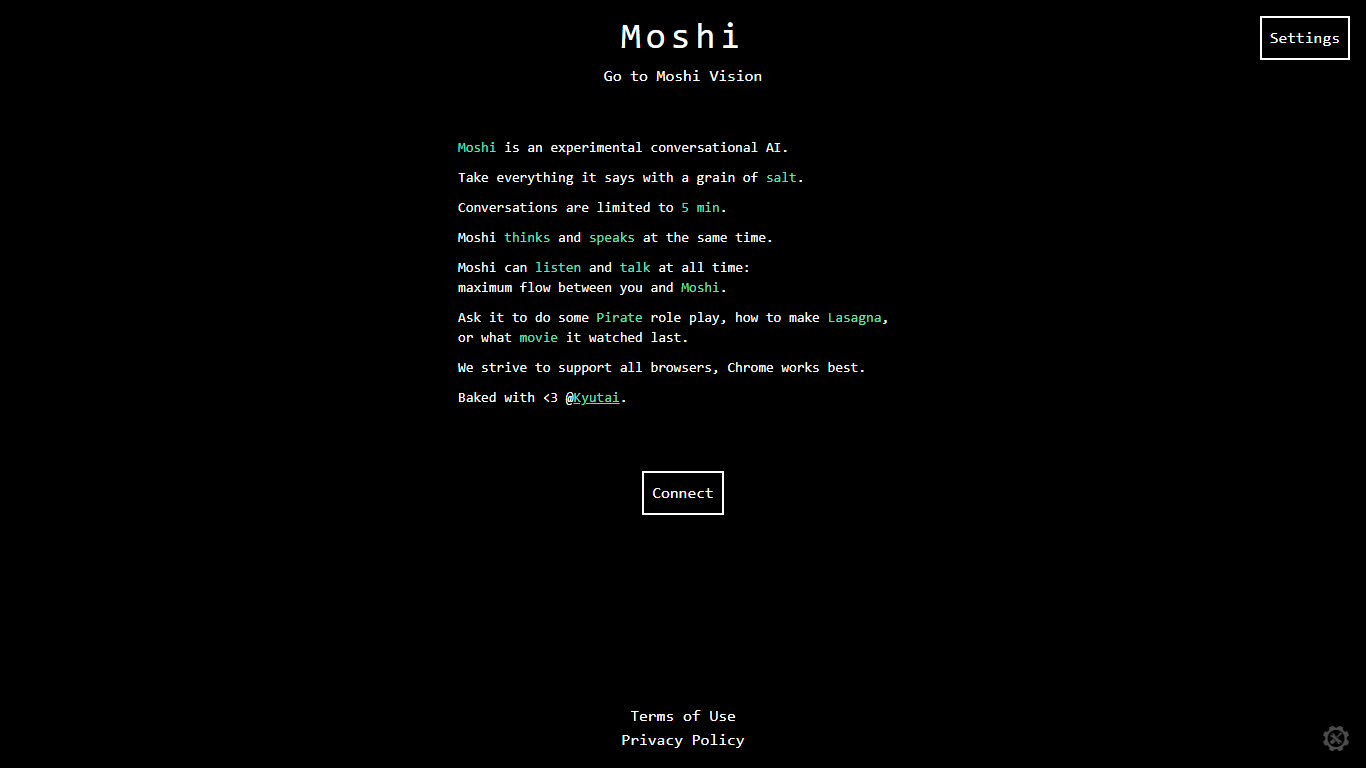

What is Moshi AI?
Moshi AI is a speech-native conversational model from Kyutai, a Paris-based open-science research lab. Instead of chaining speech recognition, text generation, and text-to-speech, Moshi processes audio directly and holds full-duplex voice conversations with minimal latency.
Its multi-stream design runs separate channels for the user, Moshi's spoken output, and an Inner Monologue text stream that improves coherence. That setup lets Moshi listen and talk at the same time, handle overlaps, interruptions, and backchanneling like a real conversation rather than rigid speaker turns.
Moshi is built on Helium, a 7B language model, and Mimi, Kyutai's neural audio codec. Weights and inference code ship for PyTorch, Rust, and MLX, and you can try it in the browser at moshi-chat.kyutai.org. Researchers, voice AI developers, and anyone building real-time spoken interfaces will find the most value here.
Voicefy

What is Voicefy?
Voicefy turns written text into natural speech using neural voices, with a strong focus on Brazilian Portuguese. Creators, companies, and developers use it to narrate audiobooks, produce podcast episodes, dub videos, power virtual assistants, and build accessible audio for courses and apps.
The platform offers more than 120 neural voices across 40 languages, including regional accents within each language. Portuguese (Brazil and Portugal), English, Spanish, French, German, Japanese, Mandarin, and Hindi are among the supported options. Short text converts in under two seconds, while longer audiobooks and courses run in the background with a notification when ready.
Voicefy targets anyone who needs studio-quality narration without hiring a voice actor or setting up a recording booth. Writers, podcasters, marketing teams, e-learning builders, and developers integrating voice into chatbots all fit the use cases highlighted on the site.
Moshi AI Upvotes
Voicefy Upvotes
Moshi AI Top Features
Processes speech directly without a text pipeline in the middle
Listens and talks simultaneously with overlap and interruption support
Inner Monologue text stream improves speech quality and reasoning
Runs real-time on an L4 GPU or M3 MacBook Pro via the Mimi codec
Open weights on Hugging Face with PyTorch, Rust, and MLX inference code
Voicefy Top Features
120+ neural voices with native Brazilian Portuguese prosody and regional accents
Turn manuscripts into audiobooks or podcast scripts into episodes without a microphone
Dub videos and tutorials into 40 languages from a single script
Virtual assistant responses with sub-300ms latency for real-time conversations
Starter plan stays free forever with 10,000 characters per month
Moshi AI Category
- Audio Generation
Voicefy Category
- Audio Generation
Moshi AI Pricing Type
- Free
Voicefy Pricing Type
- Freemium