Moshi AI vs voicemy
Dive into the comparison of Moshi AI vs voicemy and discover which AI Audio Generation tool stands out. We examine alternatives, upvotes, features, reviews, pricing, and beyond.
When comparing Moshi AI and voicemy, which one rises above the other?
When we compare Moshi AI and voicemy, two exceptional audio generation tools powered by artificial intelligence, and place them side by side, several key similarities and differences come to light. The upvote count is neck and neck for both Moshi AI and voicemy. Your vote matters! Help us decide the winner among aitools.fyi users by casting your vote.
You don't agree with the result? Cast your vote to help us decide!
Moshi AI

What is Moshi AI?
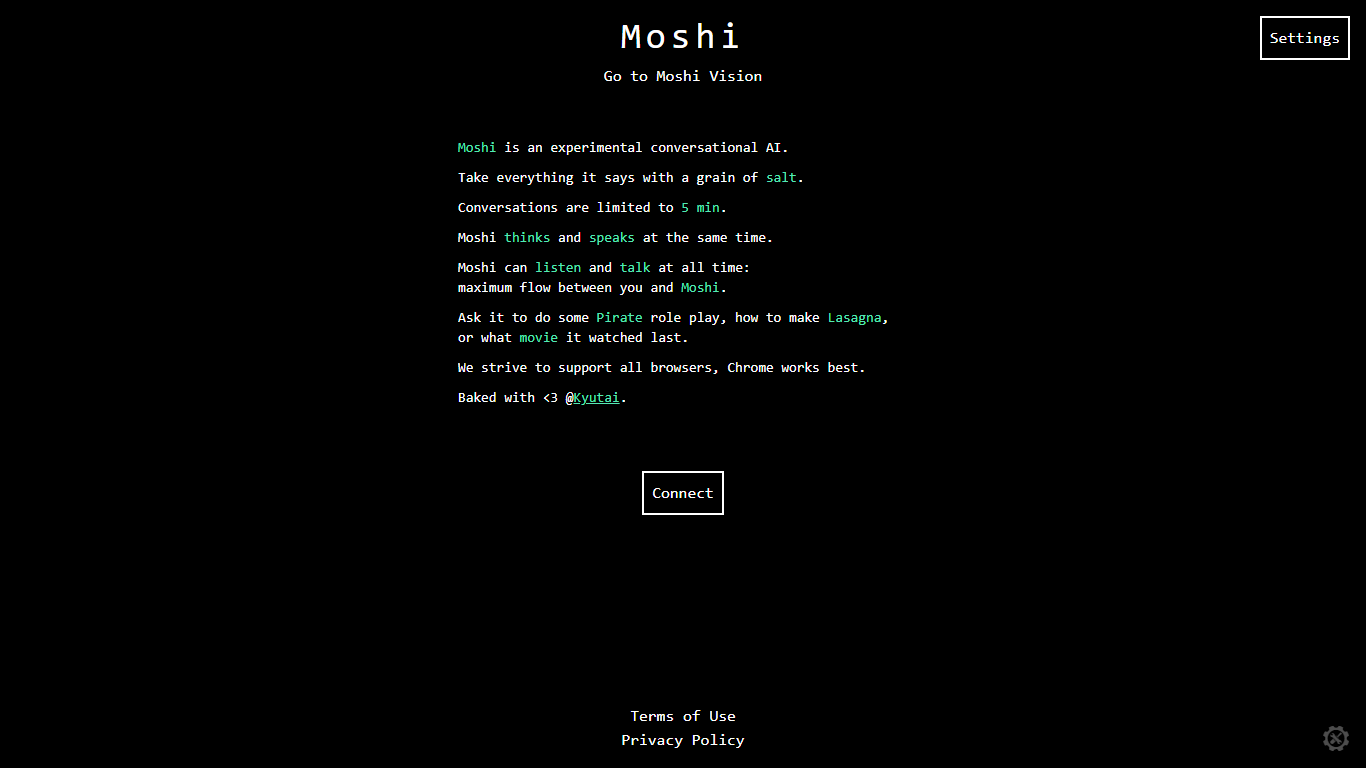
Moshi AI is a speech-native conversational model from Kyutai, a Paris-based open-science research lab. Instead of chaining speech recognition, text generation, and text-to-speech, Moshi processes audio directly and holds full-duplex voice conversations with minimal latency.
Its multi-stream design runs separate channels for the user, Moshi's spoken output, and an Inner Monologue text stream that improves coherence. That setup lets Moshi listen and talk at the same time, handle overlaps, interruptions, and backchanneling like a real conversation rather than rigid speaker turns.
Moshi is built on Helium, a 7B language model, and Mimi, Kyutai's neural audio codec. Weights and inference code ship for PyTorch, Rust, and MLX, and you can try it in the browser at moshi-chat.kyutai.org. Researchers, voice AI developers, and anyone building real-time spoken interfaces will find the most value here.
voicemy
What is voicemy?
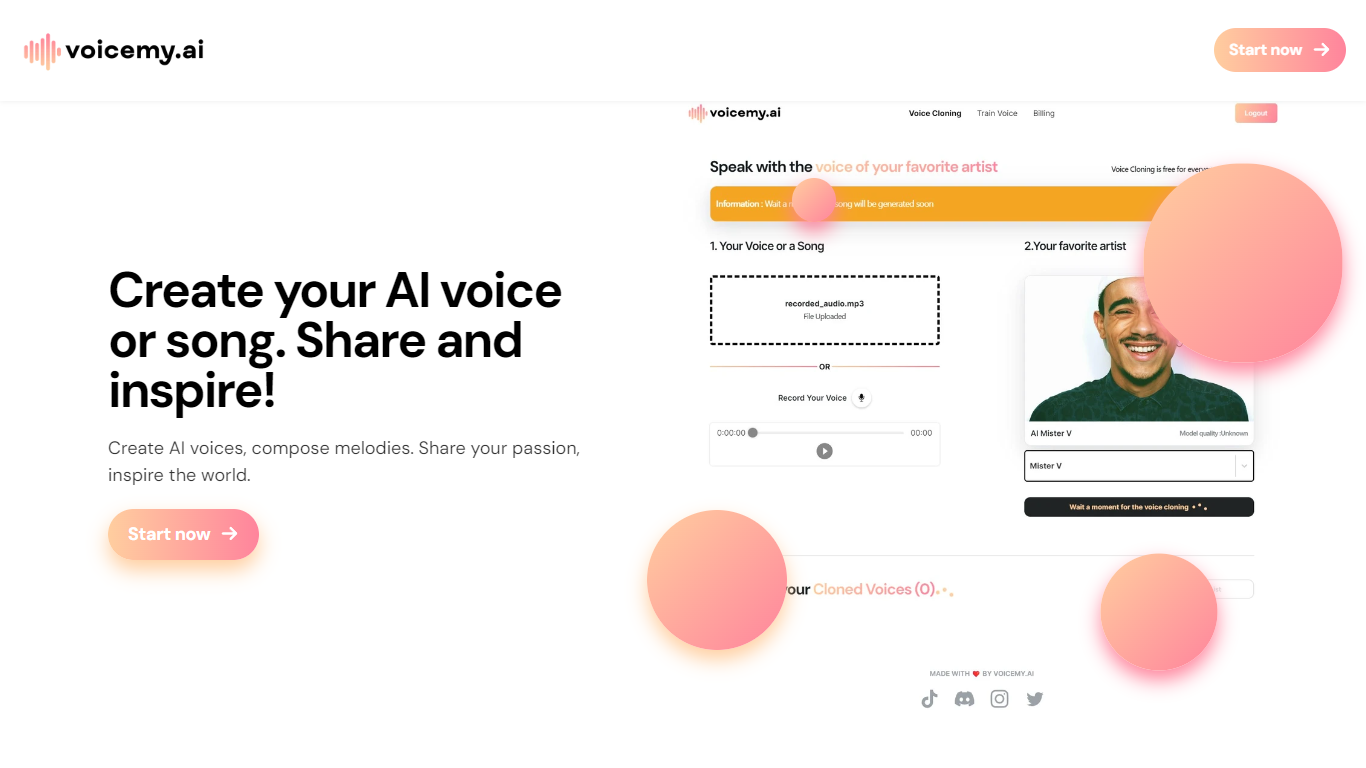
Voicemy.ai is a web platform for cloning voices, training custom voice models, and composing melodies. You upload or record audio, pick a voice from the built-in or community library, and generate new audio without recording from scratch.
The product splits into two main workflows: quick voice cloning from existing audio, and longer training runs where you teach a model to replicate a specific voice. A text-to-speech feature is listed as coming soon on the marketing site.
It targets musicians, content creators, and hobbyists who want to experiment with synthetic voices and share results with an active Discord community. The web app lives at app.voicemy.ai, with account creation required for core features.
Moshi AI Upvotes
voicemy Upvotes
Moshi AI Top Features
Processes speech directly without a text pipeline in the middle
Listens and talks simultaneously with overlap and interruption support
Inner Monologue text stream improves speech quality and reasoning
Runs real-time on an L4 GPU or M3 MacBook Pro via the Mimi codec
Open weights on Hugging Face with PyTorch, Rust, and MLX inference code
voicemy Top Features
Clone a voice by uploading audio or recording directly in the browser
Pick from the platform library or community-shared voice models
Train a custom model on your own voice recordings
Compose melodies alongside voice generation workflows
Text-to-speech conversion marked as coming soon on the homepage
Moshi AI Category
- Audio Generation
voicemy Category
- Audio Generation
Moshi AI Pricing Type
- Free
voicemy Pricing Type
- Freemium