Movavi vs PixVerse
In the face-off between Movavi vs PixVerse, which AI Video Editing tool takes the crown? We scrutinize features, alternatives, upvotes, reviews, pricing, and more.
In a face-off between Movavi and PixVerse, which one takes the crown?
If we were to analyze Movavi and PixVerse, both of which are AI-powered video editing tools, what would we find? Interestingly, both tools have managed to secure the same number of upvotes. Every vote counts! Cast yours and contribute to the decision of the winner.
Does the result make you go "hmm"? Cast your vote and turn that frown upside down!
Movavi
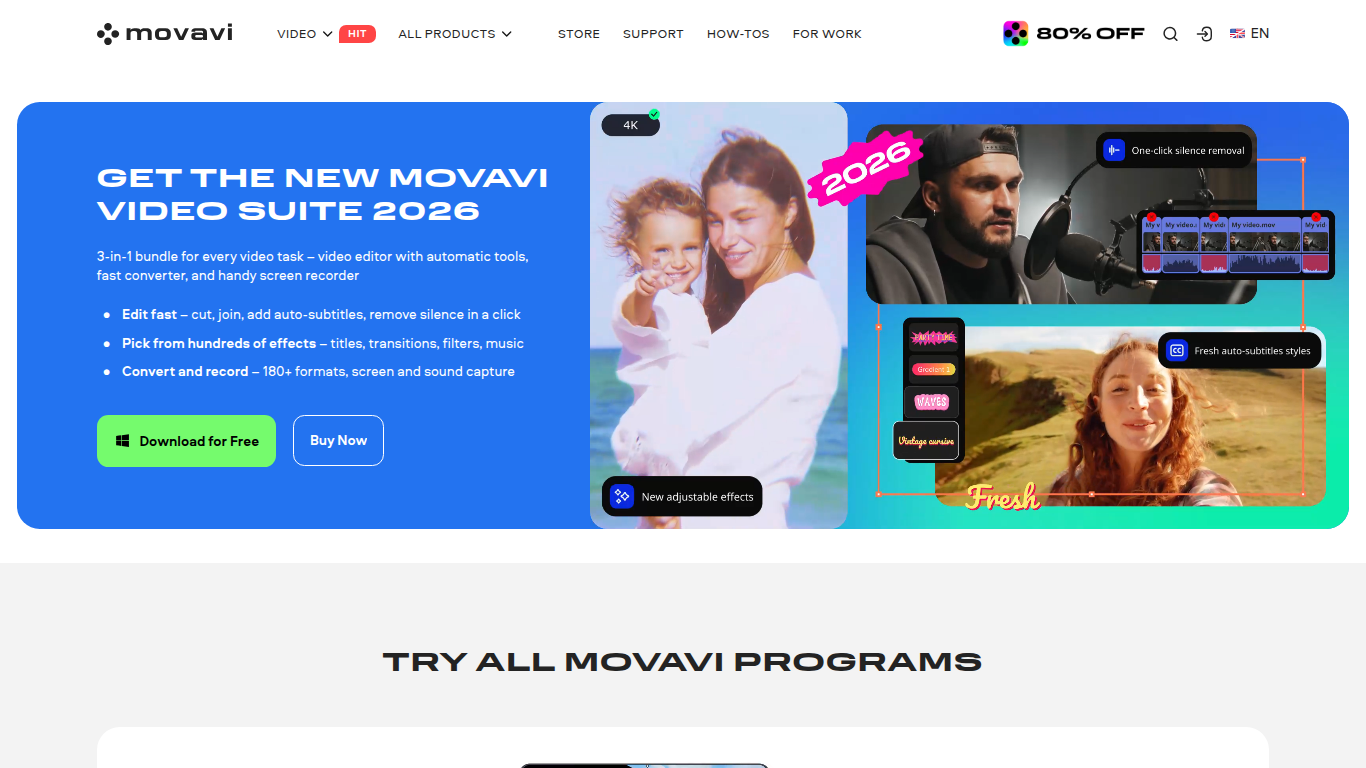

What is Movavi ?
Movavi Video Editor 2024 enables users to create and edit videos with a variety of tools designed for both beginners and experienced creators. It provides features such as background removal, motion tracking, noise reduction, color correction, and video stabilization to enhance video projects.
What sets Movavi apart is its combination of over 6,000 effects and transitions with AI-powered tools that speed up editing tasks like cutting and overlay effects. This balance of extensive creative options and intelligent automation helps users produce polished videos efficiently.
The software supports a wide range of video formats and offers a drag-and-drop interface that simplifies applying filters, titles, and effects. Movavi also includes a free music library and tutorials to assist users in mastering video editing techniques.
Movavi Video Editor 2024 is designed primarily for Windows users who want to create engaging content such as travel videos, vlogs, or family memories without a steep learning curve. Its value lies in making powerful editing accessible while maintaining quality results.
Overall, Movavi stands out for its extensive effects, AI enhancements, and approachable design that help users bring their video ideas to life quickly and effectively.
PixVerse
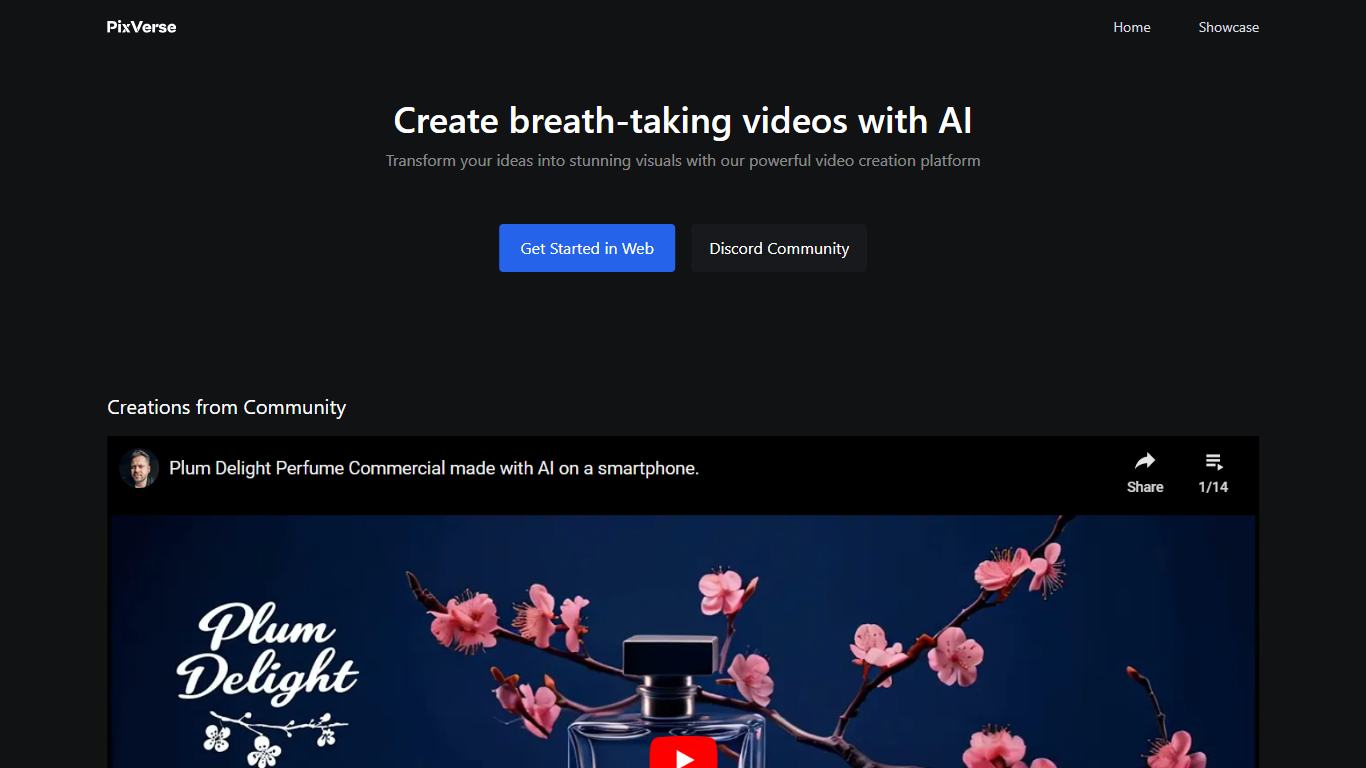
What is PixVerse?
PixVerse turns text prompts, images, and reference footage into short videos for ads, social clips, and cinematic scenes. The platform pairs a web creator studio at app.pixverse.ai with proprietary models V6, C1, and R1 for clip generation, cinematic control, and real-time interactive worlds. You can work through templates, a conversational Agent, a node-based Canvas, or a command-line interface depending on how your team likes to produce video.
Most AI video tools stop at a single prompt box. PixVerse stacks Agent multi-shot direction, Canvas workflow graphs, Marketing Hub ad workflows, and a REST API in one platform, so teams can move from concept to batch production without switching tools. On Artificial Analysis benchmarks cited by PixVerse, V6 API pricing lands at $4.80 per minute versus $13.44 for Kling 3.0 Omni and $24.00 for VEO 3.1.
Marketing teams use Marketing Hub to turn product photos into ad-ready shorts. Creators join the Creative Partner Program for credits, cash rewards, and tiered partner benefits. Developers integrate generation through platform.pixverse.ai with per-second credit billing across V6 and C1 models.
Movavi Upvotes
PixVerse Upvotes
Movavi Top Features
AI-powered video cutting speeds up editing tasks
Background removal tool for clean subject isolation
Motion tracking to follow objects smoothly in videos
Free music library included for adding soundtracks
Over 6,000 effects and transitions to customize videos
PixVerse Top Features
V6 supports 1 to 15 second clips at up to 1080p with eight aspect ratios from 16:9 to 21:9
API V6 pricing starts at 5 credits per second for 360p video without audio
Agent turns a multi-shot brief into four coordinated film shots from one conversation
Canvas links prompts, references, motion, and output in a node-based video workflow graph
Marketing Hub builds ready-to-use ad shorts from uploaded product images or URLs
PixVerse V6 API benchmarked at $4.80 per minute versus $13.44 per minute for Kling 3.0 Omni
Movavi Category
- Video Editing
PixVerse Category
- Video Editing
Movavi Pricing Type
- Freemium
PixVerse Pricing Type
- Freemium