MusicTGA-HR vs MusicLM
In the face-off between MusicTGA-HR vs MusicLM, which AI Audio Generation tool takes the crown? We scrutinize features, alternatives, upvotes, reviews, pricing, and more.
In a face-off between MusicTGA-HR and MusicLM, which one takes the crown?
If we were to analyze MusicTGA-HR and MusicLM, both of which are AI-powered audio generation tools, what would we find? Neither tool takes the lead, as they both have the same upvote count. Every vote counts! Cast yours and contribute to the decision of the winner.
Think we got it wrong? Cast your vote and show us who's boss!
MusicTGA-HR

What is MusicTGA-HR?
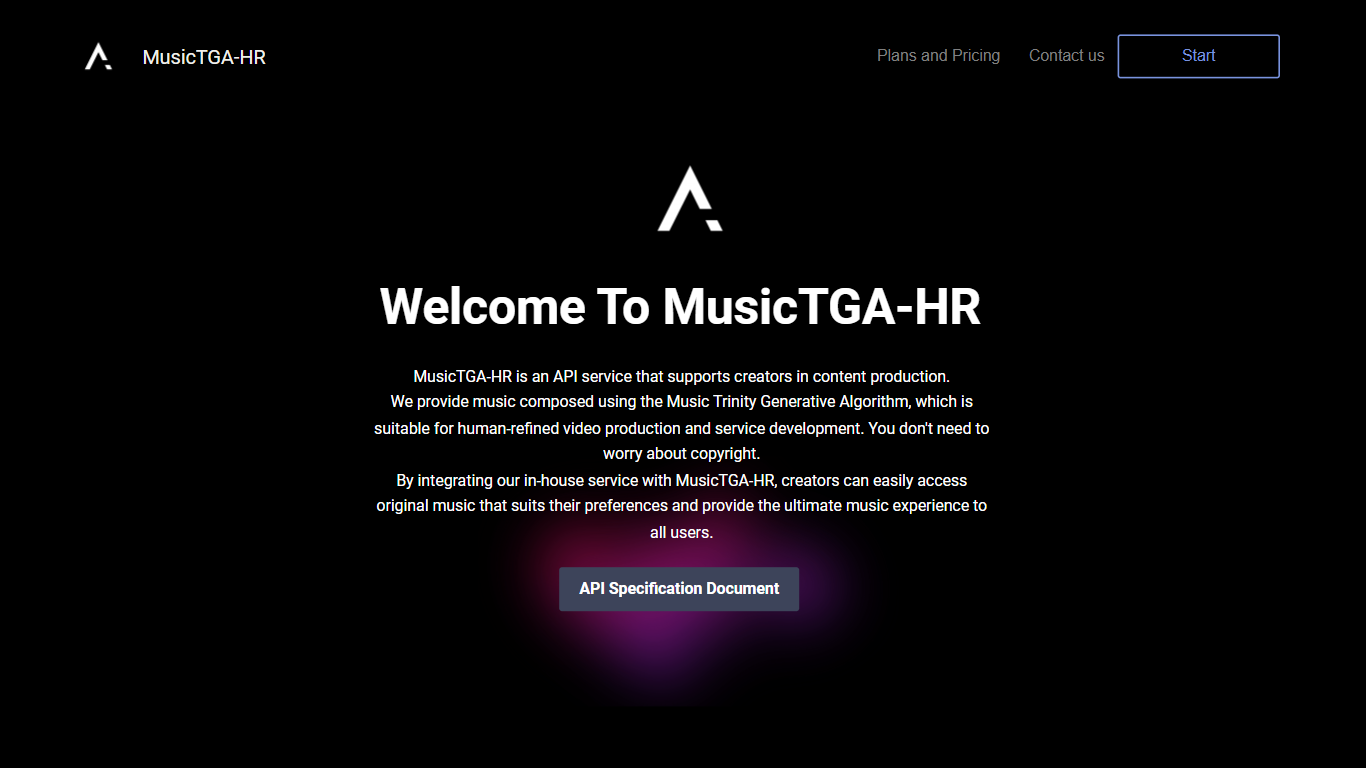
MusicTGA-HR is Amadeus Code's audio infrastructure API for teams building music AI products. It ships rights-cleared datasets with full mixes, six stem groups, multitrack audio, multitrack MIDI, and human-annotated metadata at 24-bit/48 kHz WAV quality. Developers query the catalog through REST endpoints or MCP with NeuroSync semantic search by mood, genre, BPM, or instruments.
Most public music datasets are noisy, rights-unclear, or missing stems and MIDI in one package. MusicTGA-HR targets that gap with a human-in-the-loop pipeline: semantic analysis, music-theory scoring, and musician review before tracks enter the API. Roland is listed as a trusted partner on the product page.
Generative AI labs, source-separation researchers, and BGM streaming products use it for training data, PoC trials, and production retrieval. Access is sales-led through dataset packages or API integration rather than a self-serve consumer app.
MusicLM
What is MusicLM?
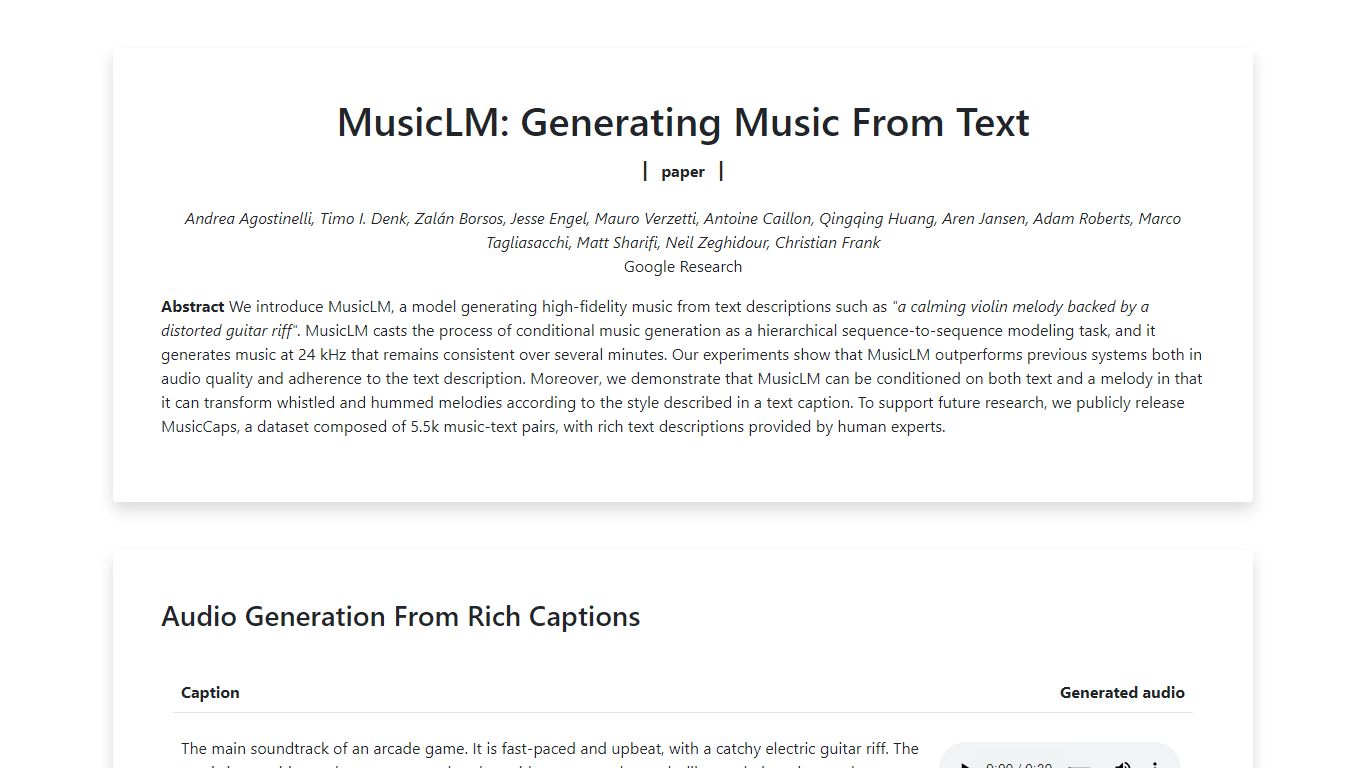
MusicLM is a Google Research audio generation model that creates music from text captions at 24 kHz. The public examples page hosts sample clips for prompts like arcade soundtracks, reggaeton-EDM fusions, and relaxing jazz, plus longer story-mode generations that shift styles across timed segments. Google released the MusicCaps dataset of 5,500 music-text pairs alongside the paper.
Unlike consumer apps that ship one prompt box, MusicLM was published as a research demo with pre-generated samples rather than a login product. Its headline trick is joint text-and-melody conditioning: you can hum or whistle a tune and have the model re-render it in a new genre described in text. Story mode chains multiple captions so the music evolves across sections.
MusicLM matters as the research foundation behind Google's later Lyria music models, but this page is for listening to published examples, not creating new tracks interactively. Researchers and musicians study it for long-form consistency, painting-to-music conditioning, and melody transfer results documented in the 2023 paper.
MusicTGA-HR Upvotes
MusicLM Upvotes
MusicTGA-HR Top Features
10,000+ human-designed music classification categories with expert mood and energy tags
24-bit/48 kHz WAV full mixes plus six stem groups and multitrack MIDI per track
NeuroSync semantic search maps text queries to mood, instrumentation, and tempo matches
REST API and free MCP token for Claude, Cursor, and other MCP clients
Rights-cleared catalog cleared for commercial training, product integration, and research
Human-in-the-loop QA from musicians before audio enters the dataset
MusicLM Top Features
Generates music at 24 kHz from rich text captions
Story mode chains multiple text prompts across timed segments
Text-and-melody conditioning transforms hummed or whistled tunes into new styles
Painting caption conditioning pairs artwork descriptions with generated audio
Long-generation examples cover melodic techno, swing, and relaxing jazz
MusicCaps dataset includes 5,500 expert-written music-text pairs
MusicTGA-HR Category
- Audio Generation
MusicLM Category
- Audio Generation
MusicTGA-HR Pricing Type
- Paid
MusicLM Pricing Type
- Free