NeuralNewsletters vs SciSpace (formerly Typeset)
In the clash of NeuralNewsletters vs SciSpace (formerly Typeset), which AI Summarizer tool emerges victorious? We assess reviews, pricing, alternatives, features, upvotes, and more.
When we put NeuralNewsletters and SciSpace (formerly Typeset) head to head, which one emerges as the victor?
Let's take a closer look at NeuralNewsletters and SciSpace (formerly Typeset), both of which are AI-driven summarizer tools, and see what sets them apart. In the race for upvotes, SciSpace (formerly Typeset) takes the trophy. SciSpace (formerly Typeset) has received 24 upvotes from aitools.fyi users, while NeuralNewsletters has received 6 upvotes.
Feeling rebellious? Cast your vote and shake things up!
NeuralNewsletters
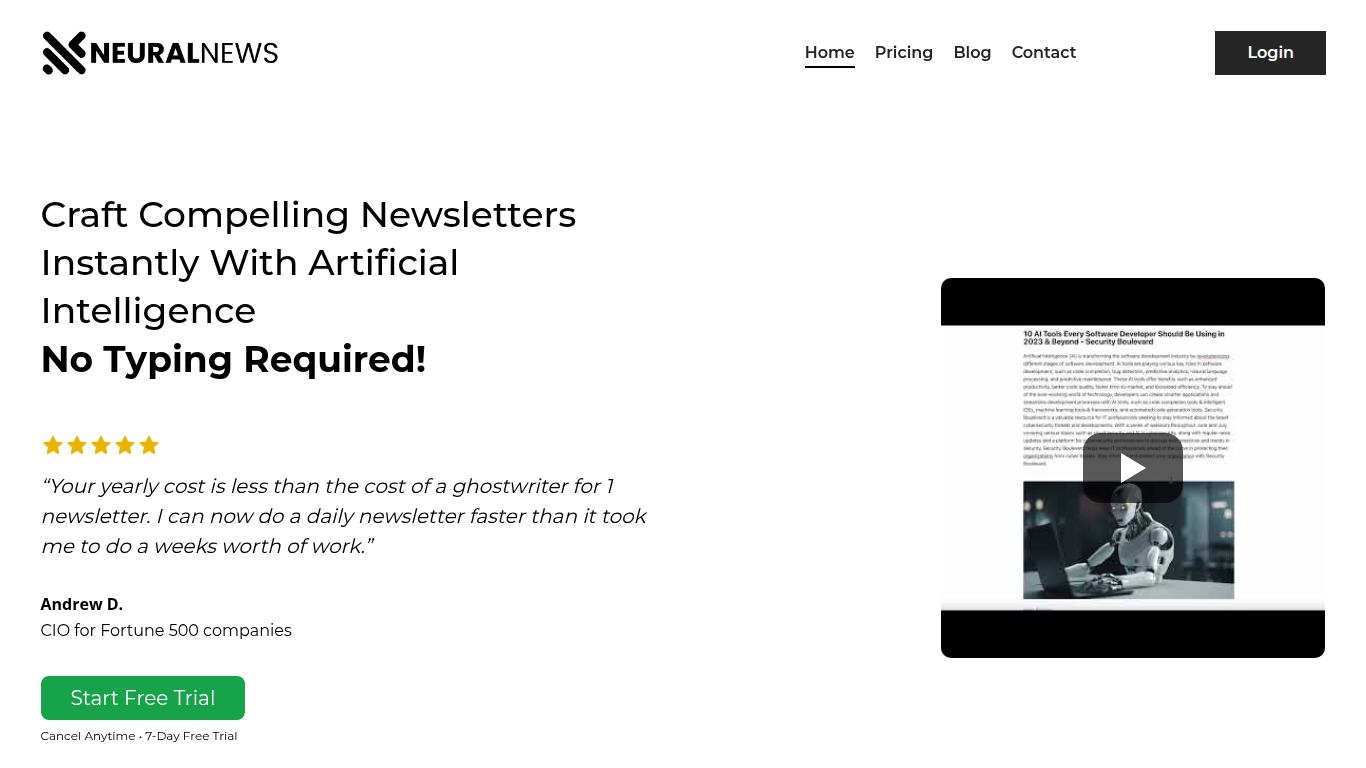

What is NeuralNewsletters?
NeuralNewsletters turns niche news into ready-to-send email newsletters by pulling articles from across the web, summarizing them with AI, and formatting the output in a block-style editor you can export to any email provider. You set up newsfeeds with keywords or boolean queries, pick the stories you want, choose a tone, and the platform drafts a full newsletter in the background while you move on to other work.
Most newsletter writers still bounce between RSS readers, Google alerts, and a blank doc. NeuralNewsletters bundles research, summarization, and layout into one flow, with a stash feature for pasting your own URLs alongside discovered articles. The trade-off is focus: it is built for curated news roundups, not long-form original essays or complex drip sequences.
Solo newsletter operators, media curators, ecommerce marketers, and agency teams running multiple niche lists use NeuralNewsletters to publish daily or weekly digests without hiring a ghostwriter. Finished issues export as HTML downloads or rich text paste into Beehiiv, ConvertKit, Substack, Klaviyo, and similar ESPs.
SciSpace (formerly Typeset)
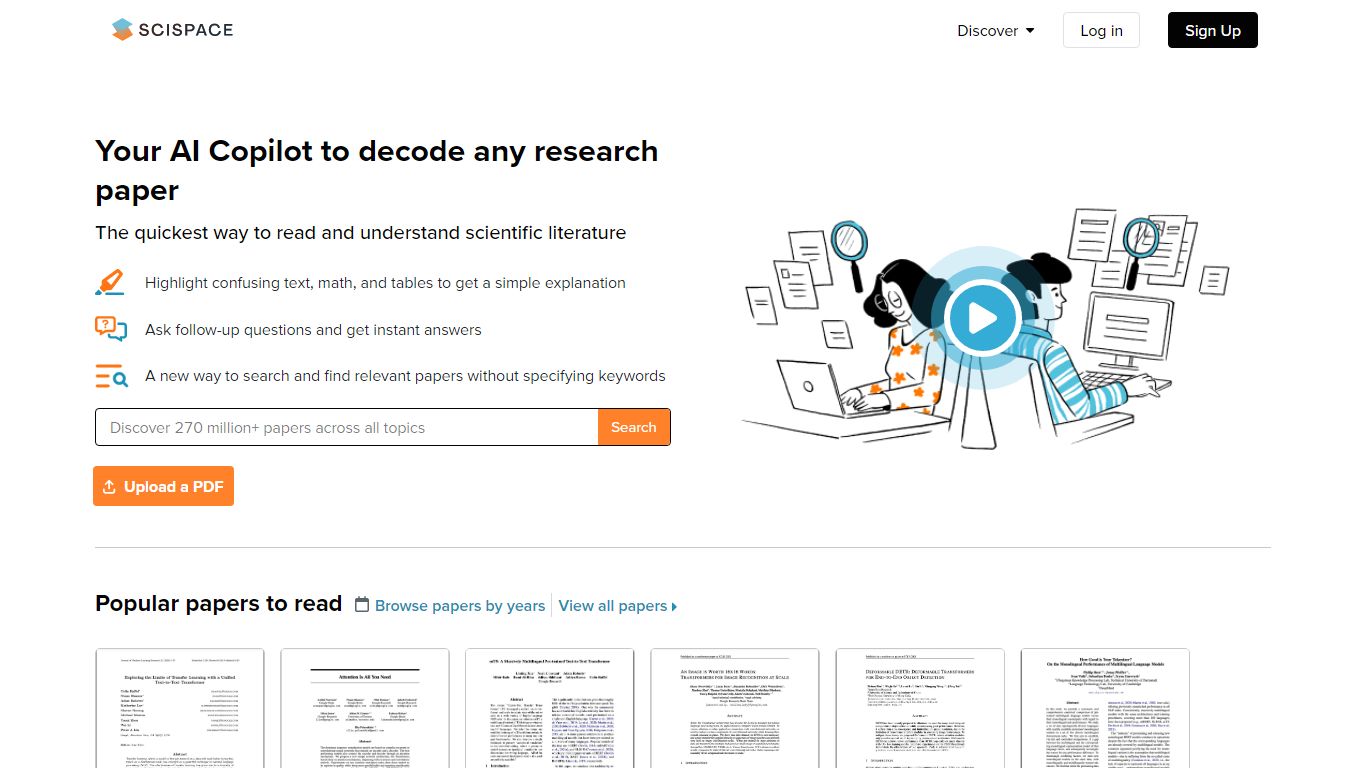
What is SciSpace (formerly Typeset)?
SciSpace, formerly Typeset, is a research workspace where you search a large academic paper index, chat with PDFs, and draft literature reviews with cited sources. The typeset.io URL now lands on scispace.com, which bundles an AI agent, literature review search, paraphraser, citation generator, data extraction, and AI detection in one interface.
General AI chat tools answer from the open web. SciSpace centers the workflow on papers: you can run systematic reviews across 280M+ indexed works, highlight passages for explanations, and move from reading into AI Writer drafts with references. Biomedical Agent, enterprise recruiting, and Chrome or mobile apps extend the same stack for labs and R&D teams.
Graduate students, PhD researchers, and pharma or biotech analysts use SciSpace to screen literature faster, unpack dense PDFs, and produce summaries or manuscripts with traceable citations. The platform reports adoption by 9.6 million researchers and lists SOC 2 compliance on its site.
NeuralNewsletters Upvotes
SciSpace (formerly Typeset) Upvotes
NeuralNewsletters Top Features
Content discovery engine pulls articles by niche keyword or boolean queries like "Artificial Intelligence AND Funding"
Unlimited newsletters and newsfeeds on paid plans with no cap on article selections per issue
AI summarizes selected articles in your chosen tone while generation runs in the background
Block-style editor supports markdown, drag-and-drop blocks, and slash commands for quick edits
Export finished newsletters as HTML files or rich text for Beehiiv, ConvertKit, Substack, and Klaviyo
Stash feature lets you add your own article URLs alongside discovered newsfeed content
7-day free trial on self-serve plans with a 30-day money-back guarantee
SciSpace (formerly Typeset) Top Features
Search and review literature across 280M+ indexed research papers
Chat with PDF highlights for plain-language explanations of dense sections
SciSpace Agent plus Biomedical Agent for guided research tasks
Built-in paraphraser, citation generator, AI detector, and data extraction tools
AI Writer and templates for drafting papers with cited sources
Chrome extension and mobile app for reading outside the browser tab
Premium plans with a 24-hour money-back guarantee on subscriptions
NeuralNewsletters Category
- Summarizer
SciSpace (formerly Typeset) Category
- Summarizer
NeuralNewsletters Pricing Type
- Paid
SciSpace (formerly Typeset) Pricing Type
- Freemium