Nora vs Kin AI
In the contest of Nora vs Kin AI, which AI Companion tool is the champion? We evaluate pricing, alternatives, upvotes, features, reviews, and more.
If you had to choose between Nora and Kin AI, which one would you go for?
When we examine Nora and Kin AI, both of which are AI-enabled companion tools, what unique characteristics do we discover? The users have made their preference clear, Kin AI leads in upvotes. The upvote count for Kin AI is 9, and for Nora it's 6.
Not your cup of tea? Upvote your preferred tool and stir things up!
Nora
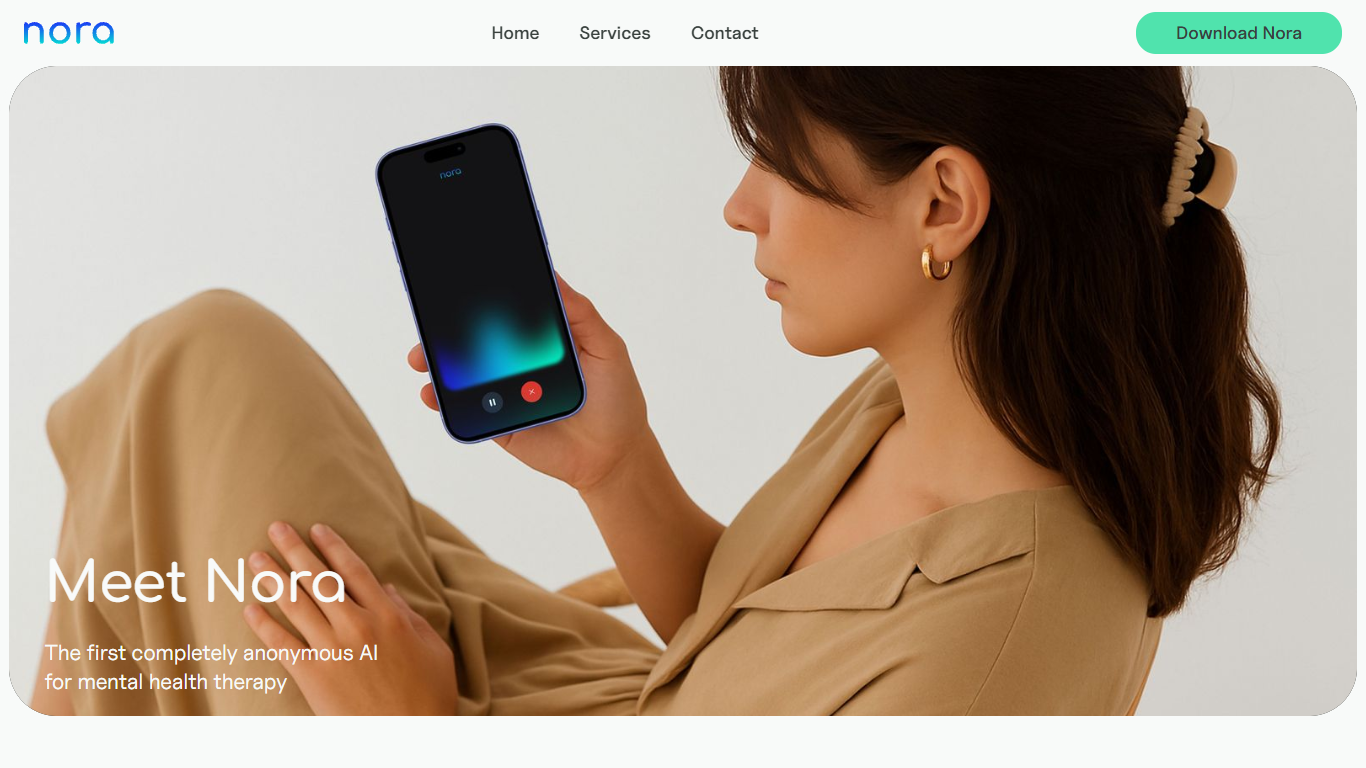

What is Nora?
Nora lets you talk through stress, anxiety, and loneliness by voice or text without sharing your name, face, or other identifying details. Nextpeer built it for people who want mental health support on their own schedule, without booking appointments or filling out intake forms before they feel ready to open up.
Where most therapy apps ask you to create a profile and commit to recurring sessions, Nora takes an anonymous-first path. You can switch between voice and typing mid-conversation, get an encrypted summary after each session, and use the app in 55+ languages. The homepage pitches unlimited access at roughly the cost of a daily cup of coffee rather than per-session therapy rates.
Nora targets adults and young adults 18 and older dealing with anxiety, depression, trauma, PTSD, postpartum stress, and related challenges. Nextpeer also sells employer, private practice, and university programs through its services page for organizations that want confidential support between formal care visits.
Kin AI
What is Kin AI?
Kin AI puts five persistent AI advisors in your pocket for work, relationships, values, energy, and social confidence, with memory that carries across sessions. Structured Sessions, voice check-ins, proactive Insights, and a guided Journal sit on top of a local-first memory engine with encrypted sync. Kin cites 60,000+ installs, 5 million messages exchanged, and a 4.8 App Store rating on mykin.ai.
Most companion apps reset every session. Kin stores semantic and episodic memory locally with encrypted sync, which means sessions, journal entries, and voice chats build on what it already knows about your patterns and relationships. That local-first setup is the trade-off it sells against cloud-only assistants that treat every prompt like a first meeting.
Founders, operators, and people juggling personal and professional decisions use Kin for structured Sessions, voice check-ins, proactive Insights, and guided journaling. Pricing runs through the mobile app stores rather than a public web page, and the marketing site emphasizes privacy ownership over feature checklists. The company lists Denmark as headquarters in its entity data.
Nora Upvotes
Kin AI Upvotes
Nora Top Features
Switch between voice and text mid-session without restarting the conversation
Stay anonymous with no requirement to share your name, face, or personal identifying data
Receive encrypted session summaries after each conversation to reflect on patterns and progress
Use Nora in 55+ languages so you can express yourself in the language that feels most natural
93% of users report feeling more optimistic about their future after 5 average sessions with Nora
Kin AI Top Features
Five advisor personas cover work, relationships, values, body energy, and social confidence
Local-first semantic and episodic memory keeps context between sessions
Structured Sessions guide daily prep, decisions, and stuck-point conversations
Voice mode supports spoken advisor conversations outside text chat
Insights surface recurring themes and blind spots proactively
Guided Journal entries build on prior history instead of blank pages
Encrypted sync lets you choose what to share while data stays on your device
Nora Category
- Companion
Kin AI Category
- Companion
Nora Pricing Type
- Paid
Kin AI Pricing Type
- Freemium