Nora vs Personal AI
In the battle of Nora vs Personal AI, which AI Companion tool comes out on top? We compare reviews, pricing, alternatives, upvotes, features, and more.
Between Nora and Personal AI, which one is superior?
Upon comparing Nora with Personal AI, which are both AI-powered companion tools, The upvote count shows a clear preference for Personal AI. Personal AI has been upvoted 7 times by aitools.fyi users, and Nora has been upvoted 6 times.
Think we got it wrong? Cast your vote and show us who's boss!
Nora

What is Nora?
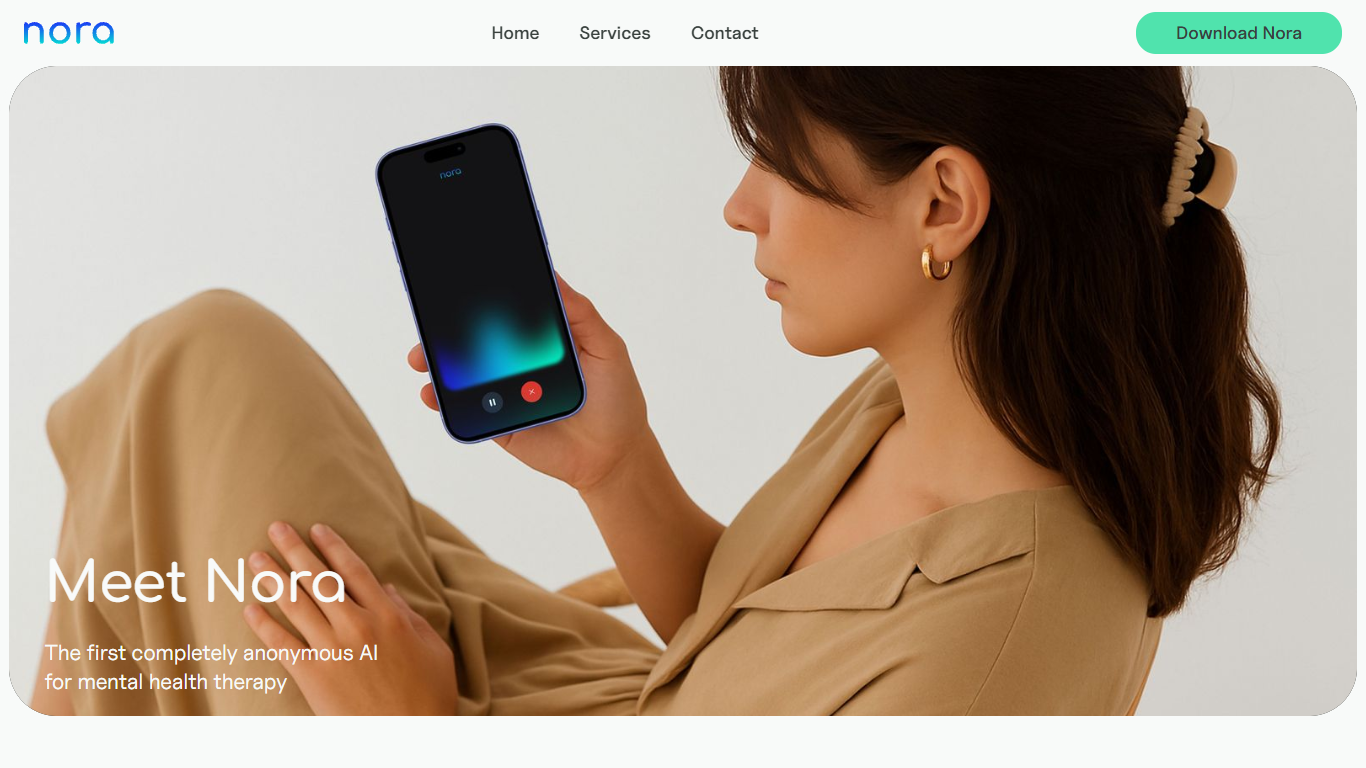
Nora lets you talk through stress, anxiety, and loneliness by voice or text without sharing your name, face, or other identifying details. Nextpeer built it for people who want mental health support on their own schedule, without booking appointments or filling out intake forms before they feel ready to open up.
Where most therapy apps ask you to create a profile and commit to recurring sessions, Nora takes an anonymous-first path. You can switch between voice and typing mid-conversation, get an encrypted summary after each session, and use the app in 55+ languages. The homepage pitches unlimited access at roughly the cost of a daily cup of coffee rather than per-session therapy rates.
Nora targets adults and young adults 18 and older dealing with anxiety, depression, trauma, PTSD, postpartum stress, and related challenges. Nextpeer also sells employer, private practice, and university programs through its services page for organizations that want confidential support between formal care visits.
Personal AI
What is Personal AI?
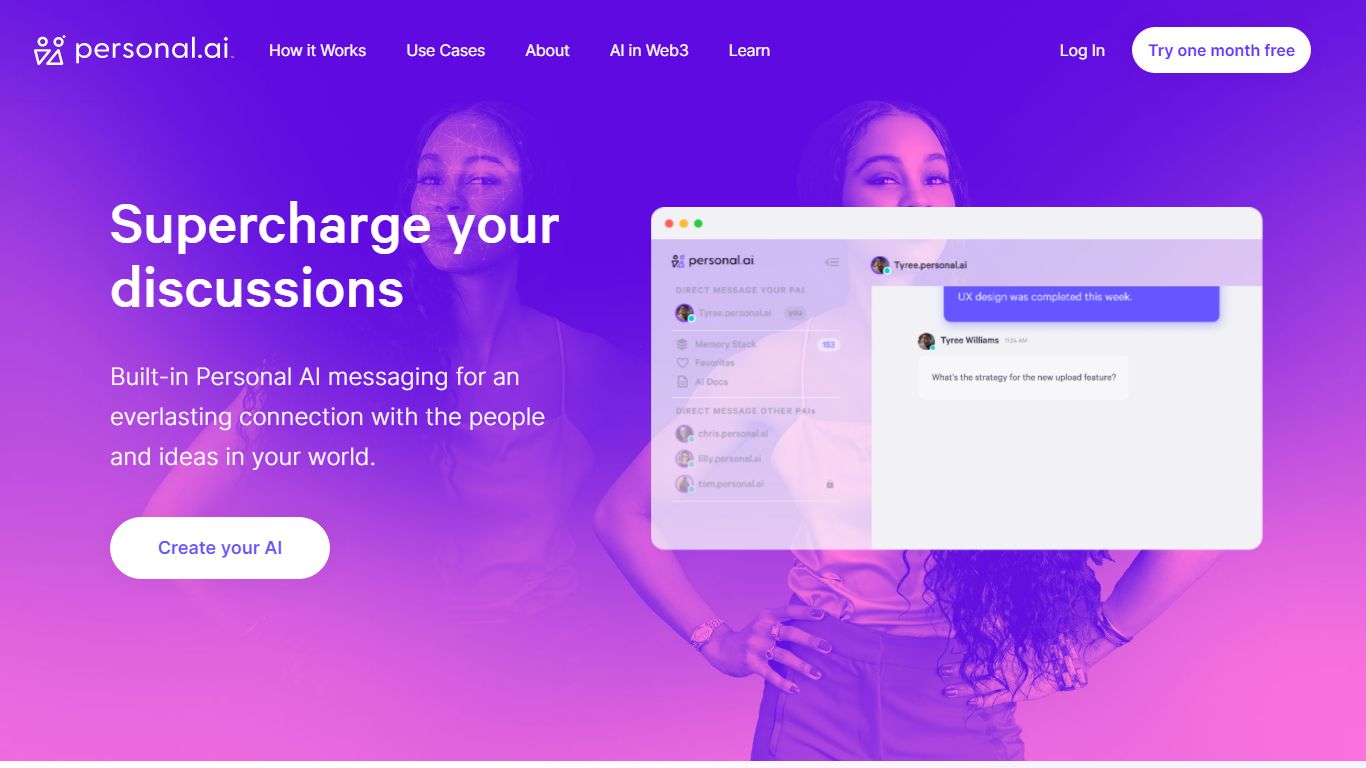
Personal AI builds memory infrastructure that gives AI a persistent identity instead of resetting every session. Its Memory Core encodes, stabilizes, stores, retrieves, and updates experiences so an assistant remembers what it has lived, not just documents you upload. The stack spans My AI for end users, Persona Studio for builders, and carrier-grade Memory Core deployments on operator networks.
Most AI assistants treat context as static files you attach before each chat. Personal AI separates memory (accumulated experiences with temporal structure) from context (static uploads) and lets identity emerge over time. Carrier benchmarks on Comcast's network cite 15ms time to first token, $0.02 per million tokens, and sub-500ms end-to-end voice versus cloud LLM baselines.
Telecom carriers, enterprise AI teams, and individual users who want a long-running assistant use Personal AI. Carriers deploy MODEL-4 on their own networks under custom agreements. Builders use Persona Studio to configure personas without code. Consumers get My AI, an assistant that remembers conversations and learns preferences over time.
Nora Upvotes
Personal AI Upvotes
Nora Top Features
Switch between voice and text mid-session without restarting the conversation
Stay anonymous with no requirement to share your name, face, or personal identifying data
Receive encrypted session summaries after each conversation to reflect on patterns and progress
Use Nora in 55+ languages so you can express yourself in the language that feels most natural
93% of users report feeling more optimistic about their future after 5 average sessions with Nora
Personal AI Top Features
Memory Core with five primitives: encoding, stabilizing, storing, retrieving, and updating
15ms time to first token in carrier benchmarks versus 1,000ms cloud LLM baseline
$0.02 per million tokens cited versus $0.80 on Gemma-27B in published benchmarks
Persona Studio lets builders define personality, knowledge, and memory without code
AI Training Studio with batch uploads, Gmail, Google Drive, Outlook, and OneDrive sync
Sub-500ms end-to-end voice pipeline versus 1,500ms OpenAI Realtime benchmark
Nora Category
- Companion
Personal AI Category
- Companion
Nora Pricing Type
- Paid
Personal AI Pricing Type
- Paid