Open Interpreter vs Gorilla Terminal
When comparing Open Interpreter vs Gorilla Terminal, which AI Code Assistant tool shines brighter? We look at pricing, alternatives, upvotes, features, reviews, and more.
In a comparison between Open Interpreter and Gorilla Terminal, which one comes out on top?
When we put Open Interpreter and Gorilla Terminal side by side, both being AI-powered code assistant tools, The upvote count is neck and neck for both Open Interpreter and Gorilla Terminal. The power is in your hands! Cast your vote and have a say in deciding the winner.
You don't agree with the result? Cast your vote to help us decide!
Open Interpreter
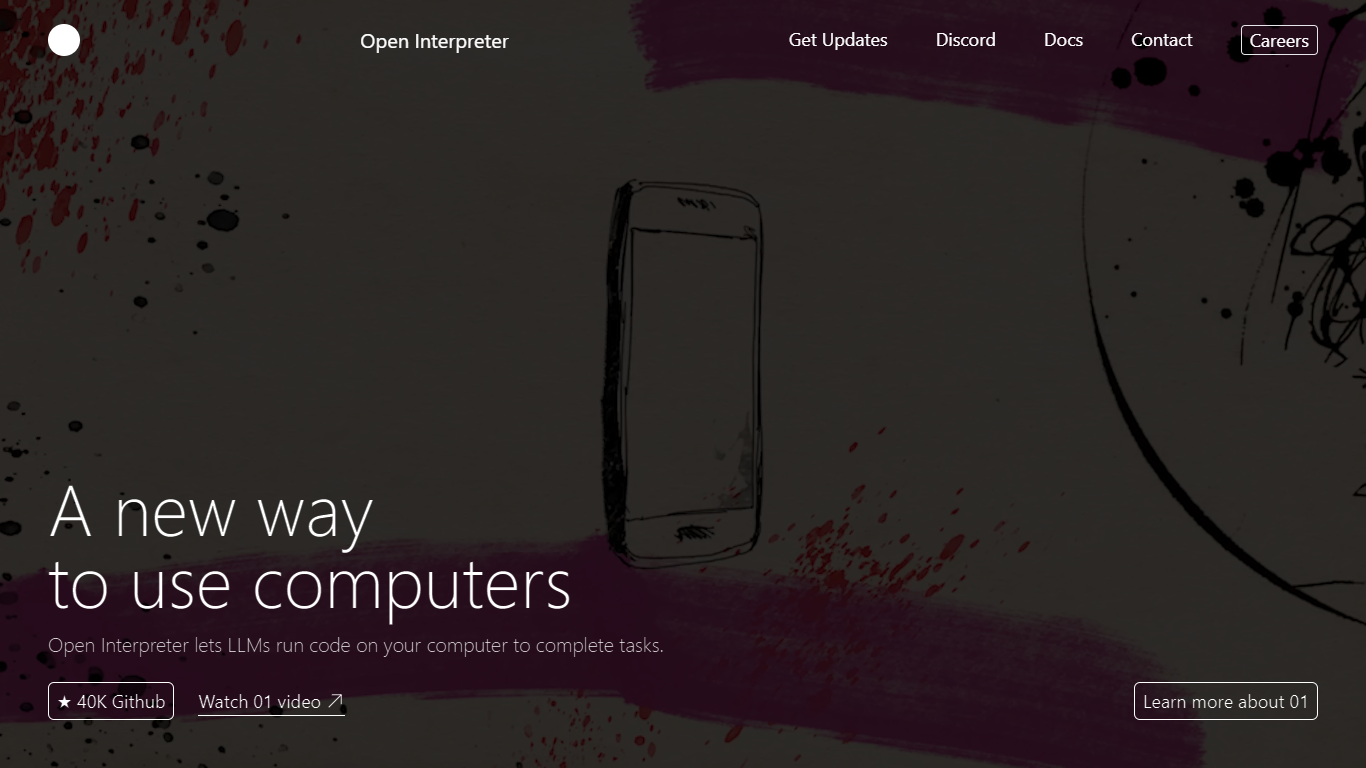

What is Open Interpreter ?
Open Interpreter is an open-source coding agent that runs in your terminal or as a desktop app. Open a project, type interpreter, and it reads your files, edits code, and runs commands with sandbox guardrails. It is built on a fork of OpenAI's Codex CLI and stays provider agnostic, so you can plug in OpenAI, Anthropic, Kimi, Qwen, DeepSeek, or local models.
The project targets low-cost and open-weight models rather than frontier-only agents. Model-specific harnesses emulate the tool interfaces each provider trained on, which the team reports improves benchmark scores on models like Kimi K2.5 and DeepSeek V4 Flash compared to generic agent loops.
Developers get a familiar Codex-style terminal with AGENTS.md support, skills, MCP servers, and session management. The separate desktop app brings the same agent workflow to Word, Excel, PDFs, and the browser for knowledge workers who do not live in a code editor.
Gorilla Terminal
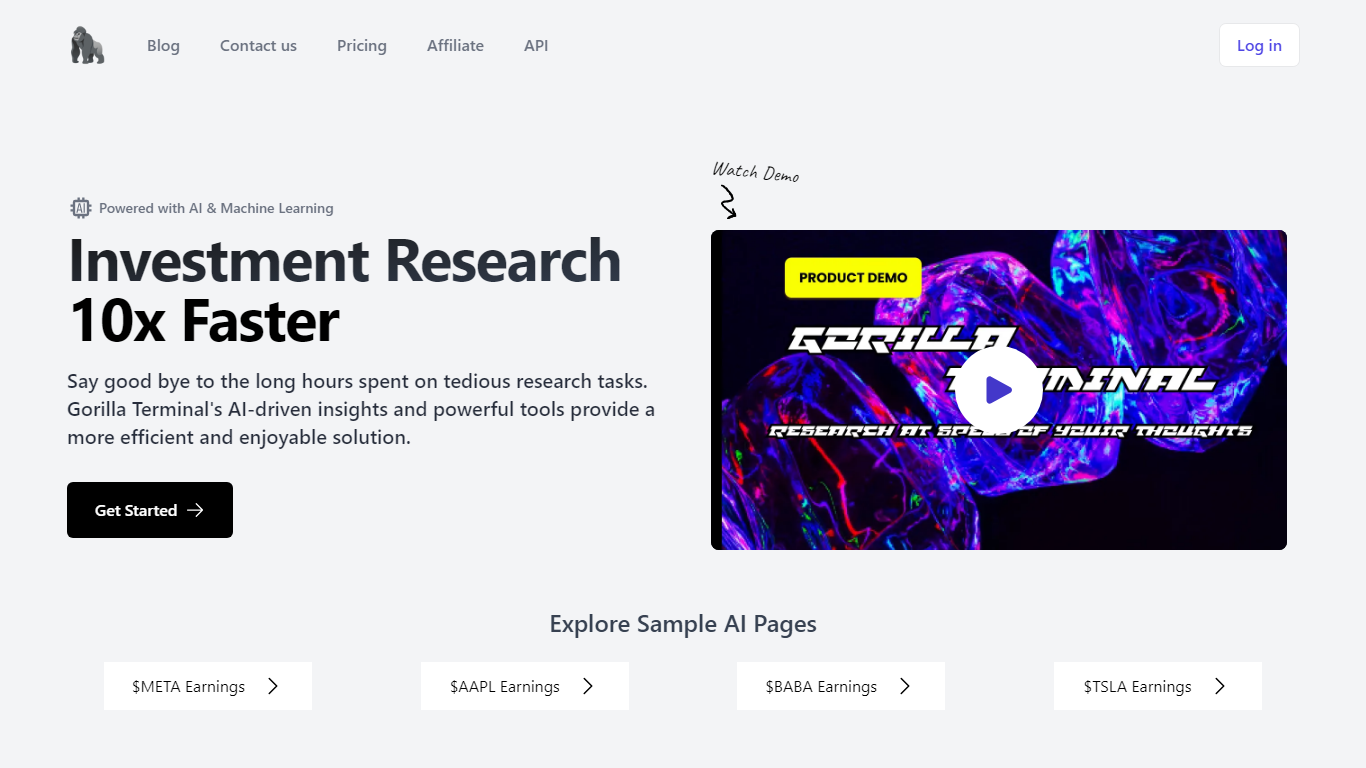
What is Gorilla Terminal?
Gorilla Terminal pulls stock data, SEC filings, macro indicators, and earnings call transcripts into one terminal-style dashboard in your browser. Search by ticker and you get charts, quarterly reports, insider trades, Twitter sentiment, and live futures without hopping between Bloomberg tabs and scattered finance sites.
Most research terminals either dump raw data tables or lean on generic summaries. Gorilla Terminal focuses on earnings calls: it runs sentiment analysis on what executives actually said, flags positive and negative statements, and lets you filter by quarter. That transcript-first angle is the trade-off. You get deeper call breakdowns than a charting site, but the product is built for equity research rather than crypto or forex.
Portfolio managers, solo investors, and finance students use this investment research tool to prep for earnings season, scan sector averages, and stress-test holdings with value-at-risk and regression tools. The macro panel covers CPI, unemployment, retail sales, and consumer sentiment in one click.
Open Interpreter Upvotes
Gorilla Terminal Upvotes
Open Interpreter Top Features
Model-specific harnesses tuned for Kimi, Qwen, DeepSeek, and other open models
OS-level sandbox on macOS, Linux, and Windows with approval gates before network access
Swap providers and models from the terminal with
/modelwithout reinstalling anythingKeeps Codex skills, MCP servers, AGENTS.md, and slash commands from the upstream fork
Desktop app fills PDF forms, edits Word docs, and builds Excel sheets with built-in editors
Gorilla Terminal Top Features
Earnings call transcripts with AI sentiment scoring and positive/negative statement filters per quarter
Macro dashboard covering CPI, unemployment, retail sales, and consumer sentiment in one view
Stock search returns charts, 10-Ks, 10-Qs, insider buying, and Twitter sentiment on one page
Value-at-risk and regression analysis for portfolio risk modeling
Industry average metrics across revenue growth, margins, and tax rates by sector
Pro plan at $29 per month, down from a listed $49 per month on the pricing page
7-day pass at $9.99 for short-term access without a monthly commitment
Open Interpreter Category
- Code Assistant
Gorilla Terminal Category
- Code Assistant
Open Interpreter Pricing Type
- Freemium
Gorilla Terminal Pricing Type
- Paid