Outset vs DrugCard
Dive into the comparison of Outset vs DrugCard and discover which AI Research tool stands out. We examine alternatives, upvotes, features, reviews, pricing, and beyond.
In a comparison between Outset and DrugCard, which one comes out on top?
When we compare Outset and DrugCard, two exceptional research tools powered by artificial intelligence, and place them side by side, several key similarities and differences come to light. Interestingly, both tools have managed to secure the same number of upvotes. Be a part of the decision-making process. Your vote could determine the winner.
Not your cup of tea? Upvote your preferred tool and stir things up!
Outset
What is Outset?
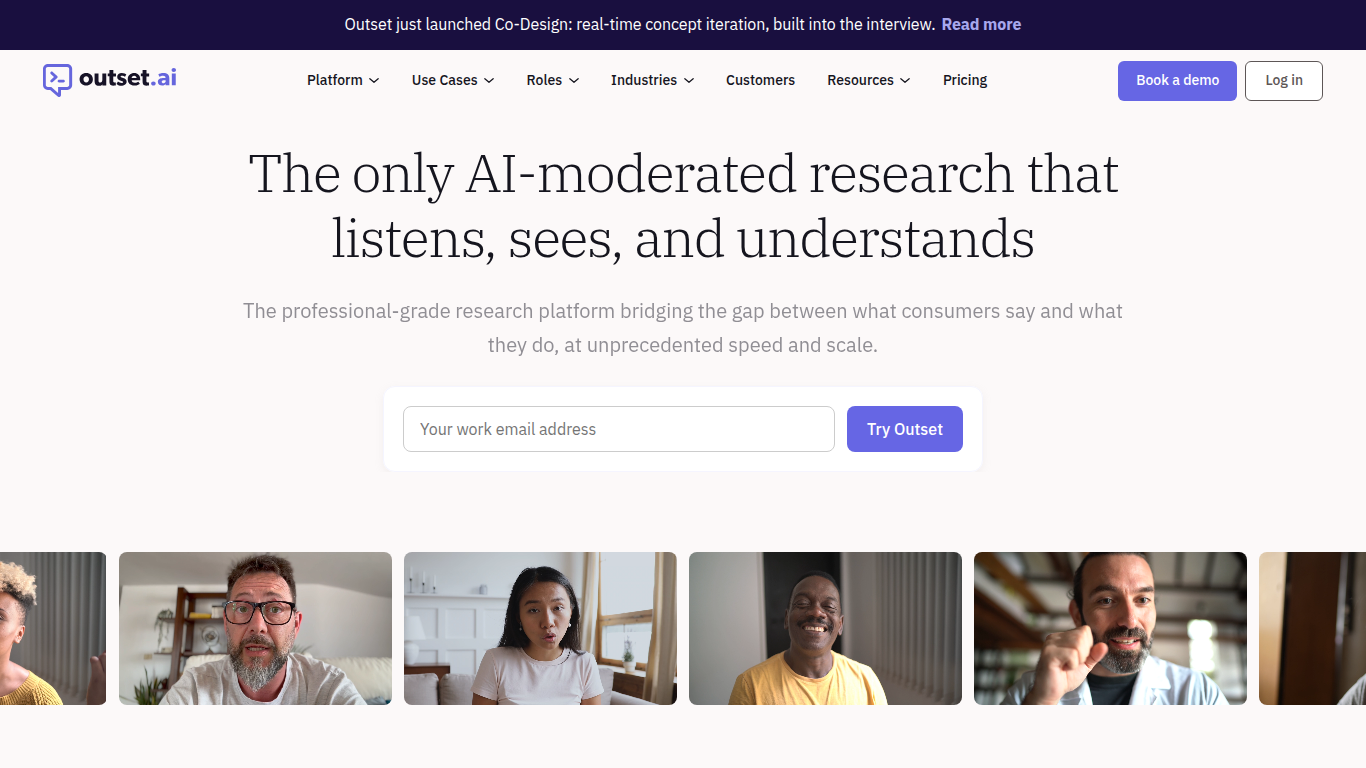
Outset runs qualitative interviews at survey scale with an AI moderator that listens, watches, and probes in real time. You build a guide, recruit participants or import your own list, and the platform fields hundreds of parallel video, voice, or text sessions. It then synthesizes themes, quotes, highlight reels, and exportable reports without manual tagging.
Survey tools capture what people remember. Traditional qual interviews go deep but cap out at a dozen sessions. Outset targets the gap: dynamic probing tied to audio and visual cues, plus instant synthesis so teams close the say-do gap faster. It also ships Co-Design for real-time concept iteration inside live interviews, which most async survey or transcript-only tools do not bundle in one workflow.
Market researchers, UX researchers, and consumer insights teams at companies like Microsoft, HubSpot, Glassdoor, and Nestle use Outset for concept testing, persona work, brand studies, and usability tests. The platform reports 500,000+ interview hours, 10,000+ studies, and access to 1.1 billion possible participants across 85+ countries with support for 40+ interview languages.
DrugCard
What is DrugCard?
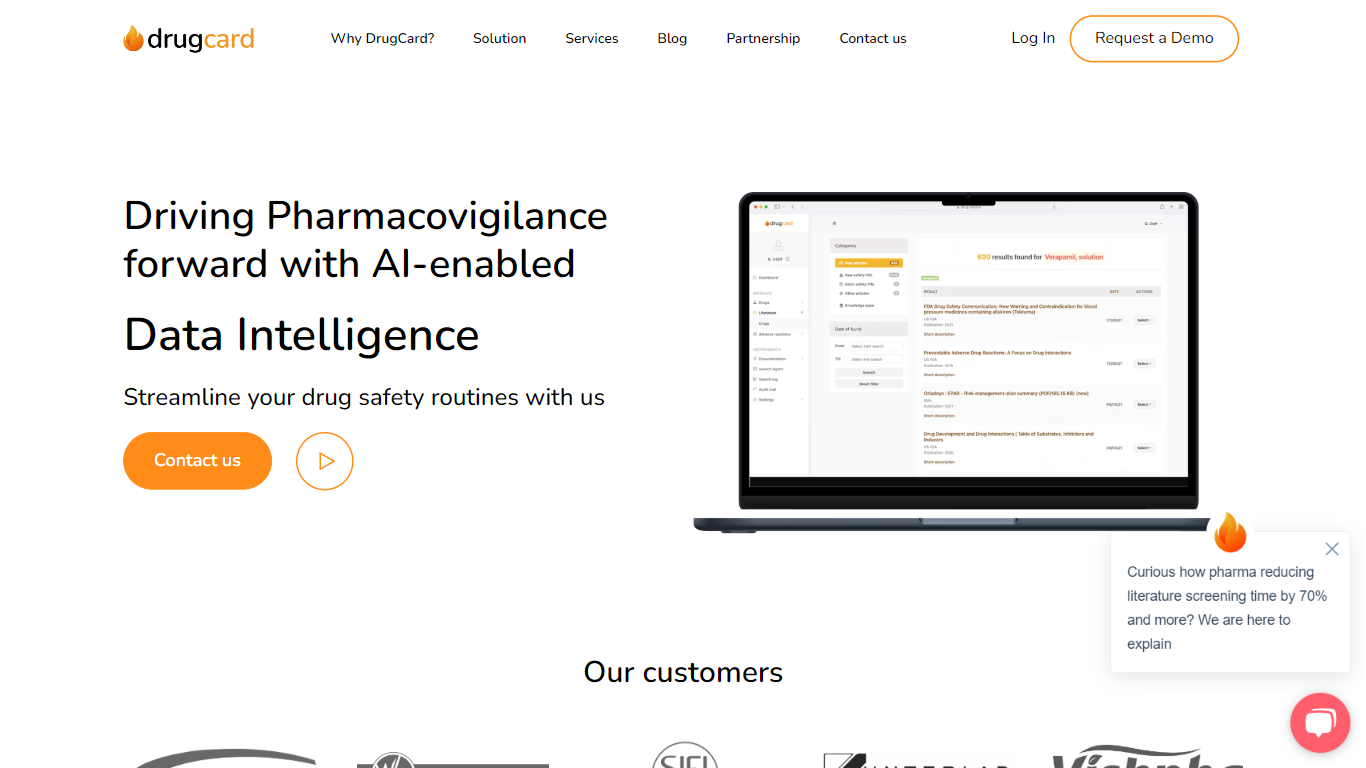
Teams use DrugCard to automate local and global medical literature screening without reading every journal cover to cover. The service monitors 2200+ local journals across 146+ countries, handles 100+ languages, and bundles modules like Simple Search, Regulatory Intelligence, an adverse event database, and eCTDlight. Marketing Authorization Holders, CROs, and PV freelancers are the audiences highlighted on the homepage.
Where generic literature databases stop at keyword alerts, DrugCard focuses on local-language journals and scanned print copies. The vendor claims proprietary OCR reaches up to 99% accuracy on average-quality scans and that customers see 50-70% time savings versus manual screening, with the homepage citing 60% savings and up to 3 minutes per article instead of 35.
Teams buy through demo requests rather than self-serve checkout. DrugCard also sells LQPPV, signal management, PSUR, ICSR, PSMF, and risk management services for orgs that want outsourced pharmacovigilance help alongside the software.
Outset Upvotes
DrugCard Upvotes
Outset Top Features
AI moderator runs video, voice, and text interviews with dynamic probing on audio and visual cues
Instant synthesis delivers themes, quotes, highlight reels, and CSV, PPT, PDF, or video exports
Recruitment covers 1.1 billion possible participants across 85+ countries on the homepage
Supports 40+ interview languages plus BYO participant lists and custom screeners
SOC 2 Type II, GDPR, and HIPAA compliance badges listed on the security page
Automatic fraud tagging advertised at 99%+ accuracy on incomplete or suspicious responses
Co-Design adds real-time concept iteration inside live AI-moderated interviews
DrugCard Top Features
Monitors 2200+ local medical journals across 146+ countries with support for 100+ languages
Proprietary OCR handles poorly scanned hard-copy journals with up to 99% keyword recognition accuracy
DrugCard Platform automates local literature screening with email alerts plus weekly summary reports
Simple Search, Regulatory Intelligence, Adverse Event Database, and eCTDlight modules extend beyond core screening
Customer feedback cites 50-70% time savings, and the homepage lists 60% savings versus human-only screening
New country journal packs typically onboard in 2-3 weeks according to the site FAQ
Outset Category
- Research
DrugCard Category
- Research
Outset Pricing Type
- Paid
DrugCard Pricing Type
- Paid