PimEyes vs Talk to Books
Compare PimEyes vs Talk to Books and see which AI Search Engine tool is better when we compare features, reviews, pricing, alternatives, upvotes, etc.
Which one is better? PimEyes or Talk to Books?
When we compare PimEyes with Talk to Books, which are both AI-powered search engine tools, The upvote count favors Talk to Books, making it the clear winner. Talk to Books has 23 upvotes, and PimEyes has 7 upvotes.
Want to flip the script? Upvote your favorite tool and change the game!
PimEyes
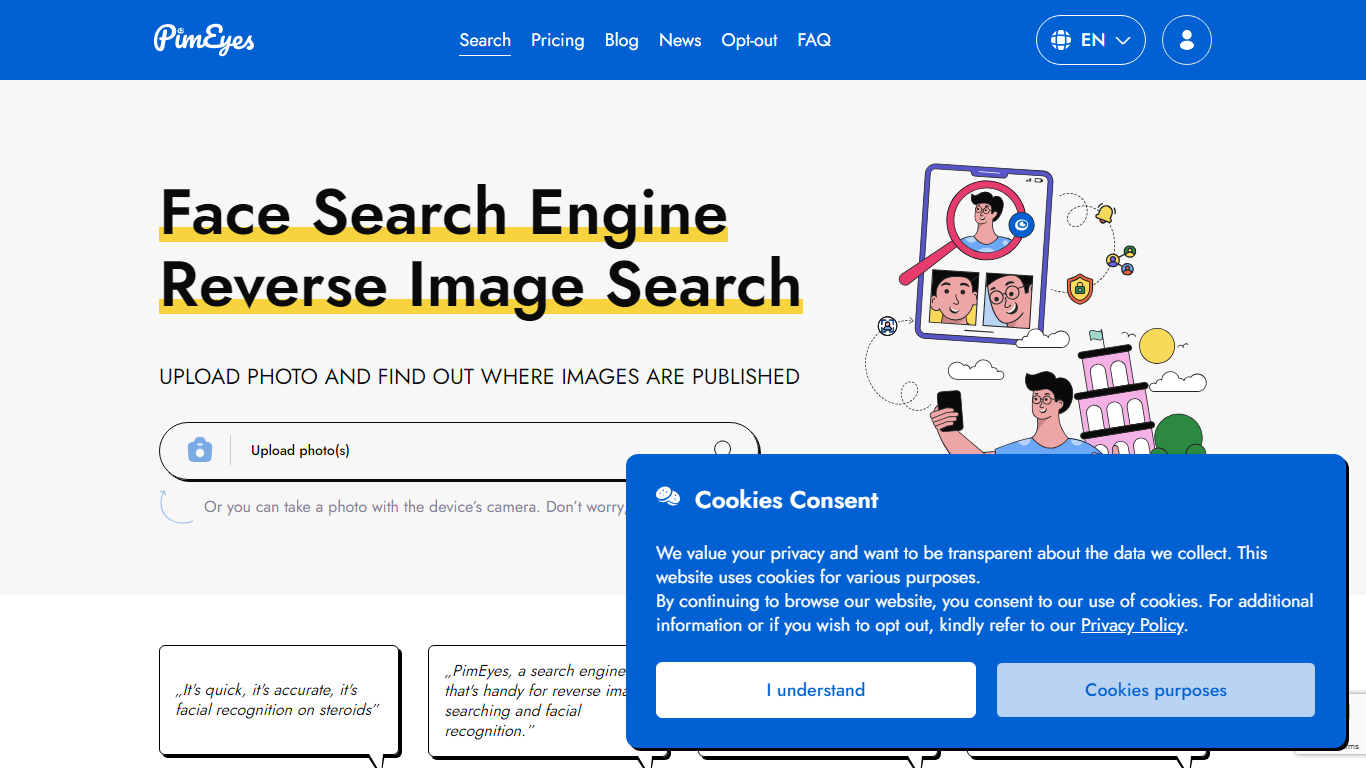

What is PimEyes?
Upload a photo and PimEyes scans the open web for matching faces in seconds. The reverse image search engine compares your picture against billions of indexed images, then returns source links so you can see where your face appears online. You can upload up to 5 photos at 8 MB each, use the camera capture option, and start with a free search from the homepage.
Generic reverse image search matches pixels and logos. PimEyes focuses on facial recognition across the open web, with monitoring alerts, optional takedown guidance, and an opt-out flow if you do not want your face indexed. Paid tiers add blur-free results, higher daily search limits, and AI-generated reports, which matters when you are tracking unauthorized reuse rather than hunting for a similar stock photo.
Creators audit copyright on photos and designs. Everyday users check their digital footprint. Public figures and PR teams set alerts for new appearances. Legal and security teams run higher-volume investigations through Advanced and OSINT offerings.
PimEyes advertises 99.5% search accuracy, GDPR compliance, SSL encryption, and more than 500,000 users on the pricing page.
Talk to Books
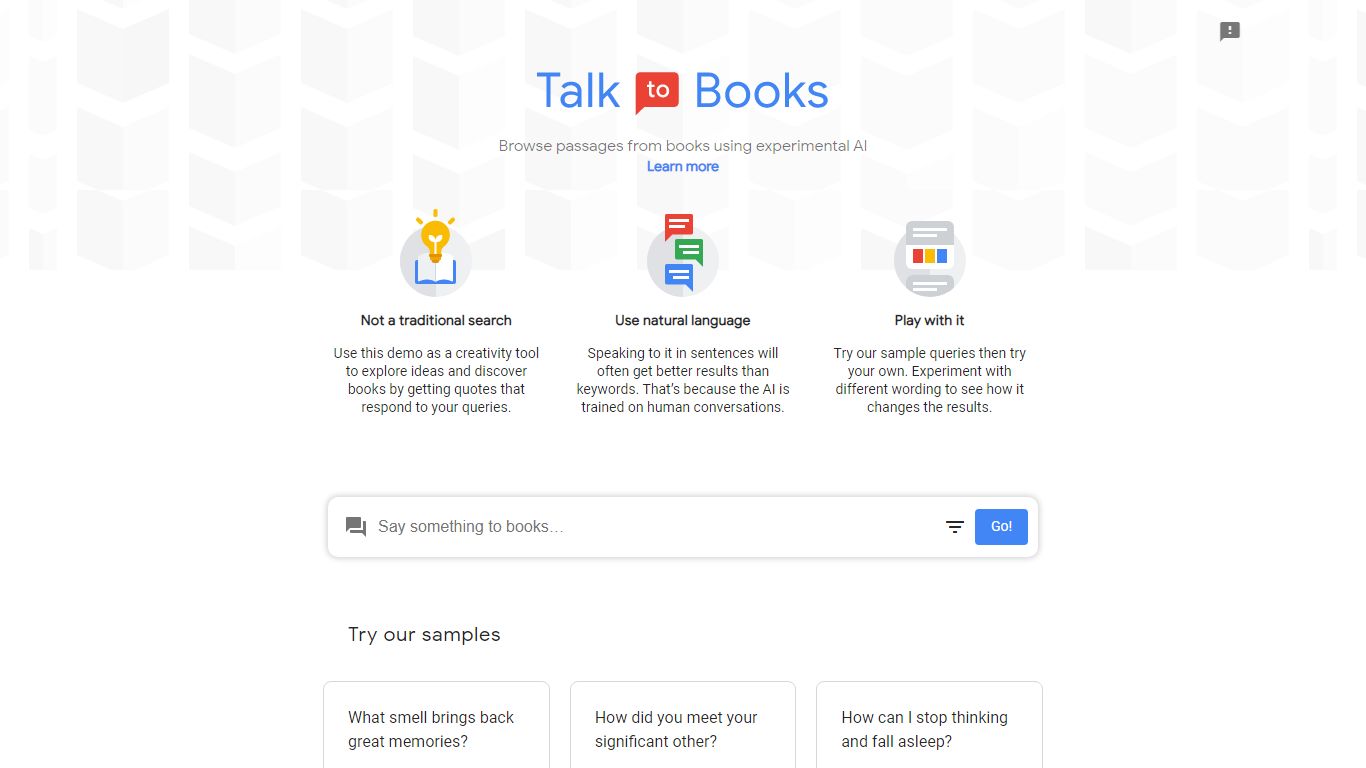
What is Talk to Books?
Talk to Books was a Google Research experiment that let you ask natural-language questions and get answers pulled from passages across a large collection of books. You typed a question or statement, and the system returned relevant book excerpts instead of standard web search results. Google has shut the service down, but the site still hosts an archive of sample queries.
The project launched in 2018 as part of Google's Semantic Experiences initiative. It used neural language models for semantic matching and retrieval, showing how conversational queries could surface ideas buried in published books rather than blog posts or forums.
Researchers, students, and curious readers used Talk to Books to explore topics through book-length context. The experiment informed later semantic search features inside Google products such as Shopping, Maps, Gmail, and Hangouts.
PimEyes Upvotes
Talk to Books Upvotes
PimEyes Top Features
Searches more than 10 billion images with a marketed 99.5% accuracy rate
Returns face matches in under 5 seconds with up to 5 photos per upload at 8 MB each
Open Plus unlocks up to 75 daily searches and 10 PimEyes Alerts
PROtect tier raises limits to 125 daily searches and 20 alerts with AI reports
Advanced plan offers unlimited daily searches and 500 active PimEyes Alerts
Opt-out page lets you exclude your face from PimEyes search results
Optional takedown agent support on PROtect for removal guidance on external sites
Talk to Books Top Features
Ask questions in plain English and get book passages back, not web links
Searches across a large corpus of published books using semantic matching
Archived sample queries still viewable on the shutdown notice page
Part of Google's 2018 Semantic Experiences research alongside Semantris
Demonstrated neural retrieval models that later shaped other Google products
PimEyes Category
- Search Engine
Talk to Books Category
- Search Engine
PimEyes Pricing Type
- Freemium
Talk to Books Pricing Type
- Free