Pixelcode vs CodeThreat
In the face-off between Pixelcode vs CodeThreat, which AI Code Assistant tool takes the crown? We scrutinize features, alternatives, upvotes, reviews, pricing, and more.
In a face-off between Pixelcode and CodeThreat, which one takes the crown?
If we were to analyze Pixelcode and CodeThreat, both of which are AI-powered code assistant tools, what would we find? Both tools have received the same number of upvotes from aitools.fyi users. You can help us determine the winner by casting your vote and tipping the scales in favor of one of the tools.
Feeling rebellious? Cast your vote and shake things up!
Pixelcode

What is Pixelcode?
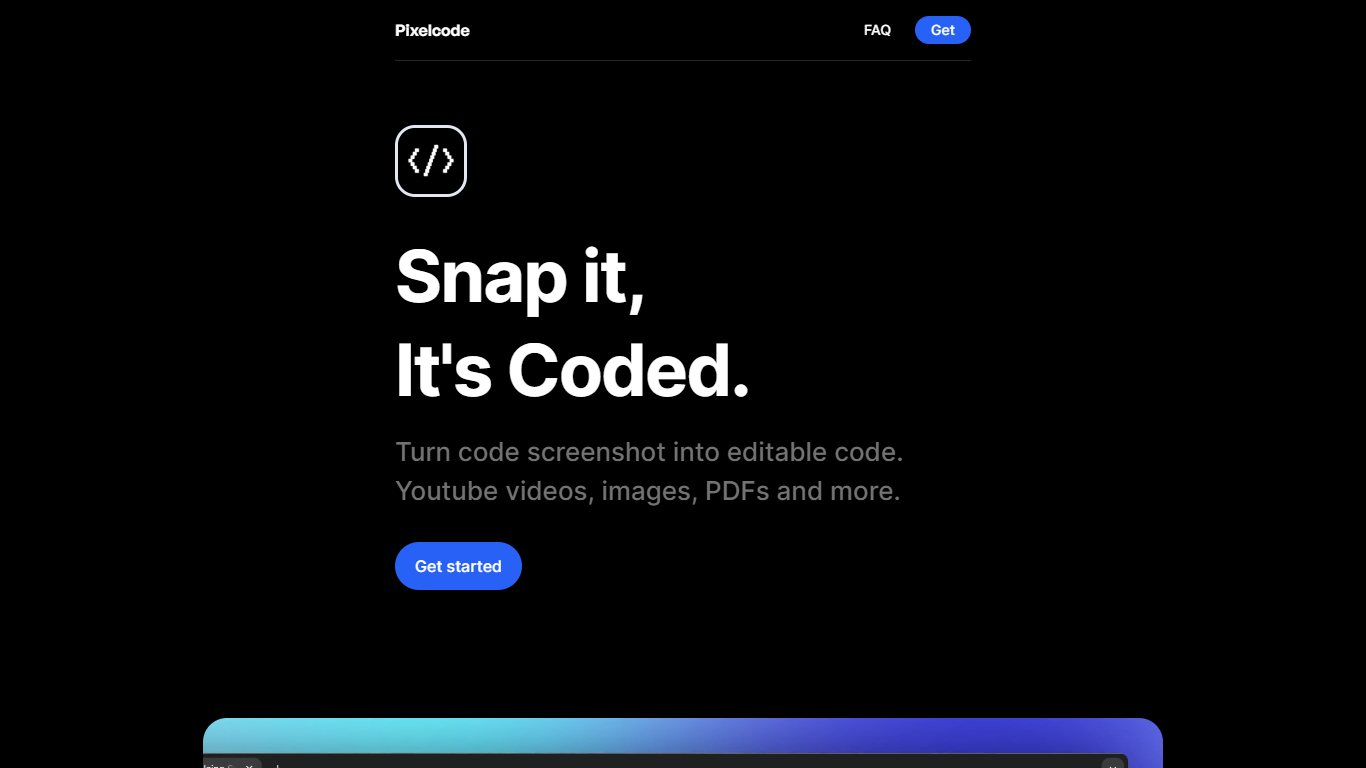
Pixelcode turns code screenshots, YouTube frames, images, and PDFs into editable source text through a Chrome extension. Click the extension, crop the snippet you need, and the extracted code lands on your clipboard formatted for your IDE instead of forcing a manual retype.
Generic OCR tools flatten indentation and miss language syntax. Pixelcode targets developer workflows with automatic language detection across 30 plus languages, precision cropping from a few lines to long blocks, and optional unlimited extraction when you connect your own ChatGPT API key on the $35 lifetime tier instead of buying screenshot credits.
Developers learning from video tutorials, reviewing legacy PDF docs, or capturing snippets from blog images use Pixelcode when they want paste-ready code without rebuilding formatting by hand.
CodeThreat

What is CodeThreat?
CodeThreat scans repositories for vulnerabilities in source code, open-source dependencies, infrastructure templates, and leaked secrets. Rule-based SAST covers 1,740+ security rules across 27+ languages, while AI agents filter false positives, review pull requests, and map repository structure. SCA runs through Trivy and Syft across 15+ package ecosystems, and IaC scanning covers Terraform, Kubernetes, and Docker with checks mapped to CIS, NIST, ISO 27001, and SOC 2.
Most SAST vendors hand developers a long alert list and leave triage to the team. CodeThreat's false positive elimination agent re-checks rule-based findings with semantic reasoning and suppresses non-exploitable alerts before they hit the dashboard. Each eliminated finding gets a short explanation of why it was dropped, which is rare in scanners that treat AI as a marketing label rather than a filter step in the workflow.
DevSecOps teams connect GitHub, GitLab, Bitbucket, or Azure DevOps repos so scans trigger on every pull request and push. Security engineers get SAST, SCA, secrets, and IaC coverage in one platform instead of stitching four separate tools. Small teams can start on the free tier with three private repos; scaling teams move to per-contributor Pro billing at $39 per month.
Pixelcode Upvotes
CodeThreat Upvotes
Pixelcode Top Features
Chrome extension captures and crops code directly in the browser with clipboard output
Recognizes 30+ programming languages including JavaScript, Python, Java, Swift, and Ruby
Pay-per-use lifetime plan costs $15 with 20 free screenshots and $8 per 100 additional captures
Unlimited lifetime tier at $35 routes extraction through your own ChatGPT API key
Processes code from YouTube video frames, static images, and PDF documents
API keys stay on your device and are not stored on Pixelcode servers per the FAQ
CodeThreat Top Features
1,740+ SAST rules across 27+ languages including Python, Java, Go, and C#
Free plan includes 5 AI PR reviews and 10 false positive elimination runs per month
SCA matches versions against NVD, GHSA, and OSV databases via Trivy and Syft
IaC scanning covers AWS, Azure, GCP, and Kubernetes with 500+ security checks
Pro plan costs $39 per contributor per month with unlimited private repositories
Integrates with GitHub, GitLab, Bitbucket, and Azure DevOps for CI/CD pipelines
Pixelcode Category
- Code Assistant
CodeThreat Category
- Code Assistant
Pixelcode Pricing Type
- Paid
CodeThreat Pricing Type
- Freemium