Pixelcode vs Refact
In the contest of Pixelcode vs Refact, which AI Code Assistant tool is the champion? We evaluate pricing, alternatives, upvotes, features, reviews, and more.
If you had to choose between Pixelcode and Refact, which one would you go for?
When we examine Pixelcode and Refact, both of which are AI-enabled code assistant tools, what unique characteristics do we discover? The upvote count is neck and neck for both Pixelcode and Refact. You can help us determine the winner by casting your vote and tipping the scales in favor of one of the tools.
Disagree with the result? Upvote your favorite tool and help it win!
Pixelcode
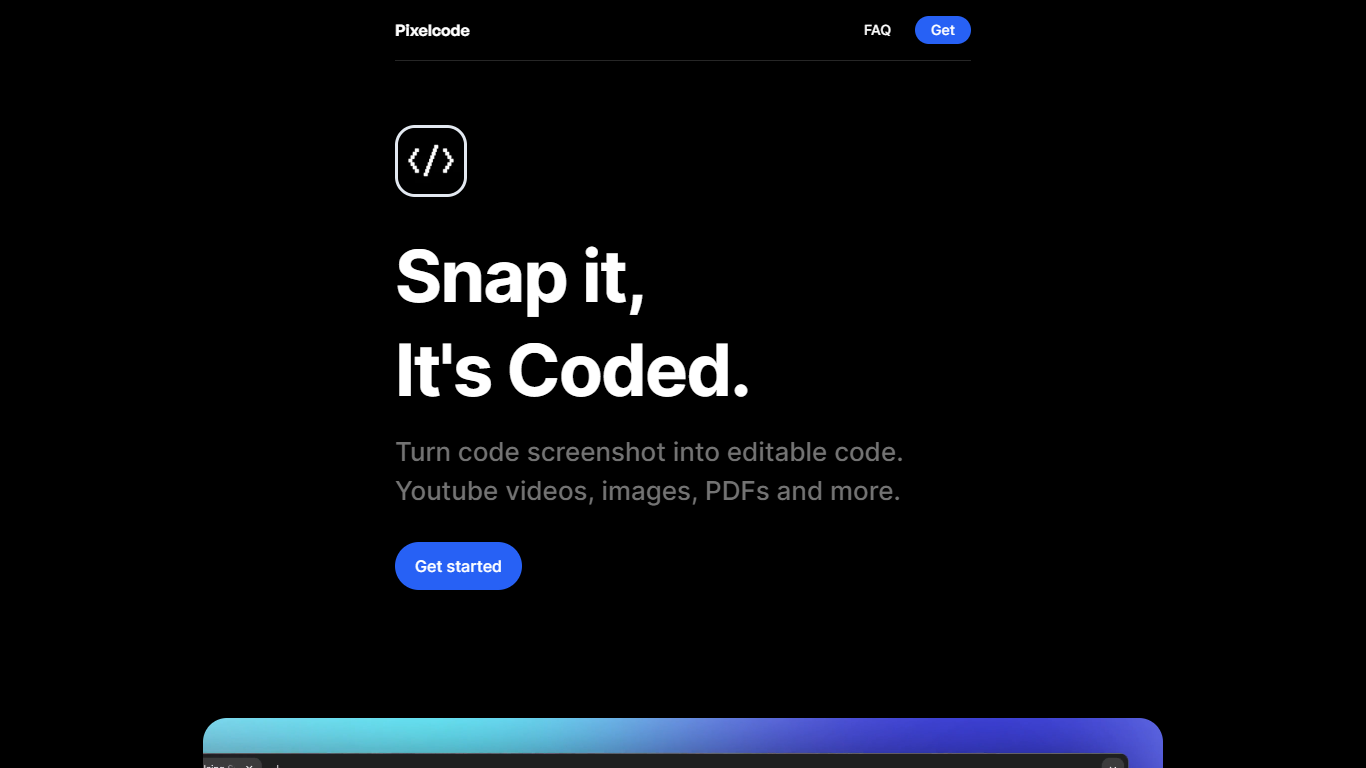

What is Pixelcode?
Pixelcode turns code screenshots, YouTube frames, images, and PDFs into editable source text through a Chrome extension. Click the extension, crop the snippet you need, and the extracted code lands on your clipboard formatted for your IDE instead of forcing a manual retype.
Generic OCR tools flatten indentation and miss language syntax. Pixelcode targets developer workflows with automatic language detection across 30 plus languages, precision cropping from a few lines to long blocks, and optional unlimited extraction when you connect your own ChatGPT API key on the $35 lifetime tier instead of buying screenshot credits.
Developers learning from video tutorials, reviewing legacy PDF docs, or capturing snippets from blog images use Pixelcode when they want paste-ready code without rebuilding formatting by hand.
Refact
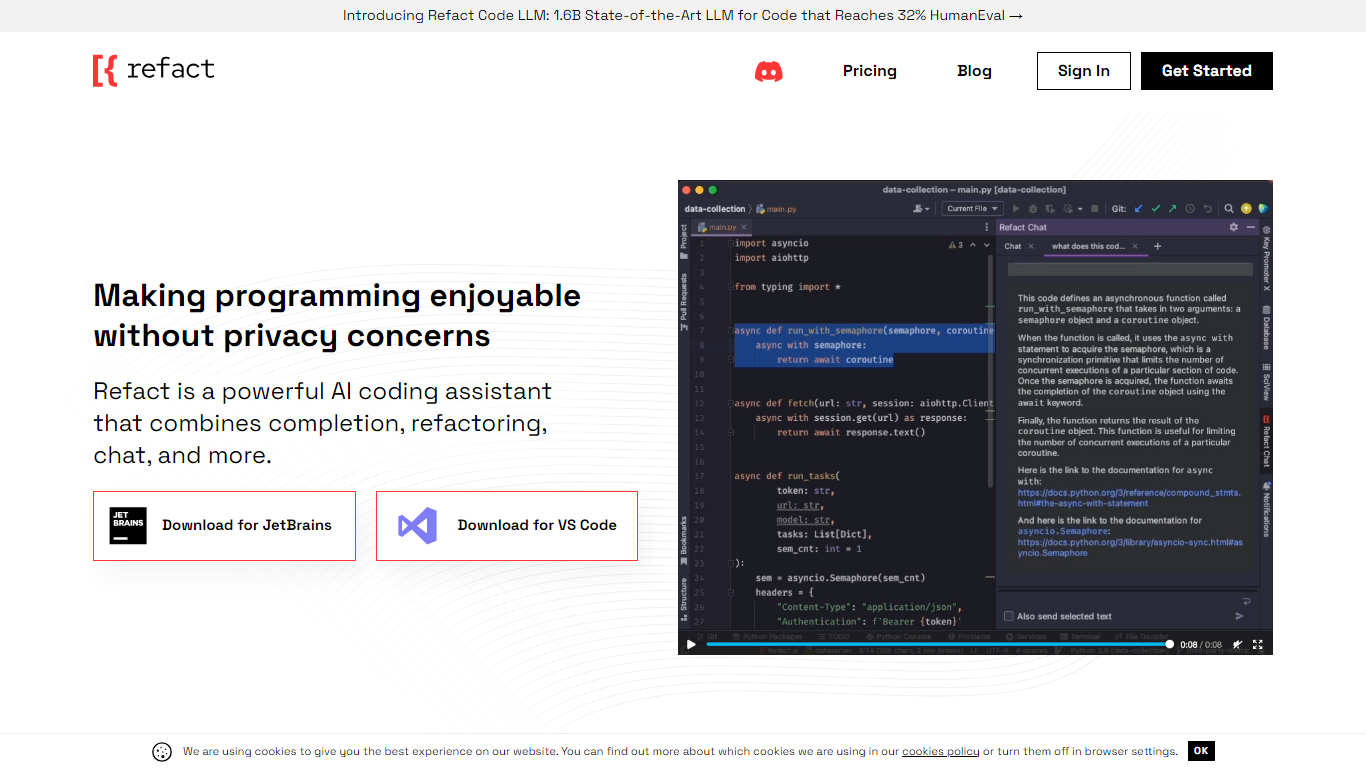
What is Refact?
Refact is an open-source AI coding agent that runs inside your IDE, completes multi-step tasks across your repo, and answers context-aware chat questions about your project. You describe the outcome, and the agent plans steps, searches the codebase, connects to GitHub or databases when needed, and lets you preview changes before applying them. Autocomplete uses Qwen2.5-Coder with retrieval over your symbols for line-by-line suggestions.
Unlike chat-only copilots that stop at snippets, Refact delegates end-to-end work such as debugging plugins, scaffolding GUIs from a repo link, or building Django admin apps while you steer through prompts. It integrates external tools like Docker, PostgreSQL, and CI pipelines, supports bring-your-own LLM keys, and offers on-premise deployment so code never leaves your infrastructure.
The product fits individual developers on the free tier and teams that need enterprise hosting on AWS or self-hosted GPUs with fine-tuning on internal code. Pro adds higher agent quotas and 64k chat context from about $10 per month, while enterprise plans add priority support and private model training. Plugins are available for popular IDEs with unlimited completions on the free plan.
Pixelcode Upvotes
Refact Upvotes
Pixelcode Top Features
Chrome extension captures and crops code directly in the browser with clipboard output
Recognizes 30+ programming languages including JavaScript, Python, Java, Swift, and Ruby
Pay-per-use lifetime plan costs $15 with 20 free screenshots and $8 per 100 additional captures
Unlimited lifetime tier at $35 routes extraction through your own ChatGPT API key
Processes code from YouTube video frames, static images, and PDF documents
API keys stay on your device and are not stored on Pixelcode servers per the FAQ
Refact Top Features
Autonomous agent plans and executes multi-step coding tasks with tool integrations
Unlimited autocomplete powered by Qwen2.5-Coder with project RAG
Pro tier includes 40 agent requests per day and 64k chat context
Connects to GitHub, PostgreSQL, Docker, and CI/CD pipelines during tasks
Supports Claude 4, GPT-4o, GPT-4o mini, Gemini, Grok, and Deepseek via BYOK
On-premise and AWS deployment options keep code off third-party servers
Pixelcode Category
- Code Assistant
Refact Category
- Code Assistant
Pixelcode Pricing Type
- Paid
Refact Pricing Type
- Freemium