Pixelgen vs Windframe
When comparing Pixelgen vs Windframe, which AI Design tool shines brighter? We look at pricing, alternatives, upvotes, features, reviews, and more.
In a comparison between Pixelgen and Windframe, which one comes out on top?
When we put Pixelgen and Windframe side by side, both being AI-powered design tools, The community has spoken, Windframe leads with more upvotes. Windframe has 7 upvotes, and Pixelgen has 6 upvotes.
Disagree with the result? Upvote your favorite tool and help it win!
Pixelgen


What is Pixelgen?
Pixelgen is a forward-thinking platform that enables users to craft and manipulate pixel-based images with ease. With a focus on simplicity and user experience, Pixelgen presents a set of intuitive tools designed for both novices and professionals seeking to create, edit, or enhance their digital graphics.
The software features a user-friendly interface that simplifies the process of generating pixel art, providing an array of functionalities from basic editing to more advanced features for detailed and intricate designs.
Whether you're a game developer needing sprites for your game, a digital artist exploring the pixel art style, or a hobbyist looking to express creativity, Pixelgen offers the perfect blend of accessibility and power to bring your pixel creations to life.
Windframe
What is Windframe?
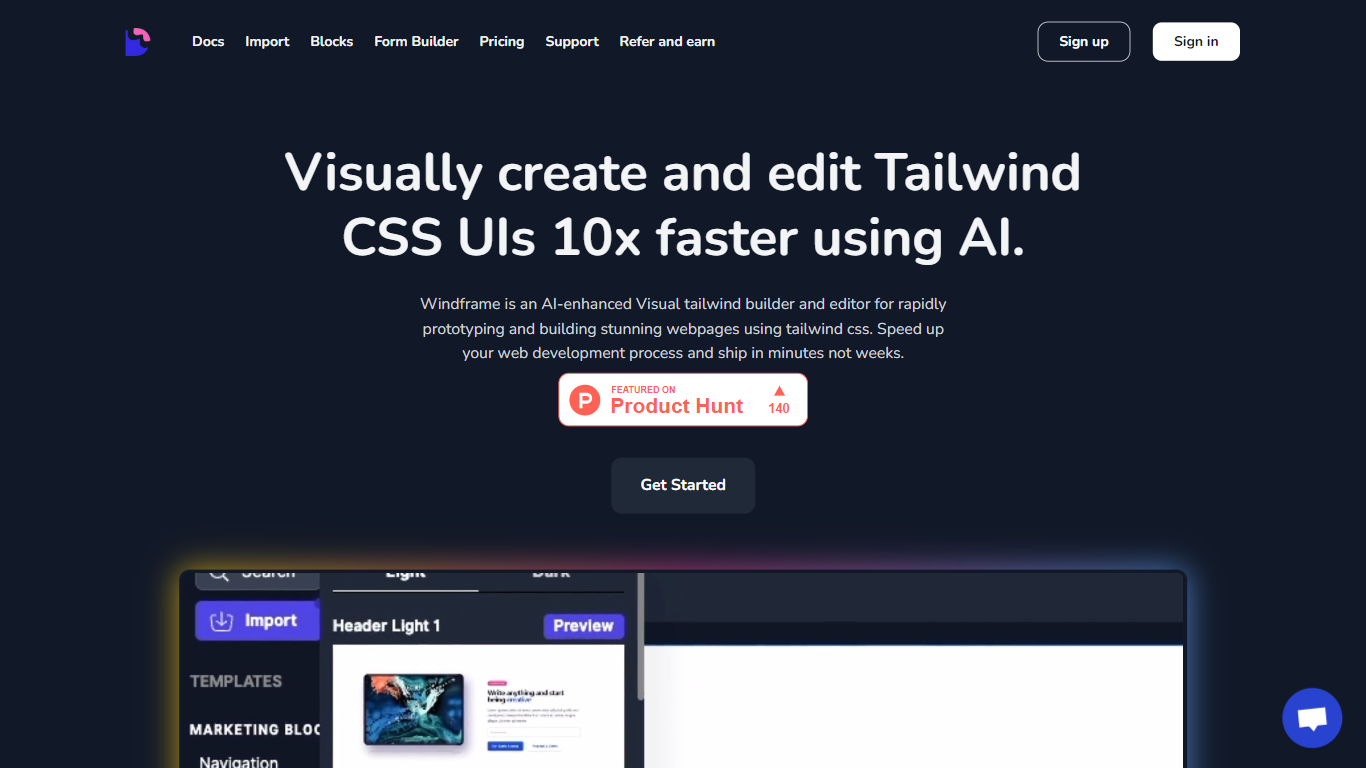
Windframe is a visual Tailwind CSS builder that turns layouts into production code for React, Vue, Svelte, and other frameworks. You start from AI prompts or 1,000+ prebuilt templates, refine everything in a drag-and-drop editor, and export clean utility classes without rewriting styles by hand. Screenshot-to-code and multi-page projects sit in the same workspace, so you can go from mockup to shippable front end in one tool.
Where prompt-only builders stop at generated snippets, Windframe keeps you in a full editor with version history, team sharing, and imports for your own Tailwind components. Its style guides borrow layout patterns from products like Linear and Apple, which gives AI output a more finished look than raw Tailwind guesses. A separate MCP server also feeds those design tokens straight into Cursor, Claude Code, and VS Code for agent-driven UI work.
Frontend developers, indie founders, and agencies use it to prototype landing pages, dashboards, and client sites without a dedicated design team. Backend-heavy teams let less technical members draft pages in the evening and hand off exportable code the next morning. The tool stays narrow on Tailwind CSS on purpose, which is why exported code drops into existing JavaScript stacks more cleanly than general site builders do.
Pixelgen Upvotes
Windframe Upvotes
Pixelgen Top Features
Intuitive Design: A user-friendly interface that caters to both beginners and professionals.
Pixel Art Creation: Allows for the crafting of pixel-based imagery, perfect for game developers and artists.
Advanced Editing Tools: Offers a variety of editing options for creating detailed and intricate designs.
Accessibility: Designed to be accessible to users with different skill levels.
Versatility: Suitable for various creative projects, including game design and digital art.
Windframe Top Features
1,000+ prebuilt Tailwind blocks for headers, heroes, pricing tables, dashboards, and full pages
Exports to React, Next.js, Vue, Nuxt, Angular, Svelte, Astro, SolidJS, Rails, and HTML
Pro Monthly plan includes 50 AI credits per month at $25; Annual plan includes 480 credits for $189
MCP server connects to Cursor, Claude Code, and VS Code with OAuth and 3 free trial calls
Screenshot-to-code converts uploaded mockups into editable Tailwind layouts
Built on Tailwind CSS v4 with curated style guides like Linear, Apple, and Notion
Pixelgen Category
- Design
Windframe Category
- Design
Pixelgen Pricing Type
- Freemium
Windframe Pricing Type
- Freemium