Polymorf vs Genmo
In the battle of Polymorf vs Genmo, which AI Video Generation tool comes out on top? We compare reviews, pricing, alternatives, upvotes, features, and more.
Between Polymorf and Genmo, which one is superior?
Upon comparing Polymorf with Genmo, which are both AI-powered video generation tools, The upvote count favors Genmo, making it the clear winner. Genmo has received 13 upvotes from aitools.fyi users, while Polymorf has received 9 upvotes.
Don't agree with the result? Cast your vote and be a part of the decision-making process!
Polymorf

What is Polymorf?
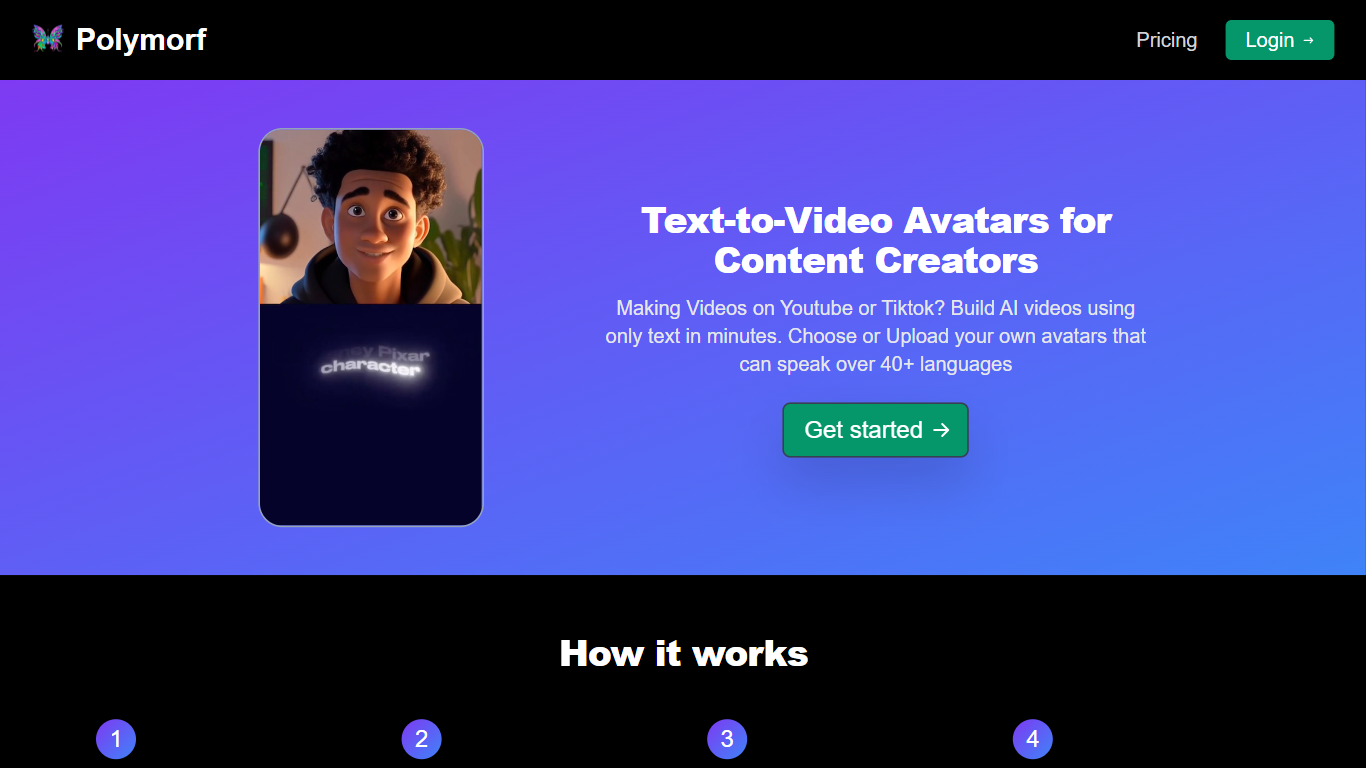
Polymorf creates talking-head avatar videos from a single selfie and a text script, rendering finished clips in about 60 seconds without cameras, microphones, or editing software. Upload one photo to generate a photorealistic digital twin with expressions and micro-movements, pick from 300+ voices across 40 languages or clone your own from a 30-second recording, then export in formats suited for YouTube, TikTok, and training content.
Where tools like D-ID focus on presenter-style clips and HeyGen targets corporate training, Polymorf adds a style transfer engine that morphs avatars into anime, 3D renders, oil paintings, or pixel art while keeping lip-sync intact. That makes it useful for creators who want Midjourney-generated characters to speak, not just realistic headshots. The trade-off is a lower domain authority and a newer platform that launched in 2024.
Content creators, educators, marketers, and enterprise teams use Polymorf for short-form social videos, course narration, product demos, and multilingual content. The multi-scene director includes a drag-and-drop timeline with 500+ background environments, auto captions, and batch processing for high-volume workflows.
Genmo
What is Genmo?
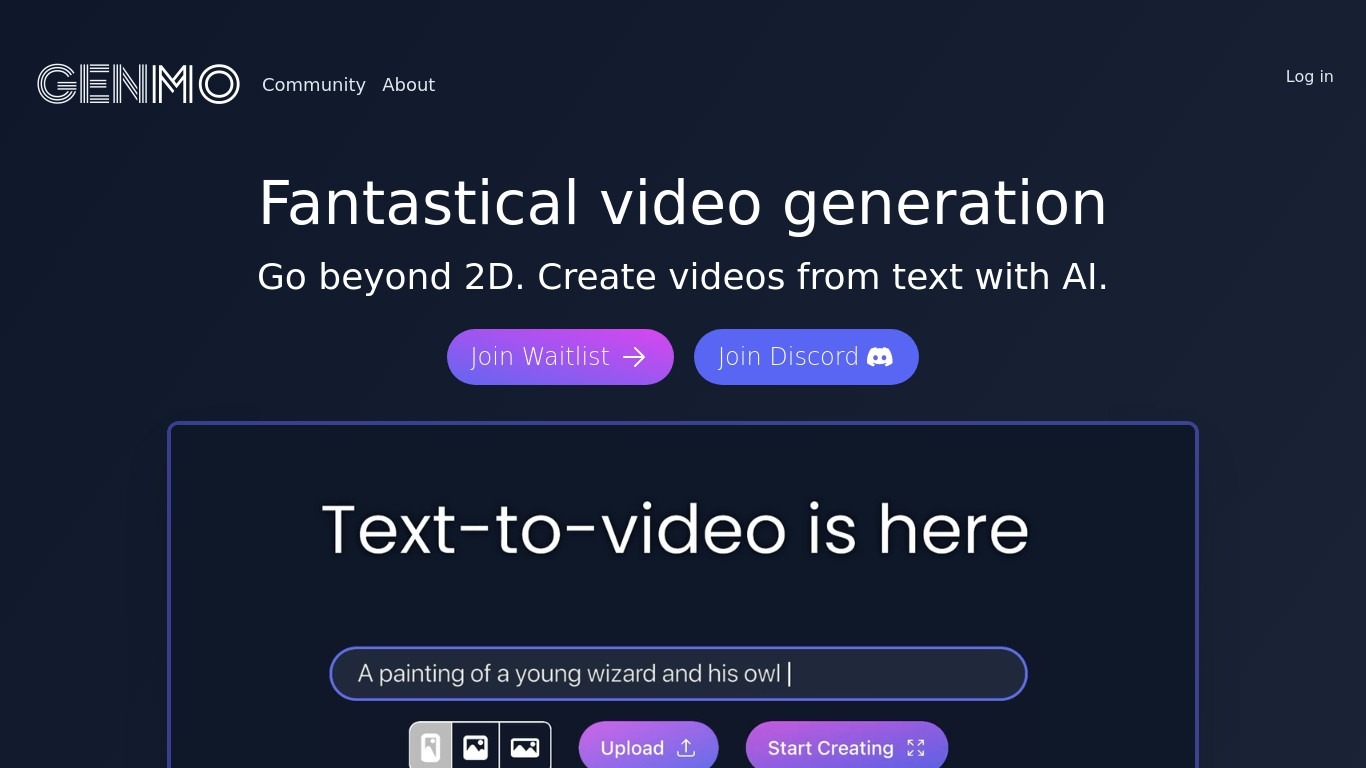
Genmo is a research lab building open video world models, with Mochi as its flagship text-to-video line. You can try generation in the browser playground, download weights for local runs, or plug into partner APIs. The team frames video as a path toward world simulators that understand physics, motion, and scene continuity.
Mochi 1 is their first major public release: a 10-billion-parameter diffusion model under Apache 2.0, trained from scratch on an Asymmetric Diffusion Transformer architecture. The preview outputs 480p clips at 30fps for up to 5.4 seconds, with emphasis on prompt adherence and realistic motion rather than static frame polish.
Researchers and developers get open weights on Hugging Face, source on GitHub, and ComfyUI support for custom pipelines. Creators and marketers use the hosted playground to prototype scenes without running GPUs locally. The lab also publishes technical writeups and benchmarks comparing Mochi against closed commercial video generators.
Polymorf Upvotes
Genmo Upvotes
Polymorf Top Features
Photorealistic avatar from a single selfie in about 10 seconds
300+ voices across 40 languages with 30-second voice cloning on Pro
Script-to-video rendering in under 60 seconds with auto captions
Style transfer for anime, 3D, paintings, and Midjourney-generated images
Multi-scene timeline editor with 500+ background environments
Pro plan at $29 per month with unlimited 4K videos up to 10 minutes
Genmo Top Features
Mochi 1 playground turns text prompts into 480p clips at 30fps
Open weights and code under Apache 2.0 for personal and commercial use
Clips run up to 5.4 seconds with strong prompt adherence in benchmarks
Run locally via GitHub, Hugging Face, or ComfyUI workflows
Mochi video costs 100 credits; Replay video costs 50 credits
10B-parameter AsymmDiT architecture with a causal video VAE compressor
Polymorf Category
- Video Generation
Genmo Category
- Video Generation
Polymorf Pricing Type
- Freemium
Genmo Pricing Type
- Freemium