Raplyrics vs Google's Flan-UL2
When comparing Raplyrics vs Google's Flan-UL2, which AI Text Generation tool shines brighter? We look at pricing, alternatives, upvotes, features, reviews, and more.
In a comparison between Raplyrics and Google's Flan-UL2, which one comes out on top?
When we put Raplyrics and Google's Flan-UL2 side by side, both being AI-powered text generation tools, The upvote count is neck and neck for both Raplyrics and Google's Flan-UL2. You can help us determine the winner by casting your vote and tipping the scales in favor of one of the tools.
Want to flip the script? Upvote your favorite tool and change the game!
Raplyrics
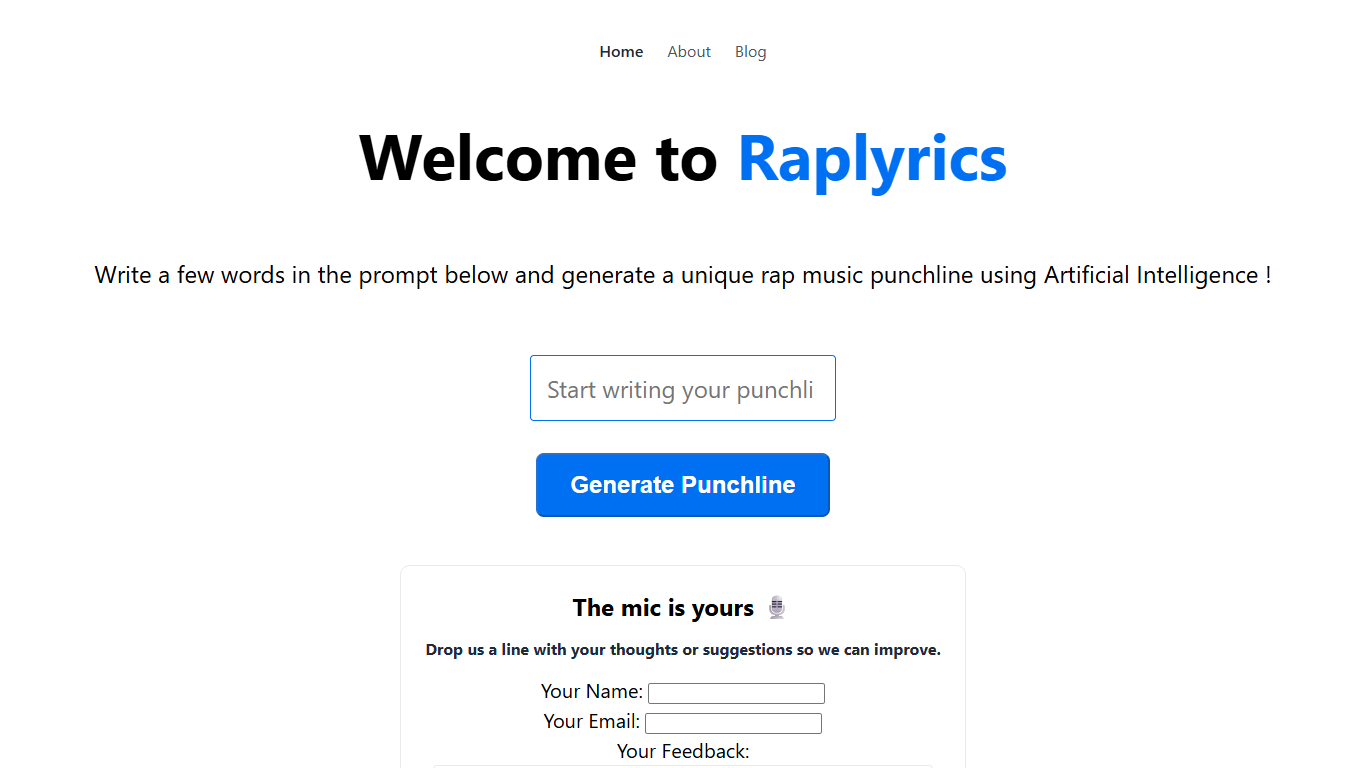

What is Raplyrics?
Raplyrics turns a handful of words into one original rap punchline. You type a short prompt on the homepage, hit generate, and the model returns a single bar trained on millions of rap tracks from various artists. No account, no paywall, and no extra steps.
Most lyric tools aim for full verses, choruses, or beat-backed songs. Raplyrics narrows text generation to one punchline at a time, which keeps brainstorming fast when you only need a hook or a clever bar. The interface is a single input field plus a blog on rap culture, and the frontend code is open on GitHub. That focus trades away structured songwriting workflows and commercial licensing.
Songwriters, aspiring rappers, and hip-hop fans who want a quick creative spark without a blank page. The policy page limits use to non-commercial projects, so treat output as inspiration rather than publish-ready lyrics unless you rewrite it yourself.
Google's Flan-UL2
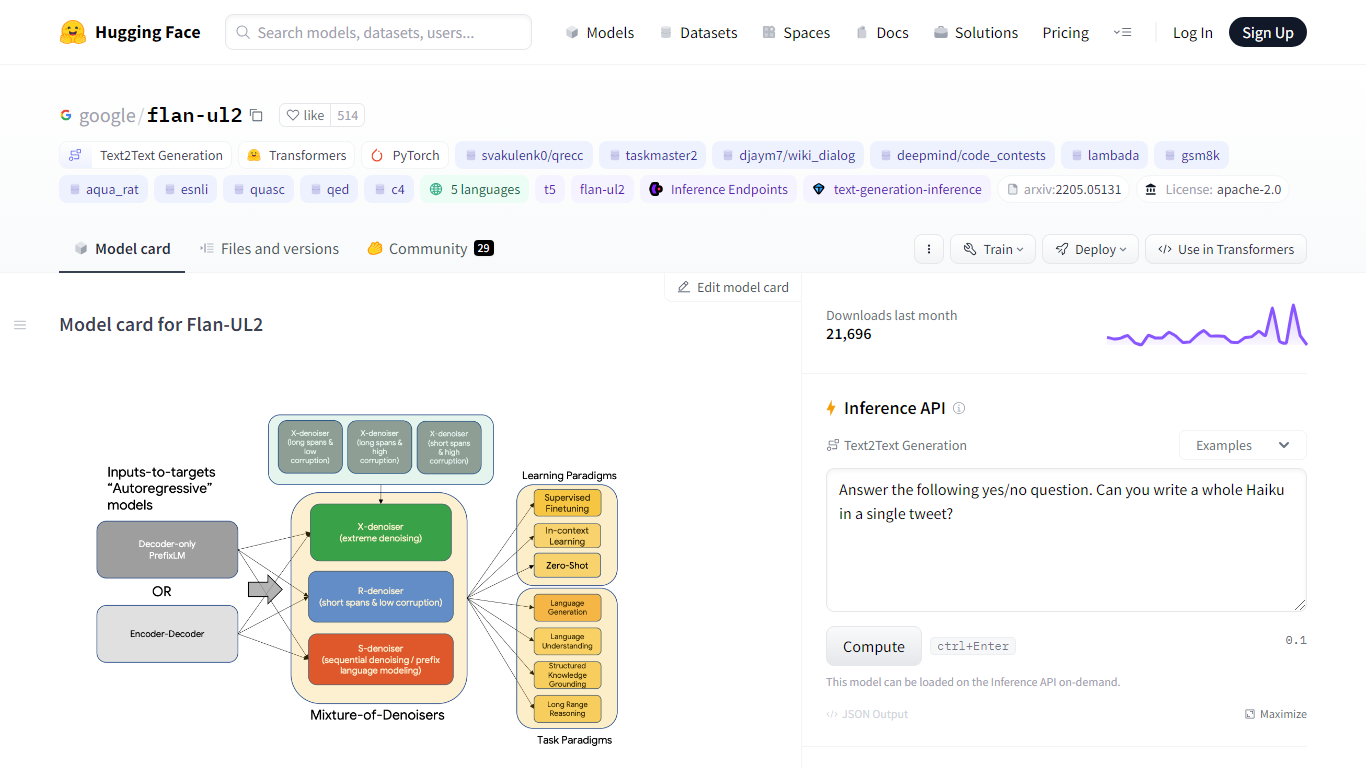
What is Google's Flan-UL2?
Google's Flan-UL2 is an open text generation model you download from Hugging Face and run with Transformers. It is a 20B-parameter encoder-decoder built on the T5 architecture, instruction-tuned on the Flan dataset after UL2 pretraining on the C4 corpus. The weights ship under the Apache 2.0 license for research and self-hosted inference.
Compared with the original UL2 checkpoint, Flan-UL2 widens the receptive field from 512 to 2048 tokens for few-shot prompts and drops the mode-switch tokens that complicated inference. Google reports Flan-UL2 20B beats FLAN-T5-XXL 11B on MMLU-CoT (+7.4%) and lifts the averaged benchmark score by 3.2% in the published table on the model card.
It targets NLP researchers and engineers who want an instruction-tuned T5-family model they can fine-tune or serve locally. You load it through T5ForConditionalGeneration with device_map="auto", typically in 8-bit or bfloat16 on a GPU, and Hugging Face logged 6,699 downloads in the last month on the model page.
Raplyrics Upvotes
Google's Flan-UL2 Upvotes
Raplyrics Top Features
Generates one punchline from a short homepage prompt in seconds
Model trained on millions of rap songs from various artists
Free to use with no signup required per the policy page
Blog lists 8 articles on rap music culture and society
Open-source frontend on GitHub at fpaupier/RapLyrics-Front
Homepage links to a Medium article on its ML engine and API
Google's Flan-UL2 Top Features
20B-parameter encoder-decoder with 32 encoder and 32 decoder layers (d_model 4096)
2048-token receptive field for few-shot in-context learning, up from 512 on base UL2
Flan instruction tuning removes mandatory UL2 mode-switch tokens at inference time
Published benchmarks show Flan-UL2 20B averaging 49.1 vs 47.6 for FLAN-T5-XXL 11B
Loads in Hugging Face Transformers with 8-bit (
load_in_8bit=True) or bfloat16 GPU inferenceApache 2.0 license with 6,699 Hugging Face downloads logged last month on the model card
Raplyrics Category
- Text Generation
Google's Flan-UL2 Category
- Text Generation
Raplyrics Pricing Type
- Free
Google's Flan-UL2 Pricing Type
- Free