Recall vs TLDR This
Explore the showdown between Recall vs TLDR This and find out which AI Summarizer tool wins. We analyze upvotes, features, reviews, pricing, alternatives, and more.
When comparing Recall and TLDR This, which one rises above the other?
When we contrast Recall with TLDR This, both of which are exceptional AI-operated summarizer tools, and place them side by side, we can spot several crucial similarities and divergences. With more upvotes, Recall is the preferred choice. The number of upvotes for Recall stands at 10, and for TLDR This it's 6.
Feeling rebellious? Cast your vote and shake things up!
Recall

What is Recall?
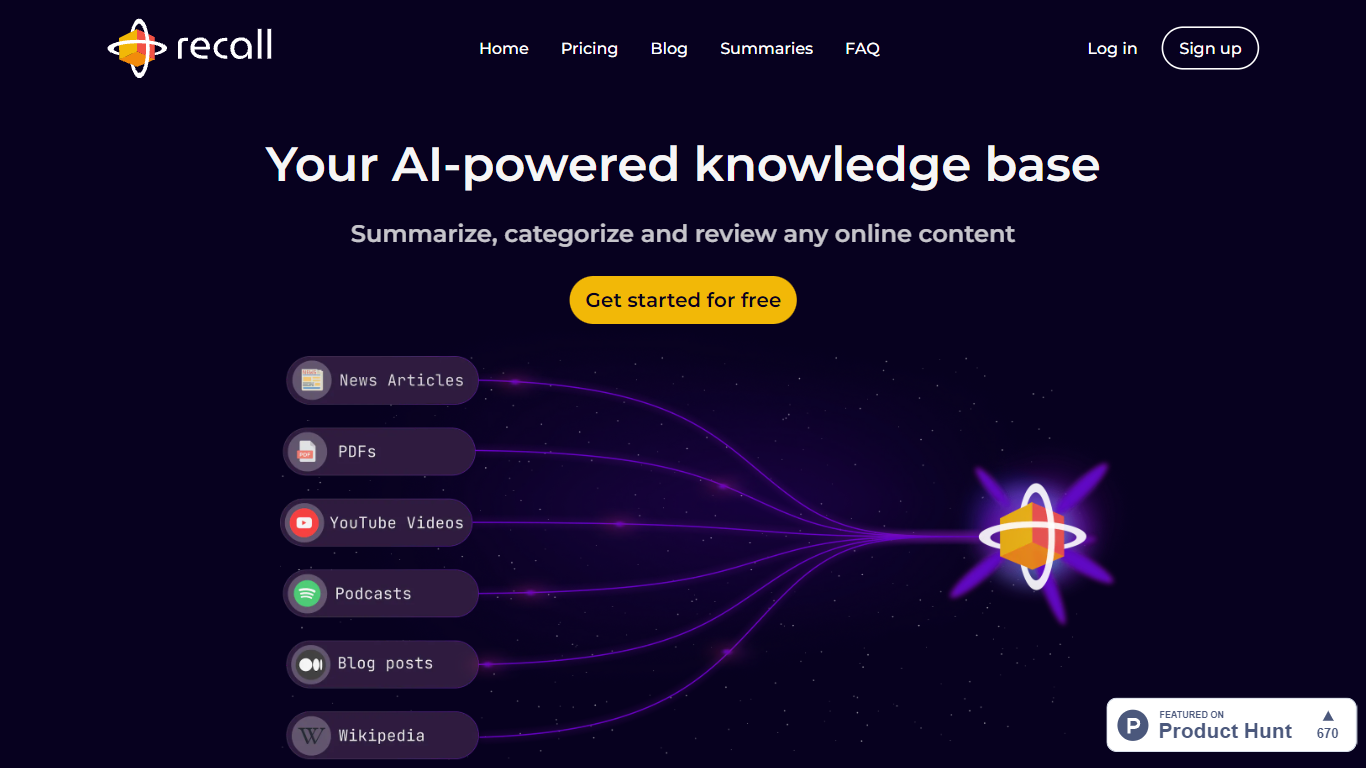
Recall is a personal AI knowledge base and summarizer that saves articles, YouTube videos, podcasts, PDFs, and notes in one place. It turns each saved item into a summarized card, tags it automatically, and links related ideas in a knowledge graph you can browse or chat with. You pick the AI model for questions, including ChatGPT, Claude, or Gemini, and answers can draw on your saved library, the open web, or both.
Where NotebookLM locks you into one notebook per project and Obsidian expects you to build every link by hand, Recall treats lifelong learning as one growing library. It captures web content in a click, summarizes it, connects it without manual filing, and adds spaced repetition quizzes so saved material actually sticks. The trade-off is less team workspace structure than Notion and less local-first control than Obsidian.
Recall fits researchers, founders, students, and heavy readers who save more than they can reread. Browser extensions for Chrome and Firefox, plus iOS and Android apps, make it easy to clip on the go and pick up in the web app later.
TLDR This
What is TLDR This?
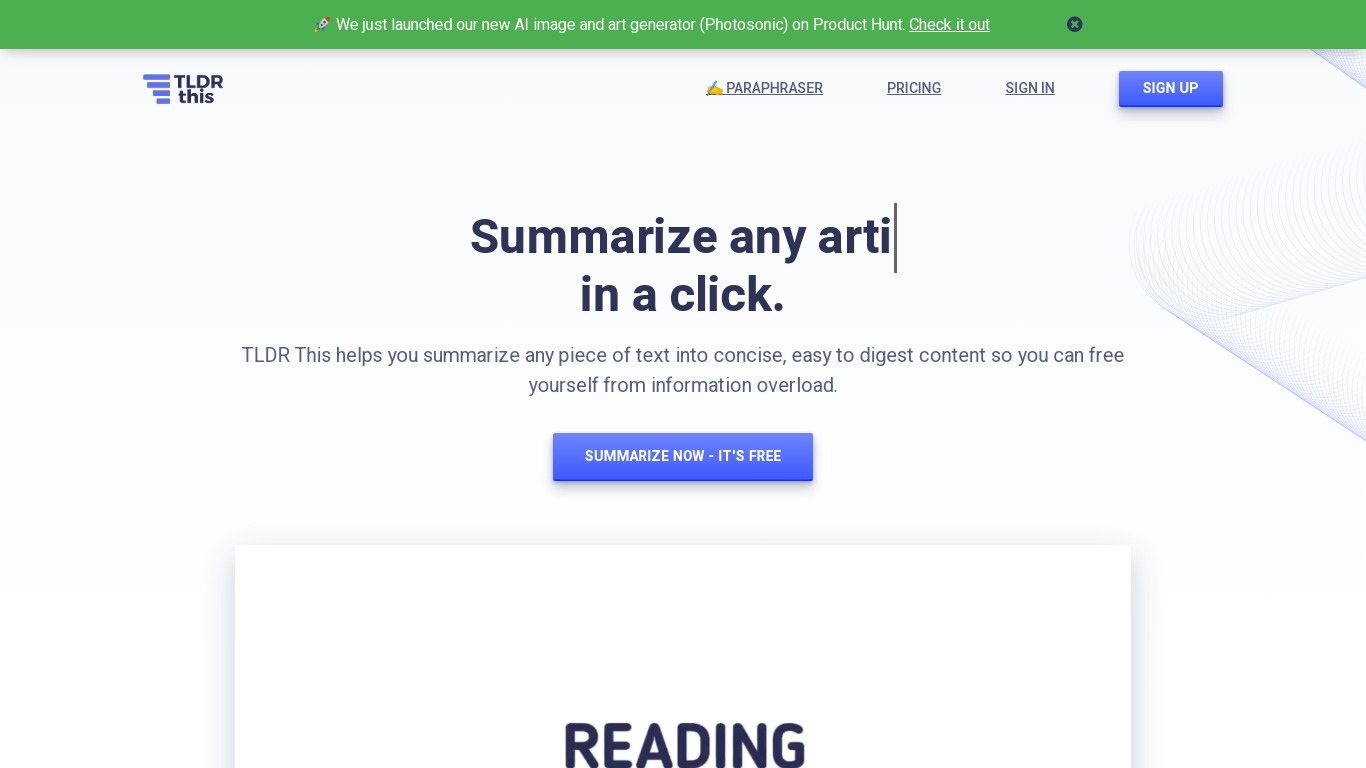
TLDR This is a web-based article and text summarizer that turns long articles, pasted text, or uploaded documents into short summaries you can scan in seconds. You can paste a URL, drop a file, or type text directly, then get either key-sentence extracts or AI-written abstractive summaries depending on the plan you use.
Where many summarizers stop at shortening text, TLDR This also strips ads, popups, and page clutter before summarizing, then pulls author names, dates, images, and estimated reading time into one view. That cleanup-first workflow matters when you are summarizing news pages or blog posts that bury the actual article under banners and related links.
Students, journalists, teachers, and researchers use it to digest long reports without rereading every paragraph. Chrome and Firefox extensions add one-click summaries on any open tab, and the site accepts PDF, DOC, and DOCX uploads up to 25 MB when you need to condense files instead of web pages.
Recall Upvotes
TLDR This Upvotes
Recall Top Features
Free tier includes 10 AI summaries per month plus unlimited saves of articles, videos, and PDFs
Plus plan at $10 per month (billed yearly) unlocks unlimited AI summaries and automatic smart tags
Chat across your saved library, the open web, or both using ChatGPT, Claude, Gemini, or other models
Spaced repetition quizzes generated from saved cards to reinforce long-term memory
Chrome, Firefox, iOS, and Android apps plus API and MCP access to connect external AI tools
Augmented browsing resurfaces related saved cards while you read new pages on the web
TLDR This Top Features
Summarize by URL, pasted text, or uploaded PDF, DOC, and DOCX files up to 25 MB
Free tier includes unlimited basic key-sentence summaries plus 10 one-time advanced AI summaries
Starter plan at $4.00 per month includes 100 advanced AI summaries and 100 paraphrases monthly
Chrome and Firefox extensions summarize any open webpage in one click
Extracts author, date, title, related images, and estimated reading time alongside each summary
Strips ads, popups, and on-page distractions before presenting the condensed text
Recall Category
- Summarizer
TLDR This Category
- Summarizer
Recall Pricing Type
- Freemium
TLDR This Pricing Type
- Freemium