Refraction vs Codex
Compare Refraction vs Codex and see which AI Code Assistant tool is better when we compare features, reviews, pricing, alternatives, upvotes, etc.
Which one is better? Refraction or Codex?
When we compare Refraction with Codex, which are both AI-powered code assistant tools, The users have made their preference clear, Refraction leads in upvotes. Refraction has attracted 5 upvotes from aitools.fyi users, and Codex has attracted 4 upvotes.
Want to flip the script? Upvote your favorite tool and change the game!
Refraction
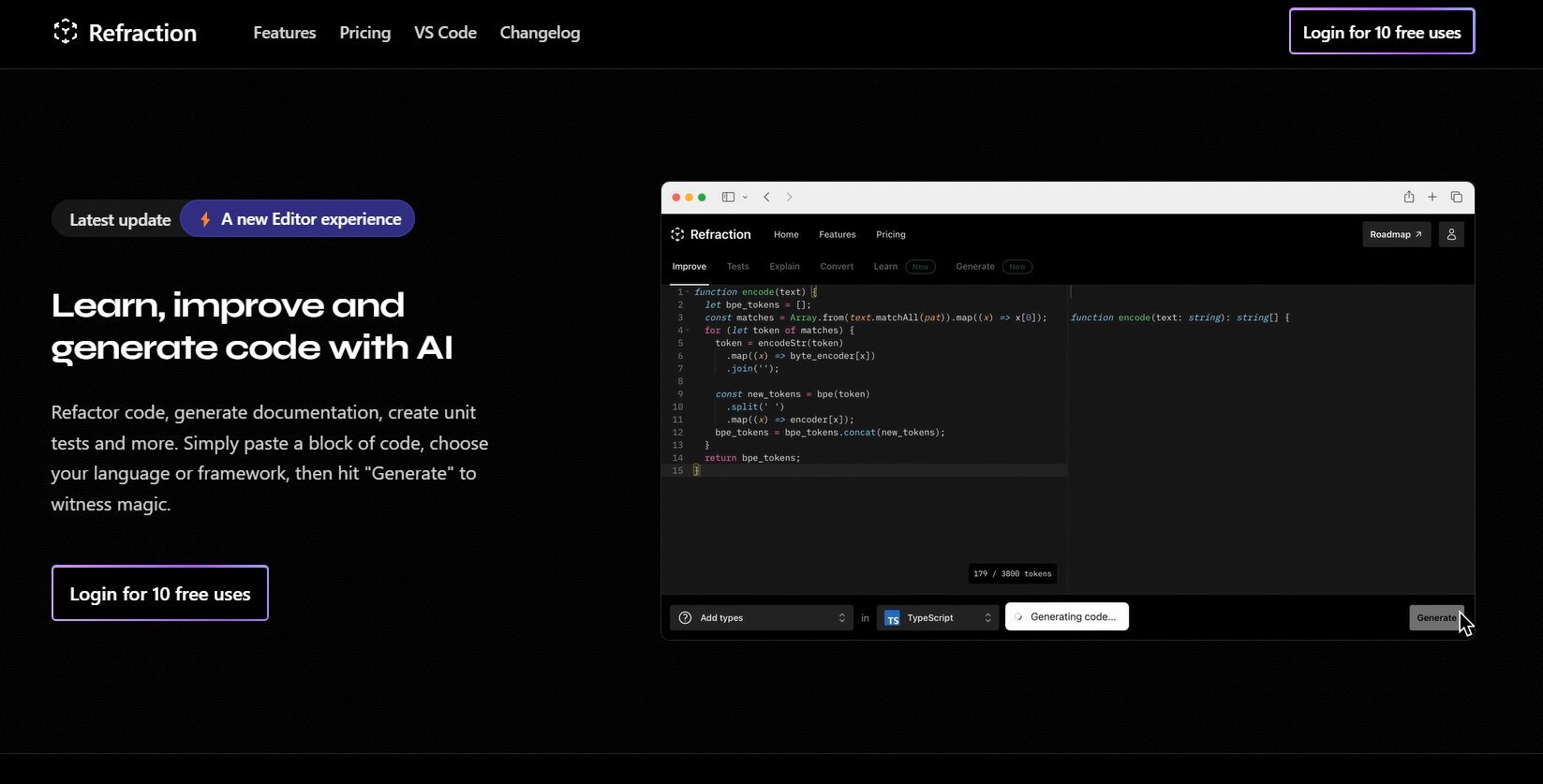

What is Refraction?
Improve and generate code with AI. Refactor code, create documentation, and write unit tests automatically. Simply paste your code, select a language or framework, and click "Generate" to see the magic happen. Refraction is a code generation tool for developers. It harnesses AI to generate code for you. Use it to produce unit tests, documentation, and refactor code.
Codex
What is Codex?
Codex is OpenAI's agentic coding assistant that writes features, fixes bugs, answers codebase questions, and opens pull requests from ChatGPT, a terminal CLI, or an IDE extension. Each cloud task spins up an isolated sandbox preloaded with your GitHub repository, where GPT-5-Codex edits files, runs tests, linters, and type checkers, and commits results you can review or merge. The same ChatGPT account links ChatGPT, the Codex CLI, and the IDE extension so you can pair locally or delegate longer jobs to run in parallel.
Unlike inline autocomplete tools that suggest the next line, Codex treats software engineering as delegated work. You assign a scoped task, wait one to thirty minutes depending on complexity, and get verifiable citations from terminal logs and test output rather than a single pasted snippet. That trade-off favors refactors, test generation, and multi-file features over keystroke-level completion, which is why teams at Ramp, Duolingo, and Harvey use it for PR reviews and background chores they would otherwise postpone.
Developers on ChatGPT Plus, Pro, Business, and Enterprise plans can run Codex in ChatGPT with built-in worktrees, schedule recurring jobs like issue triage or CI monitoring, and teach team standards through Skills. Repositories can include AGENTS.md files that tell Codex how to run tests and follow project conventions. A Codex SDK embeds the same agent in custom workflows, and a Slack integration lets teams assign tasks from channels.
Refraction Upvotes
Codex Upvotes
Refraction Top Features
No top features listedCodex Top Features
Cloud tasks run in isolated sandboxes preloaded with your GitHub repository
GPT-5-Codex model tuned for agentic coding across CLI, IDE, and cloud environments
Tasks typically finish in 1 to 30 minutes with live progress and terminal log citations
AGENTS.md files guide testing commands and repo conventions inside each sandbox
Codex CLI installs via npm i -g @openai/codex and signs in with your ChatGPT account
codex-mini-latest API priced at $1.50 per 1M input tokens and $6 per 1M output tokens
Slack integration and Codex SDK let teams delegate tasks outside ChatGPT
Refraction Category
- Code Assistant
Codex Category
- Code Assistant
Refraction Pricing Type
- Freemium
Codex Pricing Type
- Paid