Resoomer vs SciSpace (formerly Typeset)
In the clash of Resoomer vs SciSpace (formerly Typeset), which AI Summarizer tool emerges victorious? We assess reviews, pricing, alternatives, features, upvotes, and more.
When we put Resoomer and SciSpace (formerly Typeset) head to head, which one emerges as the victor?
Let's take a closer look at Resoomer and SciSpace (formerly Typeset), both of which are AI-driven summarizer tools, and see what sets them apart. SciSpace (formerly Typeset) stands out as the clear frontrunner in terms of upvotes. SciSpace (formerly Typeset) has garnered 24 upvotes, and Resoomer has garnered 6 upvotes.
Does the result make you go "hmm"? Cast your vote and turn that frown upside down!
Resoomer
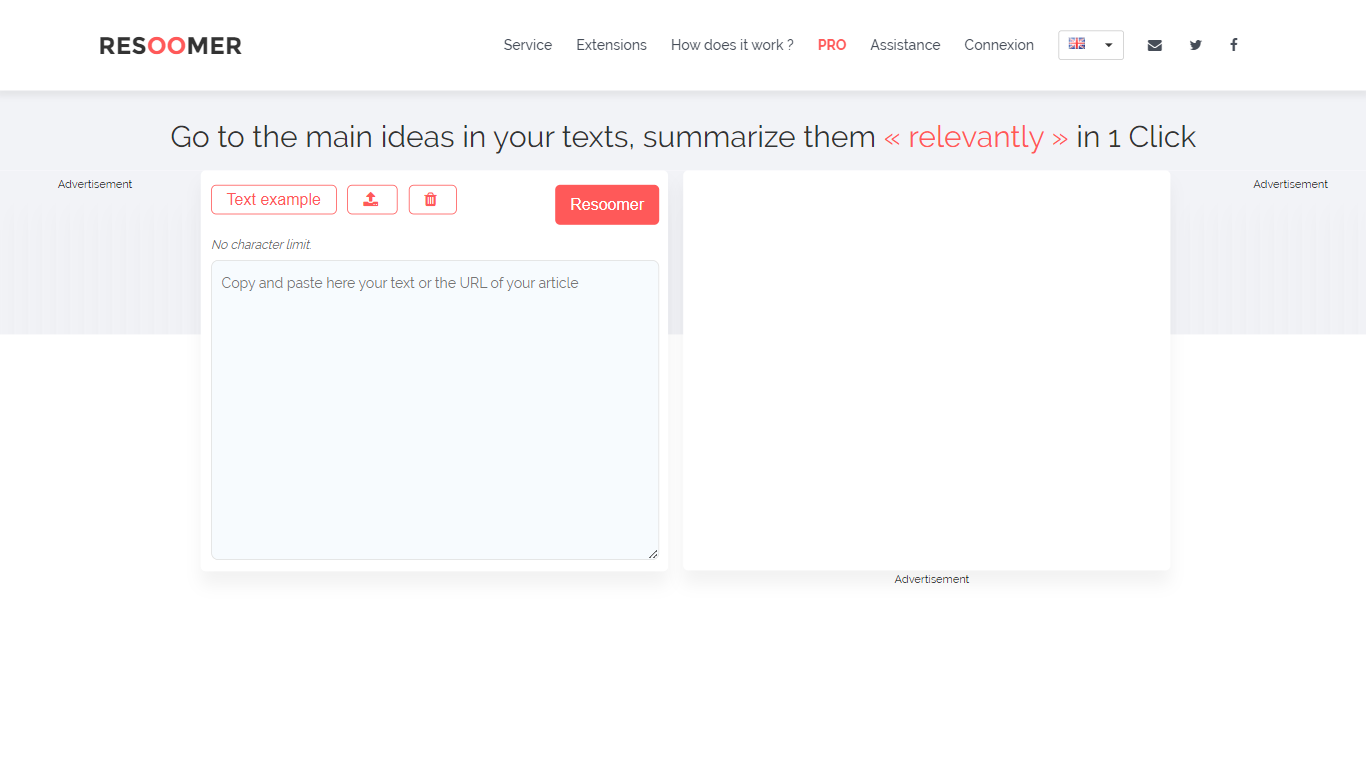

What is Resoomer?
Resoomer condenses long documents into short summaries you can read, listen to, or rework in the same workspace. Paste text or import PDF, EPUB, DOCX, ODT, and TXT files with no character limit, then chain results into a paraphraser, synonymizer, translator, or text-to-speech player without starting over.
Most summarizers stop at a bullet list. Resoomer bundles eight text tools (summarize, edit, listen, paraphrase, rewrite, synonymize, translate, spell-check) behind one click-through workflow. That makes it stronger for study sessions and research than quick headline skims, but it is not built for team collaboration or API batch jobs.
Students, journalists, and researchers use it when Wikipedia articles, press releases, or book chapters need faster uptake. Browser extensions bring the same toolkit to any webpage in 66 languages, with no account signup required.
SciSpace (formerly Typeset)
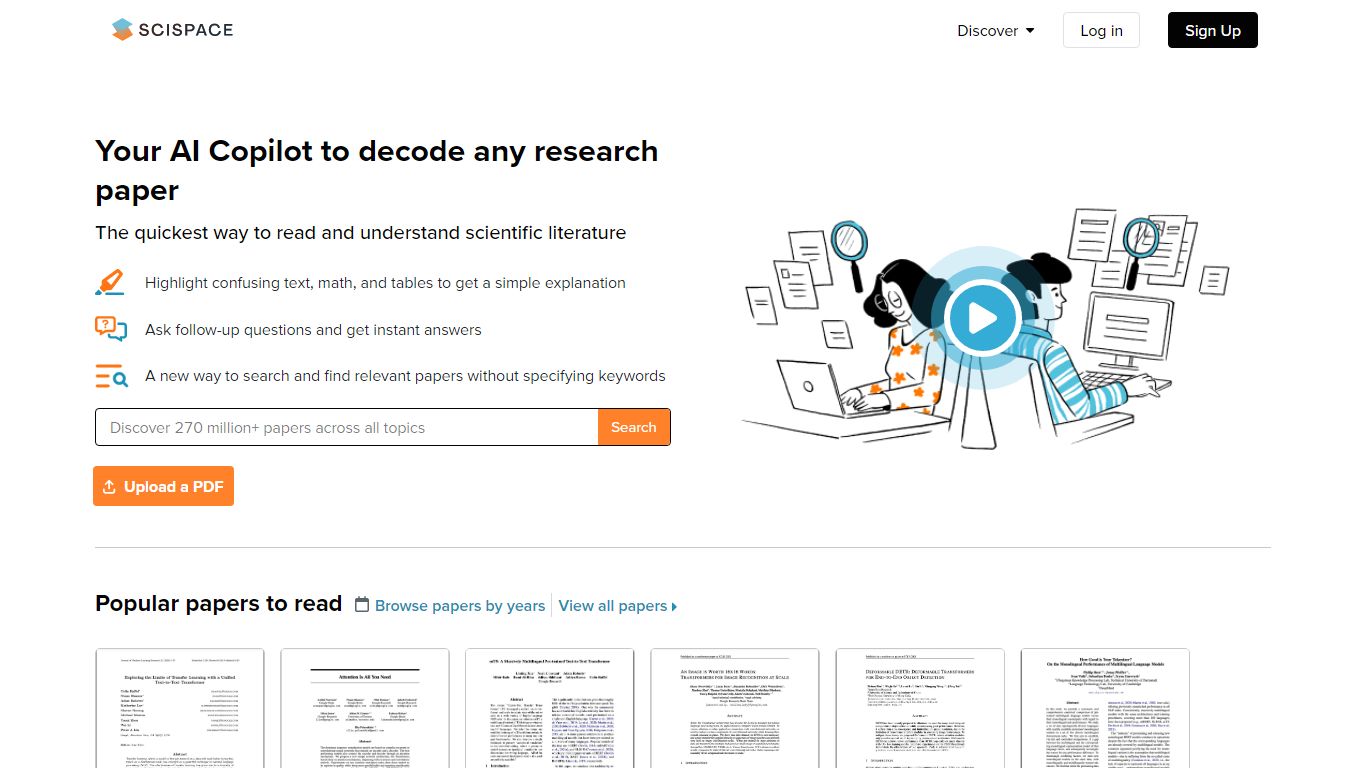
What is SciSpace (formerly Typeset)?
SciSpace, formerly Typeset, is a research workspace where you search a large academic paper index, chat with PDFs, and draft literature reviews with cited sources. The typeset.io URL now lands on scispace.com, which bundles an AI agent, literature review search, paraphraser, citation generator, data extraction, and AI detection in one interface.
General AI chat tools answer from the open web. SciSpace centers the workflow on papers: you can run systematic reviews across 280M+ indexed works, highlight passages for explanations, and move from reading into AI Writer drafts with references. Biomedical Agent, enterprise recruiting, and Chrome or mobile apps extend the same stack for labs and R&D teams.
Graduate students, PhD researchers, and pharma or biotech analysts use SciSpace to screen literature faster, unpack dense PDFs, and produce summaries or manuscripts with traceable citations. The platform reports adoption by 9.6 million researchers and lists SOC 2 compliance on its site.
Resoomer Upvotes
SciSpace (formerly Typeset) Upvotes
Resoomer Top Features
Imports PDF, EPUB, DOCX, ODT, and TXT files with no character limit on summaries
Eight linked tools: summarizer, editor, text player, paraphraser, rewriter, synonymizer, translator, and spell checker
Browser extension processes any webpage article in one click across 66 supported languages
Text Player reads summaries aloud with real-time highlighting for accessibility
No account creation required for web or extension use
Submitted texts are automatically deleted after processing for confidentiality
Over 20,000 extension users according to Resoomer's browser add-on page
SciSpace (formerly Typeset) Top Features
Search and review literature across 280M+ indexed research papers
Chat with PDF highlights for plain-language explanations of dense sections
SciSpace Agent plus Biomedical Agent for guided research tasks
Built-in paraphraser, citation generator, AI detector, and data extraction tools
AI Writer and templates for drafting papers with cited sources
Chrome extension and mobile app for reading outside the browser tab
Premium plans with a 24-hour money-back guarantee on subscriptions
Resoomer Category
- Summarizer
SciSpace (formerly Typeset) Category
- Summarizer
Resoomer Pricing Type
- Free
SciSpace (formerly Typeset) Pricing Type
- Freemium