RivalFlowAI vs Talk to Books
In the contest of RivalFlowAI vs Talk to Books, which AI Search Engine tool is the champion? We evaluate pricing, alternatives, upvotes, features, reviews, and more.
If you had to choose between RivalFlowAI and Talk to Books, which one would you go for?
When we examine RivalFlowAI and Talk to Books, both of which are AI-enabled search engine tools, what unique characteristics do we discover? With more upvotes, Talk to Books is the preferred choice. Talk to Books has 23 upvotes, and RivalFlowAI has 6 upvotes.
Don't agree with the result? Cast your vote and be a part of the decision-making process!
RivalFlowAI
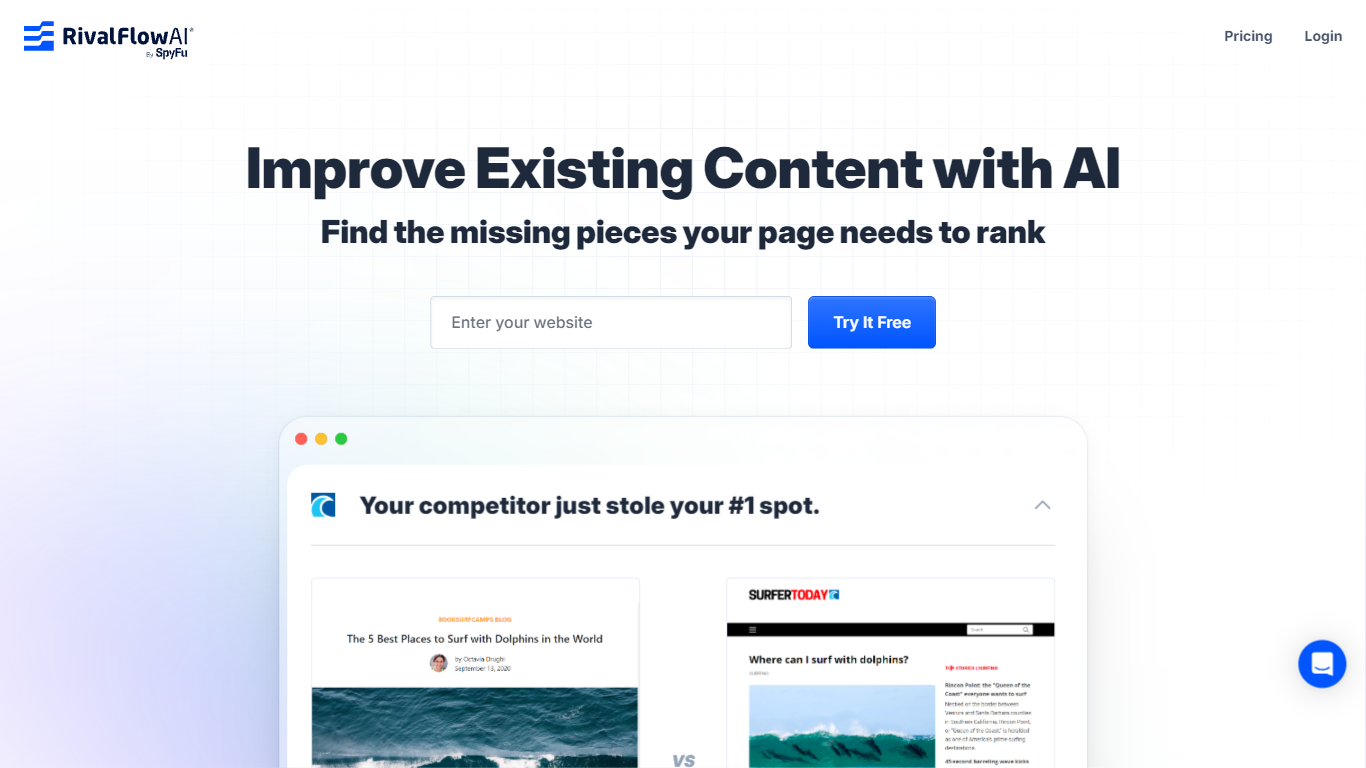

What is RivalFlowAI?
Optimize your website's SEO effortlessly with RivalFlowAI! If your content isn't ranking as high as your competitors', RivalFlowAI is the tool you need. It leverages sophisticated AI algorithms to compare your content side by side with top-ranking pages, identifying the crucial questions they address that you might be missing. By highlighting content gaps and suggesting more thorough answers, RivalFlowAI helps you enhance your content's quality and comprehensiveness, giving you a solid SEO boost. Adopt a no-risk SEO strategy that guarantees higher search engine ranks within 10 days, with no setup hassle, development work, or access to Google Analytics or Search Console required. Simply incorporate the AI-driven copy or write your own using the insights provided—RivalFlowAI adapts to your workflow, making content updates straightforward. It slots seamlessly into your AI SEO toolkit, supplementing any existing AI writing tools you might be using. Embrace continuous content improvement and watch your pages climb the Google ranks with RivalFlowAI!
Talk to Books
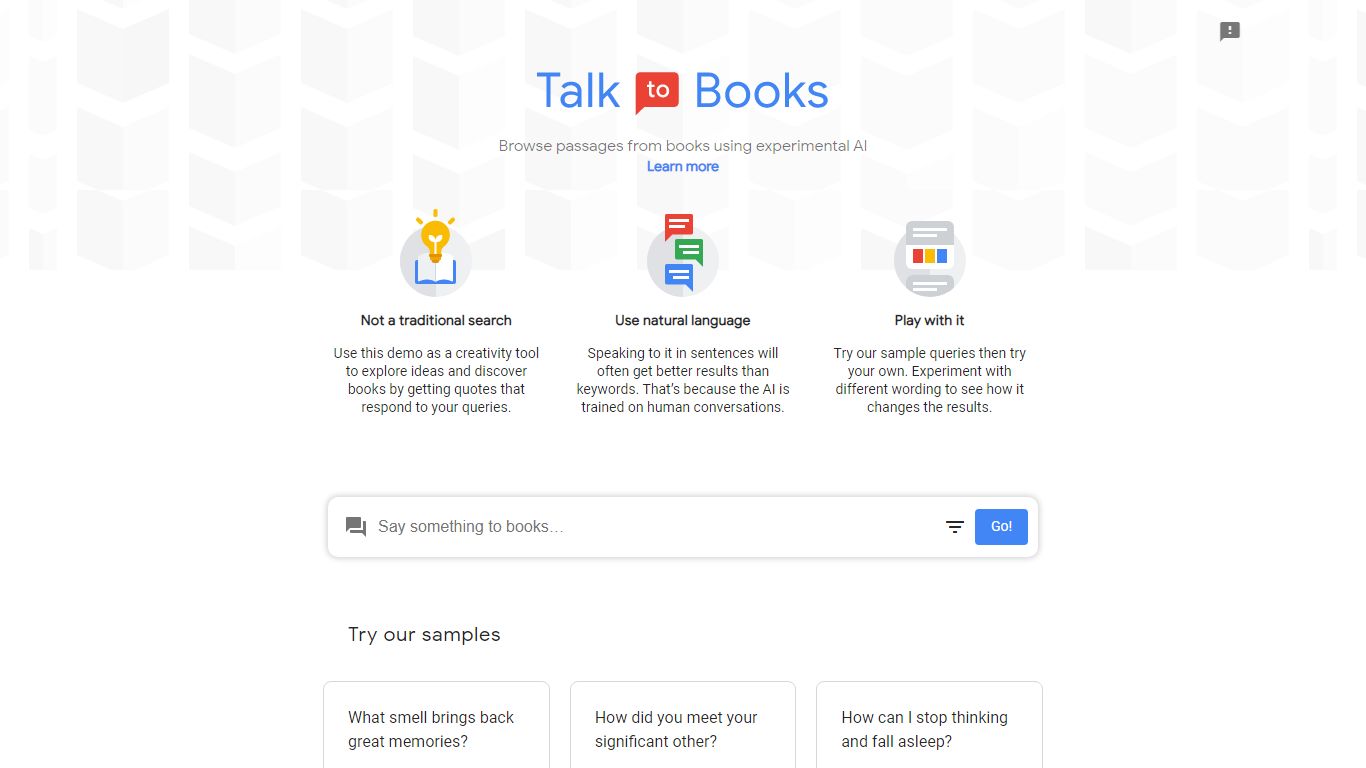
What is Talk to Books?
Talk to Books was a Google Research experiment that let you ask natural-language questions and get answers pulled from passages across a large collection of books. You typed a question or statement, and the system returned relevant book excerpts instead of standard web search results. Google has shut the service down, but the site still hosts an archive of sample queries.
The project launched in 2018 as part of Google's Semantic Experiences initiative. It used neural language models for semantic matching and retrieval, showing how conversational queries could surface ideas buried in published books rather than blog posts or forums.
Researchers, students, and curious readers used Talk to Books to explore topics through book-length context. The experiment informed later semantic search features inside Google products such as Shopping, Maps, Gmail, and Hangouts.
RivalFlowAI Upvotes
Talk to Books Upvotes
RivalFlowAI Top Features
AI-Powered Gap Analysis: Identifies what questions your competitors are covering that you aren't.
Thorough Content Suggestions: Provides specific recommendations to make your content more detailed and informative.
Effortless Integration: No complex setup needed easily integrates with existing content workflows.
SEO Rank Guarantee: Promises improved search engine rankings within 10 days.
User-Friendly Operation: No developer skills required edit your content as you normally would.
Talk to Books Top Features
Ask questions in plain English and get book passages back, not web links
Searches across a large corpus of published books using semantic matching
Archived sample queries still viewable on the shutdown notice page
Part of Google's 2018 Semantic Experiences research alongside Semantris
Demonstrated neural retrieval models that later shaped other Google products
RivalFlowAI Category
- Search Engine
Talk to Books Category
- Search Engine
RivalFlowAI Pricing Type
- Paid
Talk to Books Pricing Type
- Free