scite.ai vs Consensus
When comparing scite.ai vs Consensus, which AI Research tool shines brighter? We look at pricing, alternatives, upvotes, features, reviews, and more.
In a comparison between scite.ai and Consensus, which one comes out on top?
When we put scite.ai and Consensus side by side, both being AI-powered research tools, The upvote count favors Consensus, making it the clear winner. Consensus has garnered 7 upvotes, and scite.ai has garnered 6 upvotes.
Does the result make you go "hmm"? Cast your vote and turn that frown upside down!
scite.ai
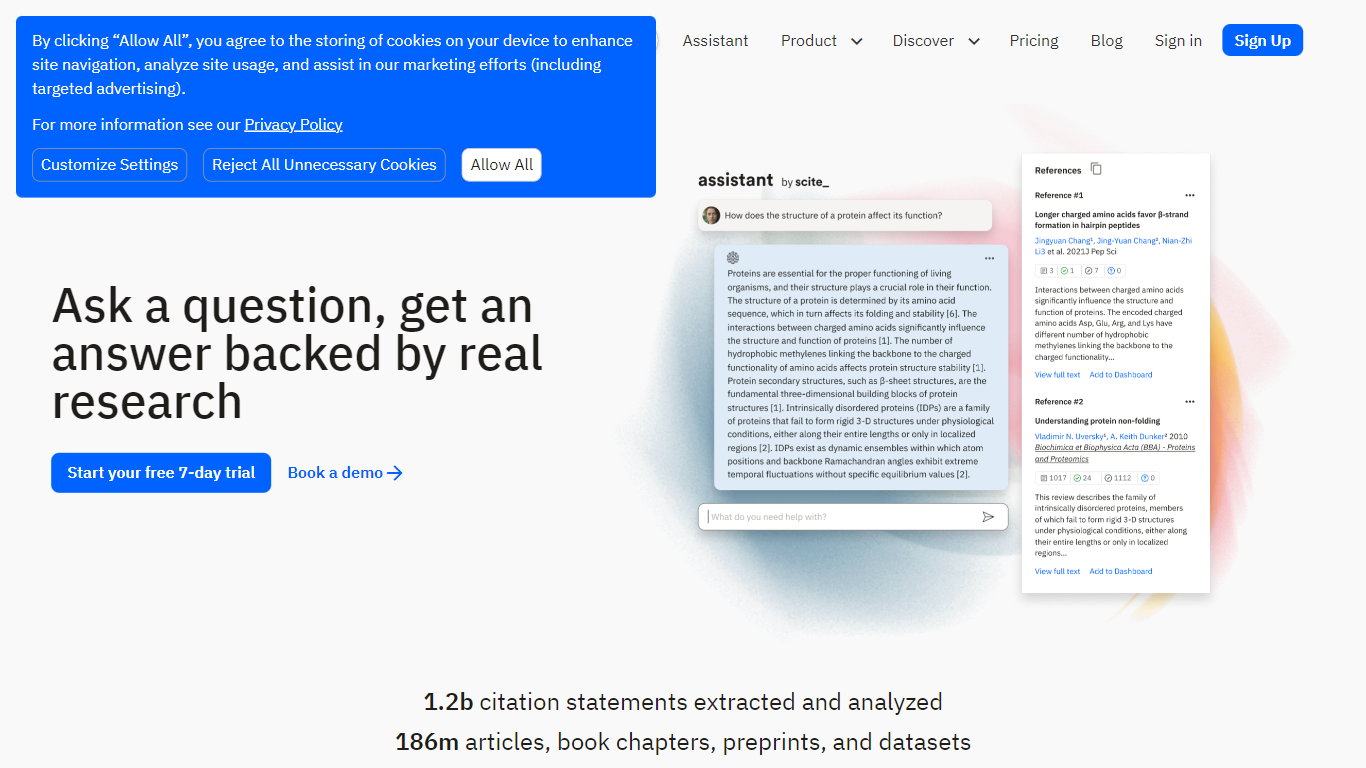

What is scite.ai?
Scite helps research teams ask literature questions and get answers tied to full-text papers, not abstract snippets alone. Its Assistant searches across 280M+ full-text scholarly articles, and Smart Citations show whether later work supported, contradicted, or mentioned a finding.
General research chatbots guess when paywalls block the PDF. Scite licenses content from Wiley, SAGE, and 40+ other publishers, so it reads inside the paper and links each claim to a specific sentence you can verify in one click. That evidence-first design targets literature reviews where you need to know if a result still holds, not just that it exists.
Grad students run disputed-or-affirmed checks before citing a paper. R&D teams trace grants, clinical trials, and patents in one search. Pro users get API access, 2,500 MCP credits per month, and collections up to 10,000 papers. Scite also plugs into Claude, ChatGPT, and Zotero so answers show up inside existing workflows.
Consensus
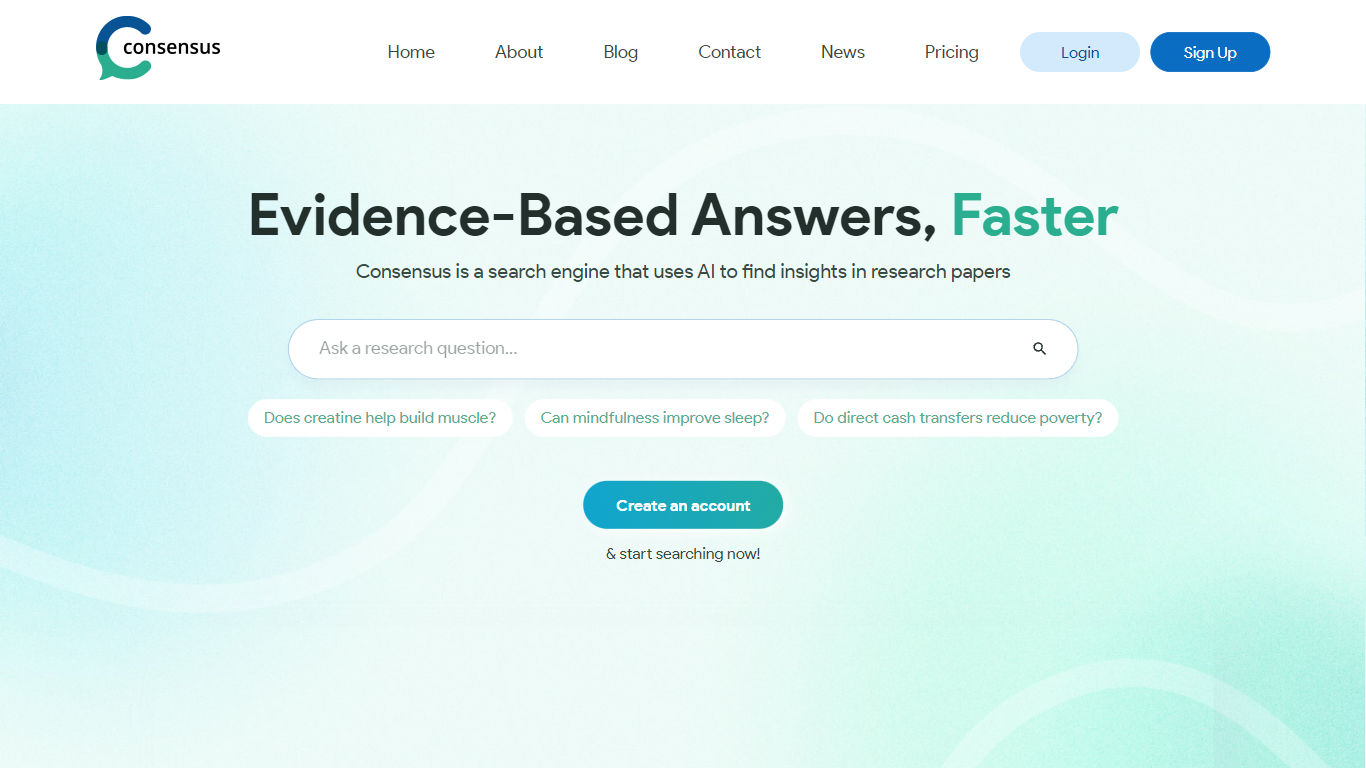
What is Consensus?
Consensus searches and summarizes peer-reviewed research from a corpus of 250 million-plus papers, including licensed full text from major publishers. Ask a research question in plain language and get cited answers drawn from academic literature, with filters for study design, population, and timeframe applied automatically from your prompt.
General-purpose chatbots guess from training data. Consensus grounds every answer in published studies and shows where evidence agrees or conflicts. Deep Search builds a full literature-review strategy in minutes, the Consensus Meter visualizes agreement on yes-or-no questions, and Medical mode narrows results to about 50,000 clinical guidelines and 8 million articles from the top 1,000 medical journals.
Researchers, students, and clinicians use Consensus for literature reviews, clinical question lookups, and evidence summaries. Over 170 university libraries partner with the platform, and 10 million users rely on it daily. A free tier includes unlimited searches with 10 GPT-4 Pro Analyses per month, while Premium at $11.99 monthly removes those caps.
scite.ai Upvotes
Consensus Upvotes
scite.ai Top Features
Search across 280M+ full-text scholarly articles plus patents, trials, grants, and preprints
Smart Citations classify later papers as supporting, contrasting, or mentioning a source
Basic plan includes 250 MCP credits per month and ChatGPT and Claude integrations
Pro plan adds API access, 2,500 MCP credits per month, and collections up to 10,000 papers
Publisher agreements with Wiley, SAGE, and 40+ partners for licensed full-text access
7-day free trial on paid plans before subscription billing begins
Database cites 1.6B+ citations indexed across 300M+ scholarly sources
Consensus Top Features
Searches 250 million-plus peer-reviewed papers with licensed full text from leading publishers
Deep Search automates literature review by expanding terms and exploring citation graphs
Consensus Meter shows agreement levels on yes-or-no research questions at a glance
Medical mode filters to 50,000 clinical guidelines and 8M articles from top medical journals
Natural-language prompts auto-apply filters for timeframe, population, and study design
Free tier includes unlimited searches plus 10 GPT-4 Pro Analyses per month
scite.ai Category
- Research
Consensus Category
- Research
scite.ai Pricing Type
- Freemium
Consensus Pricing Type
- Freemium