scite.ai vs DrugCard
Explore the showdown between scite.ai vs DrugCard and find out which AI Research tool wins. We analyze upvotes, features, reviews, pricing, alternatives, and more.
In a face-off between scite.ai and DrugCard, which one takes the crown?
When we contrast scite.ai with DrugCard, both of which are exceptional AI-operated research tools, and place them side by side, we can spot several crucial similarities and divergences. There's no clear winner in terms of upvotes, as both tools have received the same number. Since other aitools.fyi users could decide the winner, the ball is in your court now to cast your vote and help us determine the winner.
Not your cup of tea? Upvote your preferred tool and stir things up!
scite.ai
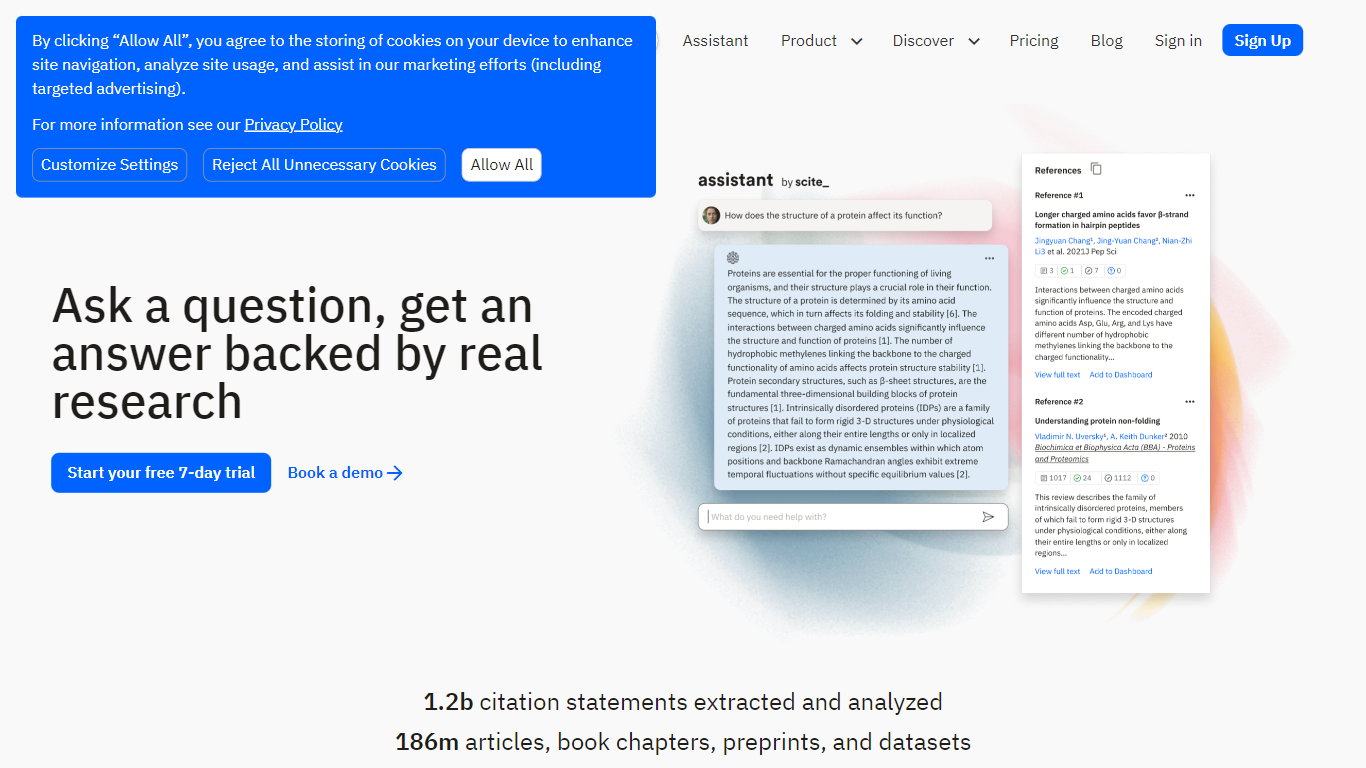

What is scite.ai?
Scite helps research teams ask literature questions and get answers tied to full-text papers, not abstract snippets alone. Its Assistant searches across 280M+ full-text scholarly articles, and Smart Citations show whether later work supported, contradicted, or mentioned a finding.
General research chatbots guess when paywalls block the PDF. Scite licenses content from Wiley, SAGE, and 40+ other publishers, so it reads inside the paper and links each claim to a specific sentence you can verify in one click. That evidence-first design targets literature reviews where you need to know if a result still holds, not just that it exists.
Grad students run disputed-or-affirmed checks before citing a paper. R&D teams trace grants, clinical trials, and patents in one search. Pro users get API access, 2,500 MCP credits per month, and collections up to 10,000 papers. Scite also plugs into Claude, ChatGPT, and Zotero so answers show up inside existing workflows.
DrugCard
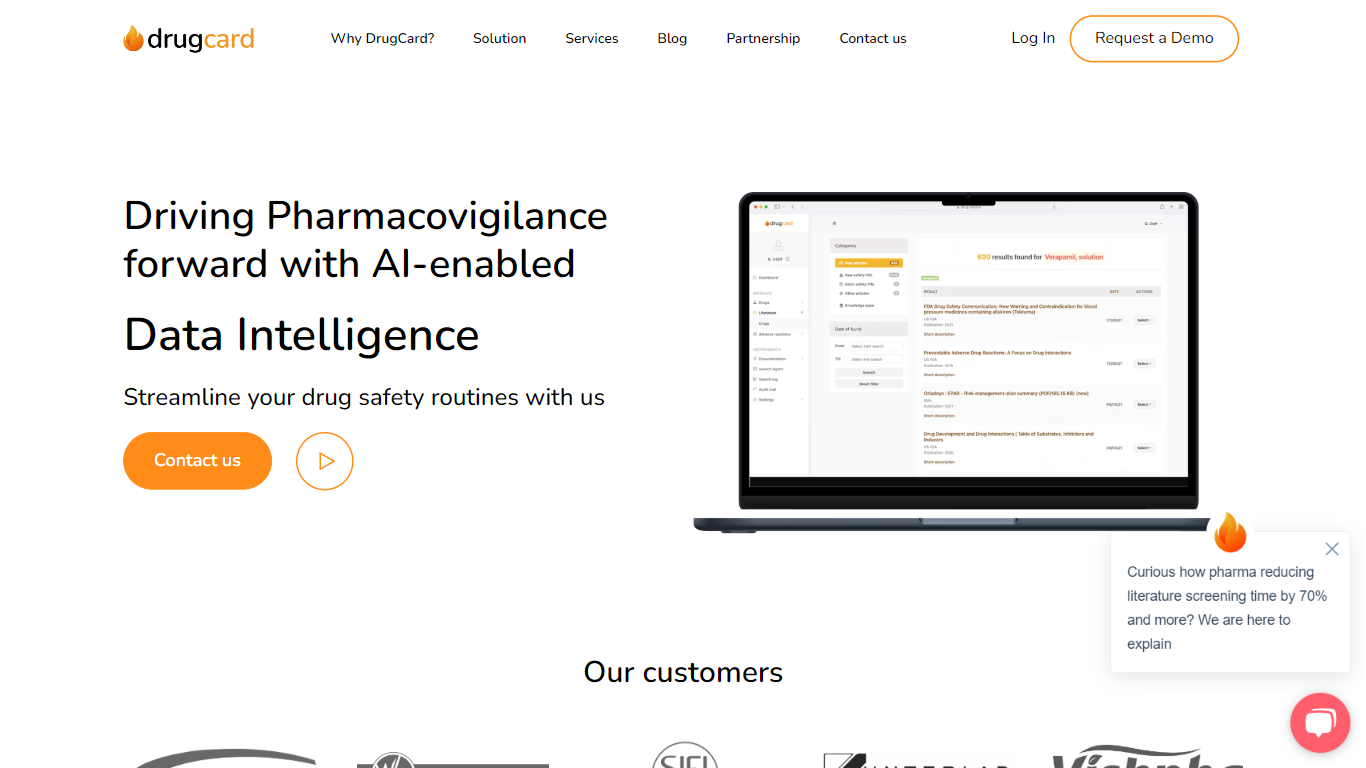
What is DrugCard?
Teams use DrugCard to automate local and global medical literature screening without reading every journal cover to cover. The service monitors 2200+ local journals across 146+ countries, handles 100+ languages, and bundles modules like Simple Search, Regulatory Intelligence, an adverse event database, and eCTDlight. Marketing Authorization Holders, CROs, and PV freelancers are the audiences highlighted on the homepage.
Where generic literature databases stop at keyword alerts, DrugCard focuses on local-language journals and scanned print copies. The vendor claims proprietary OCR reaches up to 99% accuracy on average-quality scans and that customers see 50-70% time savings versus manual screening, with the homepage citing 60% savings and up to 3 minutes per article instead of 35.
Teams buy through demo requests rather than self-serve checkout. DrugCard also sells LQPPV, signal management, PSUR, ICSR, PSMF, and risk management services for orgs that want outsourced pharmacovigilance help alongside the software.
scite.ai Upvotes
DrugCard Upvotes
scite.ai Top Features
Search across 280M+ full-text scholarly articles plus patents, trials, grants, and preprints
Smart Citations classify later papers as supporting, contrasting, or mentioning a source
Basic plan includes 250 MCP credits per month and ChatGPT and Claude integrations
Pro plan adds API access, 2,500 MCP credits per month, and collections up to 10,000 papers
Publisher agreements with Wiley, SAGE, and 40+ partners for licensed full-text access
7-day free trial on paid plans before subscription billing begins
Database cites 1.6B+ citations indexed across 300M+ scholarly sources
DrugCard Top Features
Monitors 2200+ local medical journals across 146+ countries with support for 100+ languages
Proprietary OCR handles poorly scanned hard-copy journals with up to 99% keyword recognition accuracy
DrugCard Platform automates local literature screening with email alerts plus weekly summary reports
Simple Search, Regulatory Intelligence, Adverse Event Database, and eCTDlight modules extend beyond core screening
Customer feedback cites 50-70% time savings, and the homepage lists 60% savings versus human-only screening
New country journal packs typically onboard in 2-3 weeks according to the site FAQ
scite.ai Category
- Research
DrugCard Category
- Research
scite.ai Pricing Type
- Freemium
DrugCard Pricing Type
- Paid