scite.ai vs Iris.ai
In the battle of scite.ai vs Iris.ai, which AI Research tool comes out on top? We compare reviews, pricing, alternatives, upvotes, features, and more.
Between scite.ai and Iris.ai, which one is superior?
Upon comparing scite.ai with Iris.ai, which are both AI-powered research tools, The upvote count is neck and neck for both scite.ai and Iris.ai. Every vote counts! Cast yours and contribute to the decision of the winner.
Disagree with the result? Upvote your favorite tool and help it win!
scite.ai
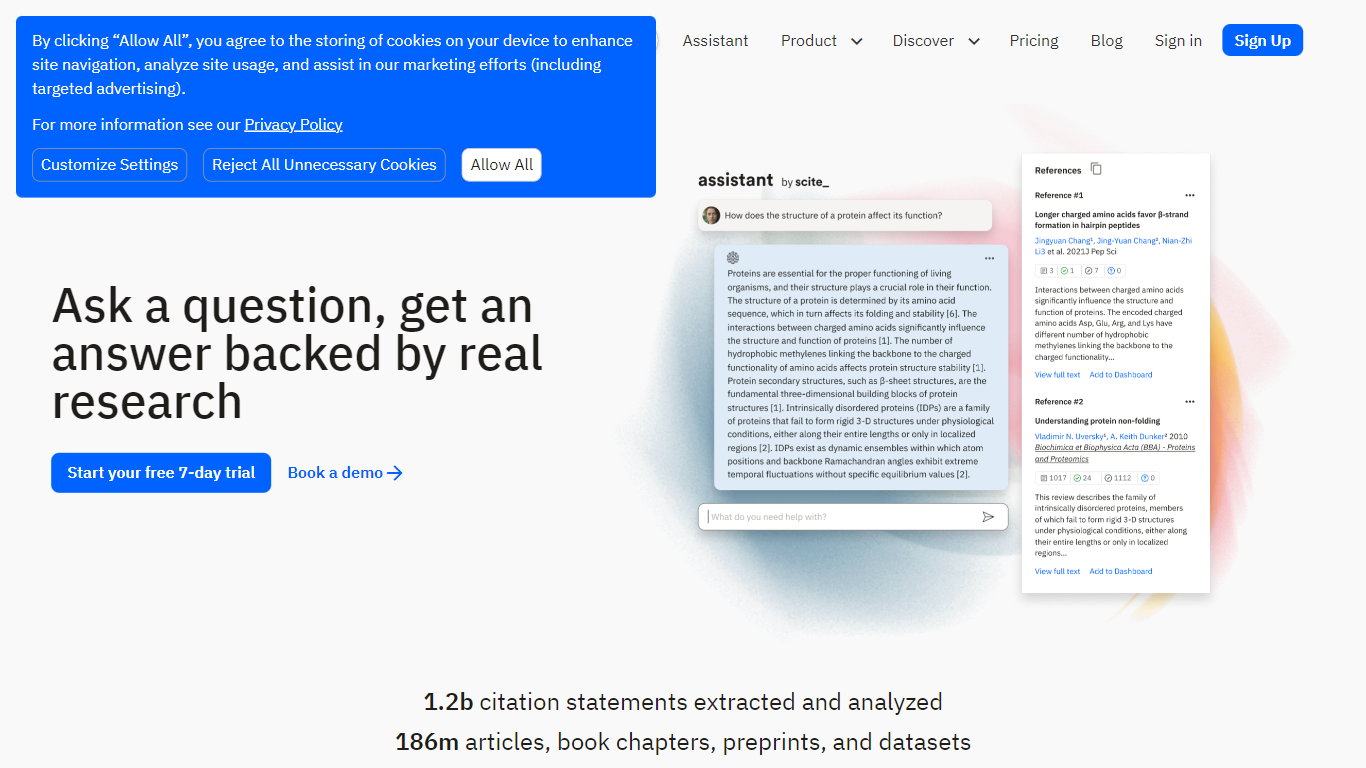

What is scite.ai?
Scite helps research teams ask literature questions and get answers tied to full-text papers, not abstract snippets alone. Its Assistant searches across 280M+ full-text scholarly articles, and Smart Citations show whether later work supported, contradicted, or mentioned a finding.
General research chatbots guess when paywalls block the PDF. Scite licenses content from Wiley, SAGE, and 40+ other publishers, so it reads inside the paper and links each claim to a specific sentence you can verify in one click. That evidence-first design targets literature reviews where you need to know if a result still holds, not just that it exists.
Grad students run disputed-or-affirmed checks before citing a paper. R&D teams trace grants, clinical trials, and patents in one search. Pro users get API access, 2,500 MCP credits per month, and collections up to 10,000 papers. Scite also plugs into Claude, ChatGPT, and Zotero so answers show up inside existing workflows.
Iris.ai
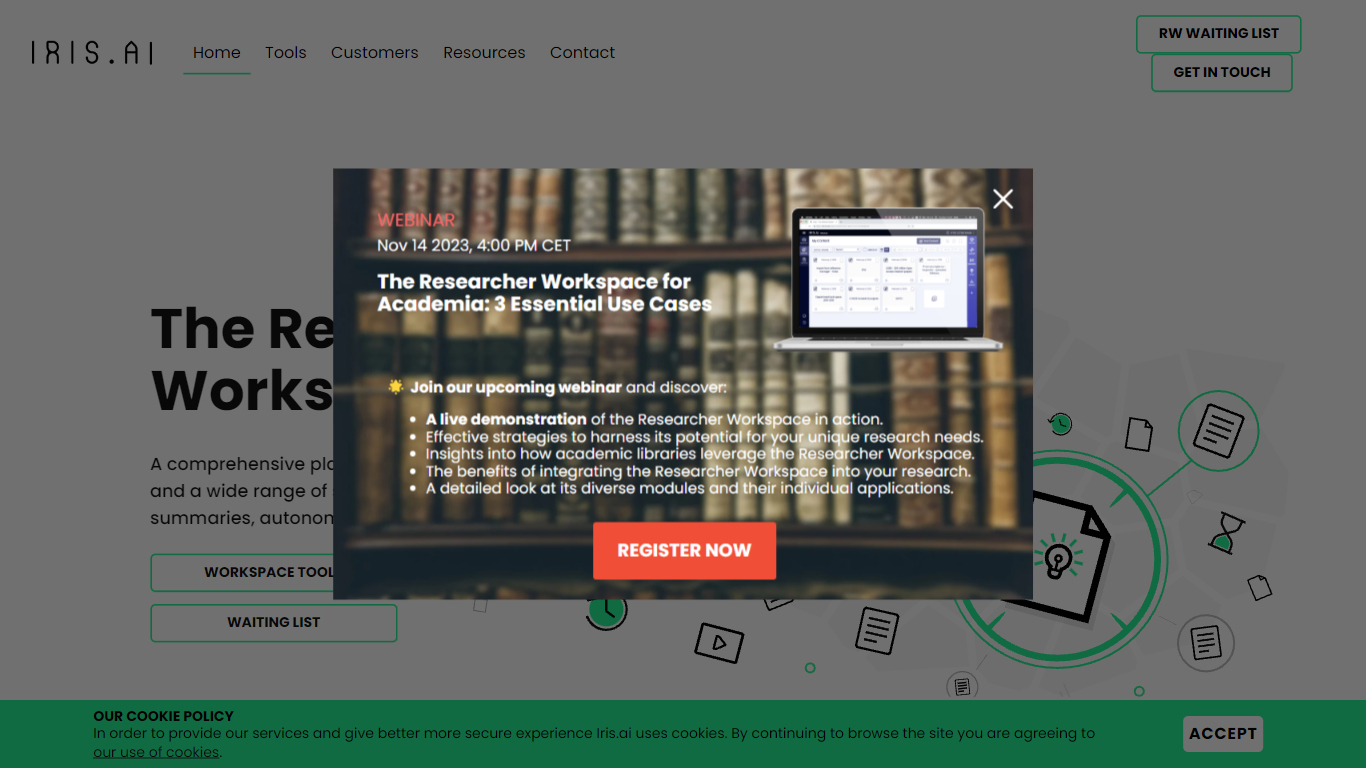
What is Iris.ai?
Iris.ai builds enterprise knowledge platforms that turn scattered PDFs, patents, reports, graphs, and tables into structured data for RAG pipelines and AI agents. Its Axion product extracts multilingual documents across 68 languages, while Neuralith and RSpace target agentic workflows and complex R&D intelligence.
General-purpose RAG tools often choke on regulated industries where contracts, clinical trials, and patent libraries need schema-aware extraction and audit trails. Iris.ai ships ISO 27001-certified processing with GDPR compliance, on-premise deployment, and a built-in LLM evaluation layer so teams in pharma, telecom, and manufacturing can trust what their agents retrieve.
Research teams, legal ops, and innovation groups at enterprises like ArcelorMittal use Axion to cut patent review time by up to 90% with 94% extraction precision. Pricing runs from a Starter one-time pack for 10 documents through Professional tiers with about 100k pages to Enterprise deals from roughly €0.05 per page.
scite.ai Upvotes
Iris.ai Upvotes
scite.ai Top Features
Search across 280M+ full-text scholarly articles plus patents, trials, grants, and preprints
Smart Citations classify later papers as supporting, contrasting, or mentioning a source
Basic plan includes 250 MCP credits per month and ChatGPT and Claude integrations
Pro plan adds API access, 2,500 MCP credits per month, and collections up to 10,000 papers
Publisher agreements with Wiley, SAGE, and 40+ partners for licensed full-text access
7-day free trial on paid plans before subscription billing begins
Database cites 1.6B+ citations indexed across 300M+ scholarly sources
Iris.ai Top Features
Axion extracts text, tables, graphs, and images from PDFs in 68+ languages
Professional tier covers about 100k pages with 2 million credits
Enterprise pricing from roughly €0.05 per page with volume discounts
ISO 27001-certified with GDPR compliance and on-premise deployment
Built-in LLM evaluation and monitoring for agentic workflows
Products include Axion, Neuralith, and RSpace for R&D intelligence
scite.ai Category
- Research
Iris.ai Category
- Research
scite.ai Pricing Type
- Freemium
Iris.ai Pricing Type
- Paid