SearchGPT vs Exa
Dive into the comparison of SearchGPT vs Exa and discover which AI Search Engine tool stands out. We examine alternatives, upvotes, features, reviews, pricing, and beyond.
When comparing SearchGPT and Exa, which one rises above the other?
When we compare SearchGPT and Exa, two exceptional search engine tools powered by artificial intelligence, and place them side by side, several key similarities and differences come to light. Both tools are equally favored, as indicated by the identical upvote count. You can help us determine the winner by casting your vote and tipping the scales in favor of one of the tools.
Disagree with the result? Upvote your favorite tool and help it win!
SearchGPT

What is SearchGPT?
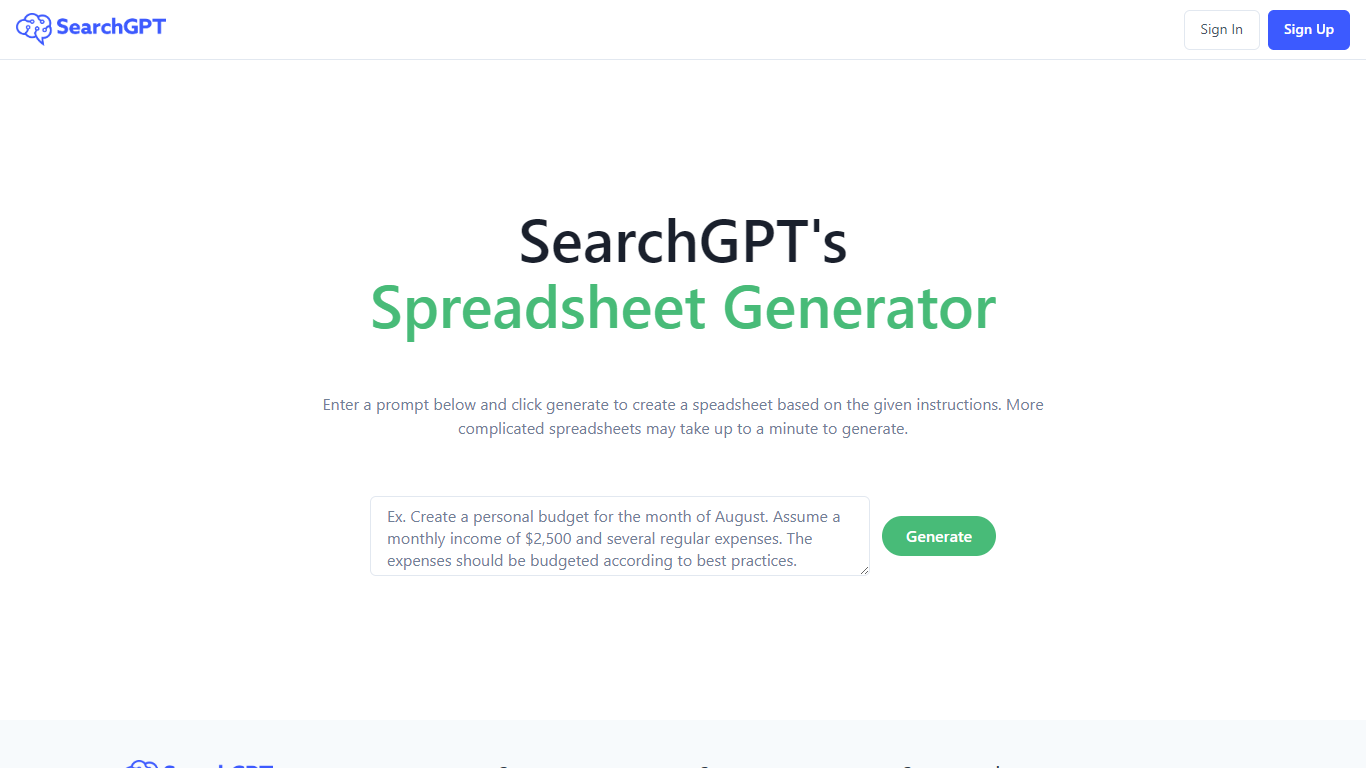
SearchGPT at searchgpt.ai is a spreadsheet generator from Owens Laboratories. You describe the table you want in a prompt, hit Generate, and the site builds a spreadsheet from your instructions instead of making you lay out rows and columns by hand.
The homepage workflow is built around that single prompt box. Simple requests return quickly, while more complicated spreadsheet layouts can take up to a minute to finish generating.
Sign in and sign up run through the site's auth pages, so you need an account before you can use the generator. The product is aimed at anyone who wants spreadsheet output from plain-language directions rather than manual setup in Excel or Google Sheets.
Exa

What is Exa?
Exa is a search API built for AI agents, not traditional keyword search. The company indexes hundreds of billions of web pages and exposes search, page contents, deep research, and monitoring through a single API so developers can give agents live web context without building their own crawl stack.
The product spans several endpoints. Search returns ranked URLs with optional highlights that strip pages down to the tokens an LLM actually needs. Contents fetches full page text. Deep Search runs multi-step research with structured outputs and citations. Agent handles async list building and enrichment. Monitors watches the web on a schedule and pushes updates through webhooks.
Latency is configurable by search type, from sub-200ms instant mode to deep modes that take several seconds for harder queries. Category indexes cover companies, people, research papers, news, and more. Customers include Cursor, Cognition, HubSpot, OpenRouter, and Monday.com, with over 400,000 developers on the platform.
SearchGPT Upvotes
Exa Upvotes
SearchGPT Top Features
Type what you need in a prompt and get a spreadsheet built from your instructions
More complex spreadsheet requests can take up to a minute to generate
Single Generate button drives the whole homepage workflow
Sign in and sign up through the site auth system before generating
Light and dark theme options on the interface
Exa Top Features
One API covers search, page contents, deep research, agents, and scheduled web monitors
Search types from ~250ms instant to multi-step deep research with structured JSON outputs
Highlights extract only the relevant passages from a page, cutting token use by up to 90%
Category indexes span 50M+ companies, 1B+ people profiles, and 100M+ research papers
Python and JavaScript SDKs plus an MCP server for plugging search into agent frameworks
SOC 2 Type II certified with zero data retention and single sign-on for enterprise teams
SearchGPT Category
- Search Engine
Exa Category
- Search Engine
SearchGPT Pricing Type
- Freemium
Exa Pricing Type
- Freemium