SearchGPT vs Findsight AI
In the contest of SearchGPT vs Findsight AI, which AI Search Engine tool is the champion? We evaluate pricing, alternatives, upvotes, features, reviews, and more.
If you had to choose between SearchGPT and Findsight AI, which one would you go for?
When we examine SearchGPT and Findsight AI, both of which are AI-enabled search engine tools, what unique characteristics do we discover? Both tools are equally favored, as indicated by the identical upvote count. You can help us determine the winner by casting your vote and tipping the scales in favor of one of the tools.
Feeling rebellious? Cast your vote and shake things up!
SearchGPT

What is SearchGPT?
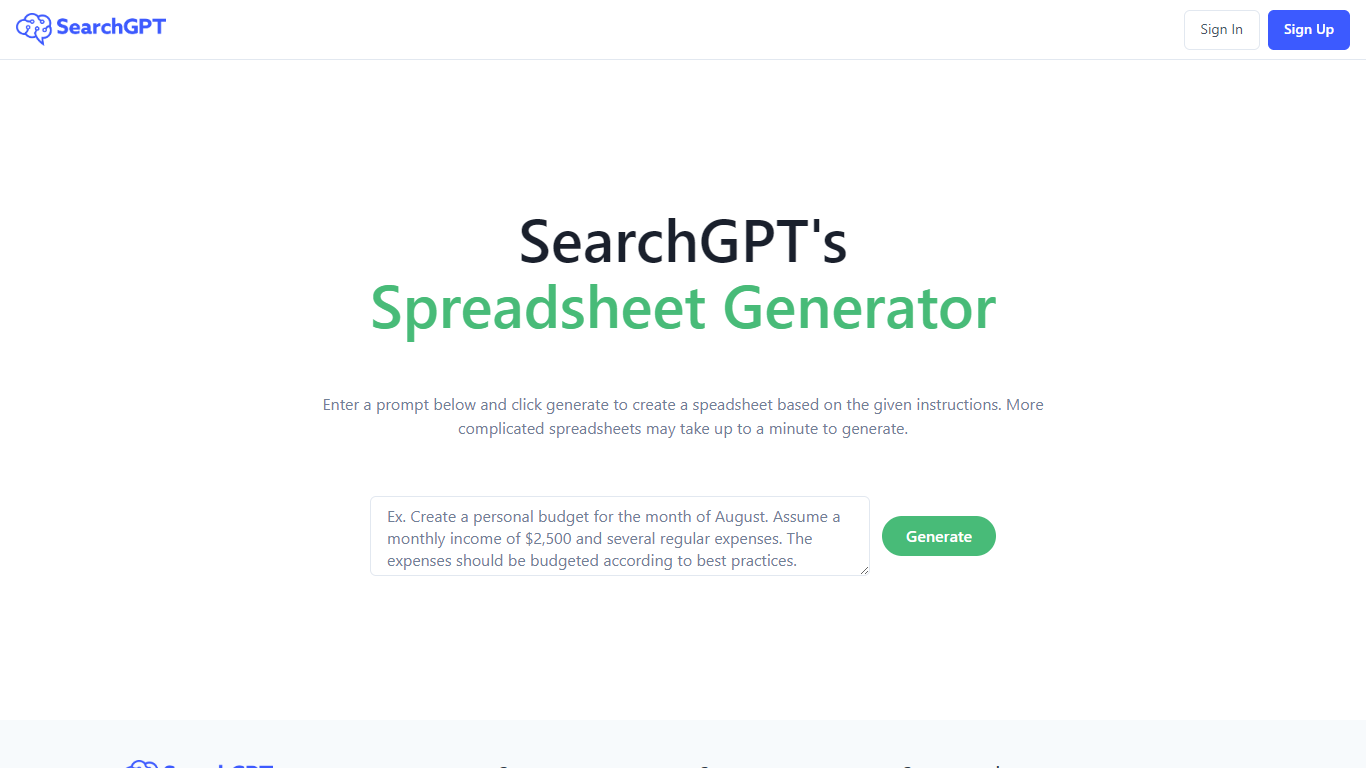
SearchGPT at searchgpt.ai is a spreadsheet generator from Owens Laboratories. You describe the table you want in a prompt, hit Generate, and the site builds a spreadsheet from your instructions instead of making you lay out rows and columns by hand.
The homepage workflow is built around that single prompt box. Simple requests return quickly, while more complicated spreadsheet layouts can take up to a minute to finish generating.
Sign in and sign up run through the site's auth pages, so you need an account before you can use the generator. The product is aimed at anyone who wants spreadsheet output from plain-language directions rather than manual setup in Excel or Google Sheets.
Findsight AI
What is Findsight AI?
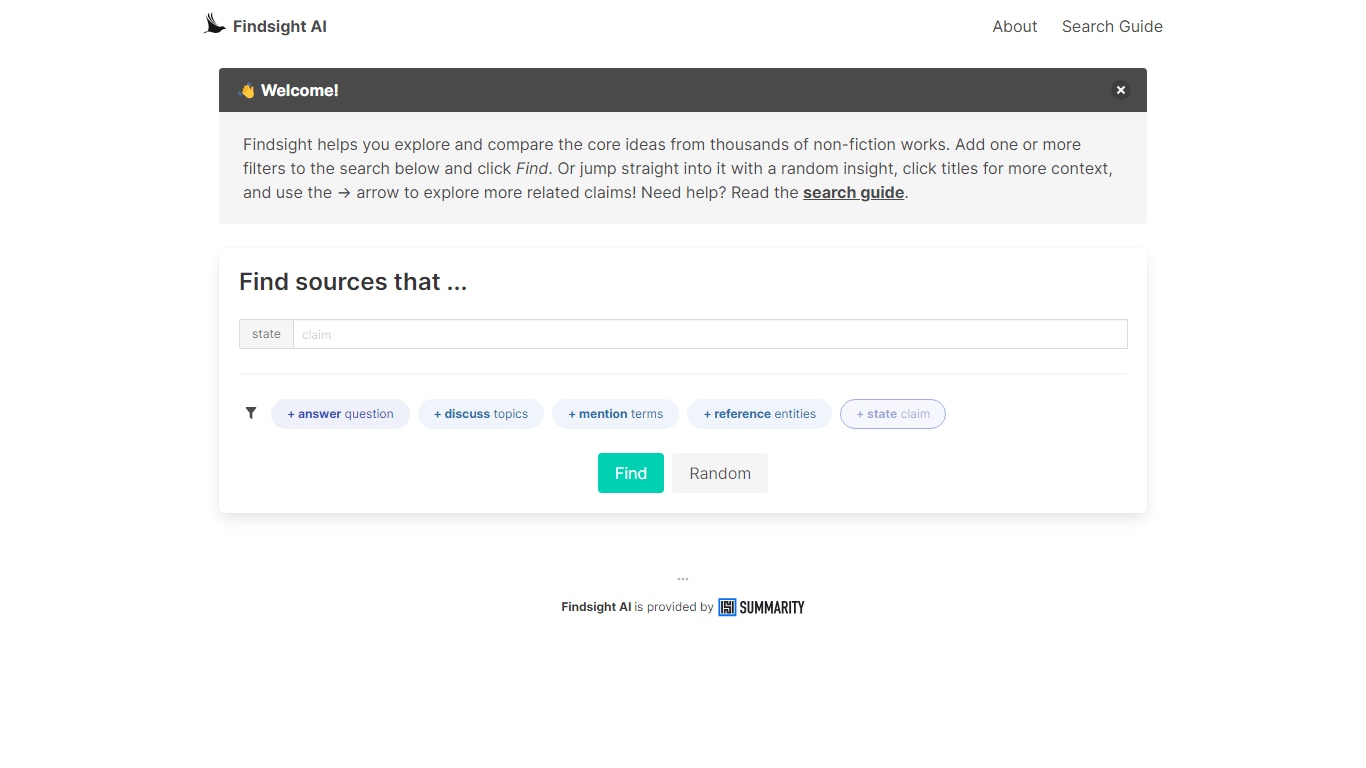
Findsight AI is a search engine for comparing core claims pulled from thousands of non-fiction books, articles, and papers. You filter by literal mentions, named entities, topics, stated claims, or natural-language questions, then follow related claims with the explore arrow to build a syntopical reading path. Each result links back to the original source so you can go deeper than the excerpt.
Google finds pages; Findsight indexes individual claims and shows how different authors answer the same question side by side. The state and answer filters use embeddings to match meaning, while mention and references filters handle keyword and entity precision that pure semantic search often misses.
Students, researchers, and curious readers use Findsight AI when they want to compare perspectives across sources without reading every book cover to cover. The site is free with no signup, and the state and answer filters allow 50 searches per day before you need to drop those filters to keep searching.
SearchGPT Upvotes
Findsight AI Upvotes
SearchGPT Top Features
Type what you need in a prompt and get a spreadsheet built from your instructions
More complex spreadsheet requests can take up to a minute to generate
Single Generate button drives the whole homepage workflow
Sign in and sign up through the site auth system before generating
Light and dark theme options on the interface
Findsight AI Top Features
Claim-based search across thousands of non-fiction books and articles
AI state filter finds claims related to a custom statement you enter
AI answer filter surfaces claims that address a natural-language question
Entity and topic filters with Wikipedia-linked named entity suggestions
Three-stage hybrid engine combining BM25 text search and vector similarity
Explore arrow links related claims for syntopical reading journeys
50 state and answer filter searches per day on the free plan
SearchGPT Category
- Search Engine
Findsight AI Category
- Search Engine
SearchGPT Pricing Type
- Freemium
Findsight AI Pricing Type
- Free