Selfgazer vs Vedic AstroGPT
When comparing Selfgazer vs Vedic AstroGPT, which AI Astrology tool shines brighter? We look at pricing, alternatives, upvotes, features, reviews, and more.
Between Selfgazer and Vedic AstroGPT, which one is superior?
When we put Selfgazer and Vedic AstroGPT side by side, both being AI-powered astrology tools, Selfgazer stands out as the clear frontrunner in terms of upvotes. Selfgazer has been upvoted 7 times by aitools.fyi users, and Vedic AstroGPT has been upvoted 6 times.
Think we got it wrong? Cast your vote and show us who's boss!
Selfgazer


What is Selfgazer?
Selfgazer combines astrology, tarot, I Ching, and Bazi readings inside one self-reflection app built on Jungian psychology. You can generate a birth chart, pull guided tarot spreads, consult the Selfgazer Oracle, and read weekly horoscopes tied to your natal placements.
Most astrology apps stop at sun-sign horoscopes or generic chatbot text. Selfgazer runs chart math on Swiss Ephemeris, the same engine professional astrologers use, then layers Jungian interpretive frameworks across tarot, synastry, and I Ching consultations in a single interface.
People exploring shadow work, relationship compatibility, or daily spiritual practice use Selfgazer for birth chart analysis, synastry comparisons, emotional check-ins, and a large library of essays on archetypes and divination. The site notes it cannot diagnose or treat mental health conditions.
Vedic AstroGPT
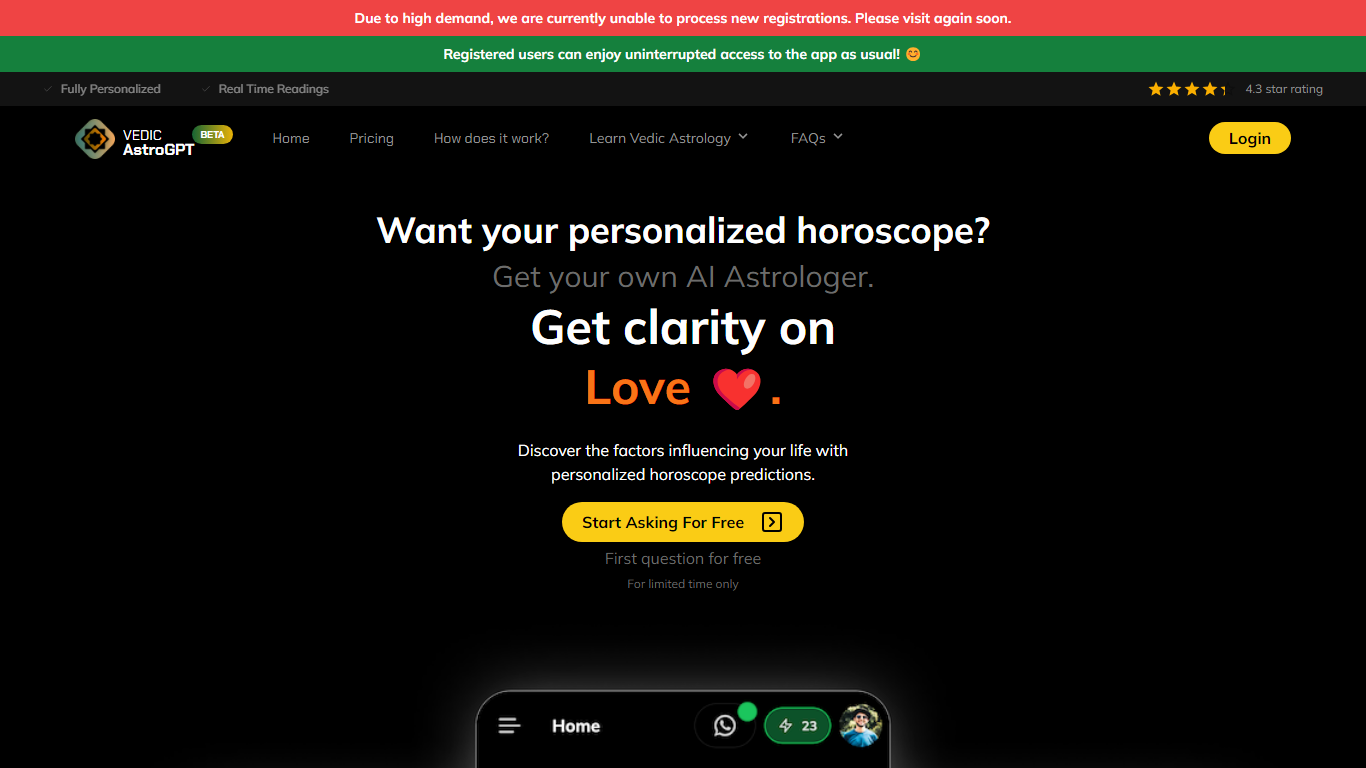
What is Vedic AstroGPT?
Vedic AstroGPT reads your Vedic birth chart (kundli) and answers questions about love, career, education, and health through chat-style AI astrologers. You enter your birth date, time, and place to generate a free chart, then buy question credits when you want deeper follow-ups. The site also ships a library of free calculators for kundali matching, mangal dosha, dasha periods, and daily panchang.
Most AI horoscope apps lean on Western sun-sign logic or generic chatbot prompts. Vedic AstroGPT stays inside sidereal Vedic astrology: it builds a natal chart from your exact birth coordinates, interprets planetary placements and dasha periods, and sells question credits instead of a flat monthly subscription. That pay-per-question model fits occasional check-ins better than an all-you-can-ask membership, though it can add up if you ask a lot.
The product targets people curious about Vedic astrology who want instant chart readings without booking a human astrologer first. Students, couples checking compatibility, and anyone exploring marriage or career timing from a kundli will find the free chart tools and paid Q&A useful. A Google Play app and web app at app.vedicastrogpt.com extend the same workflow to mobile.
Selfgazer Upvotes
Vedic AstroGPT Upvotes
Selfgazer Top Features
Birth chart analysis uses Swiss Ephemeris, the professional astrological computation engine
Selfgazer Oracle blends astrology, tarot, and I Ching guidance with interactive follow-up dialogue
Weekly horoscope readings compare current planetary transits to your stored natal chart
Guided tarot and I Ching modules include emotional check-ins for psychological integration
Synastry analysis compares two charts for relationship compatibility through the Oracle
Bazi chart readings use birth time to map traditional Chinese destiny and character patterns
Vedic AstroGPT Top Features
Free kundli and birth chart generation from your exact birth date, time, and location
Paid question credits from Rs 49 ($1) for 1 question up to Rs 999 ($20) for 40 credits
12+ free calculators including kundali matching, mangal dosha, vimshottari dasha, and panchang
Two AI astrologer personas: Pawan Paudel (live) and Krishna Upadhyay (marked coming soon)
Google Play Android app alongside the web app at app.vedicastrogpt.com
Learning library with ascendant, house, and compatibility guides for self-study
Selfgazer Category
- Astrology
Vedic AstroGPT Category
- Astrology
Selfgazer Pricing Type
- Freemium
Vedic AstroGPT Pricing Type
- Freemium