Serwell vs CodeBaby
In the face-off between Serwell vs CodeBaby, which AI Customer Support tool takes the crown? We scrutinize features, alternatives, upvotes, reviews, pricing, and more.
In a face-off between Serwell and CodeBaby, which one takes the crown?
If we were to analyze Serwell and CodeBaby, both of which are AI-powered customer support tools, what would we find? Neither tool takes the lead, as they both have the same upvote count. You can help us determine the winner by casting your vote and tipping the scales in favor of one of the tools.
Think we got it wrong? Cast your vote and show us who's boss!
Serwell

What is Serwell?
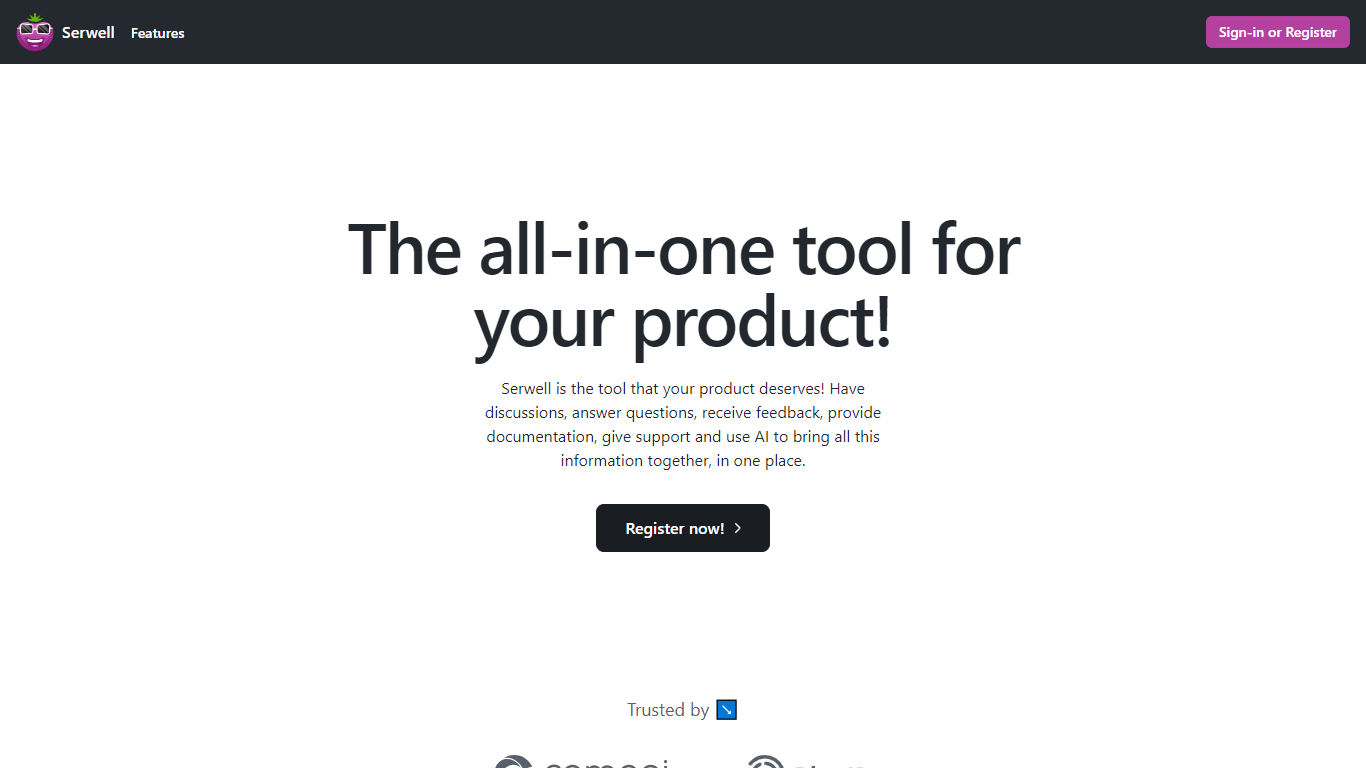
Serwell combines community forums, feedback boards, support tickets, product docs, and an embeddable AI assistant in one customer support workspace. SaaS teams run discussions, mark answers, post updates, collect feedback with an auto-generated roadmap, and handle private support tickets from the same branded hub. Documentation pages are search-engine indexed so customers can find help outside the app.
Unlike stacking Intercom, Canny, and a separate docs site, Serwell keeps community, roadmap, support, and knowledge base data in one workspace that trains its AI layer. The widget learns from workspace content and suggests replies based on docs and past tickets. Custom domains, BlueID authentication, and SSO let you host the portal on your own URL with your login flow.
Product managers, SaaS founders, and customer success teams who want one portal instead of four tools fit Serwell best. It trades deep specialization in any single category for a unified stack with shared context across support channels.
CodeBaby
What is CodeBaby?
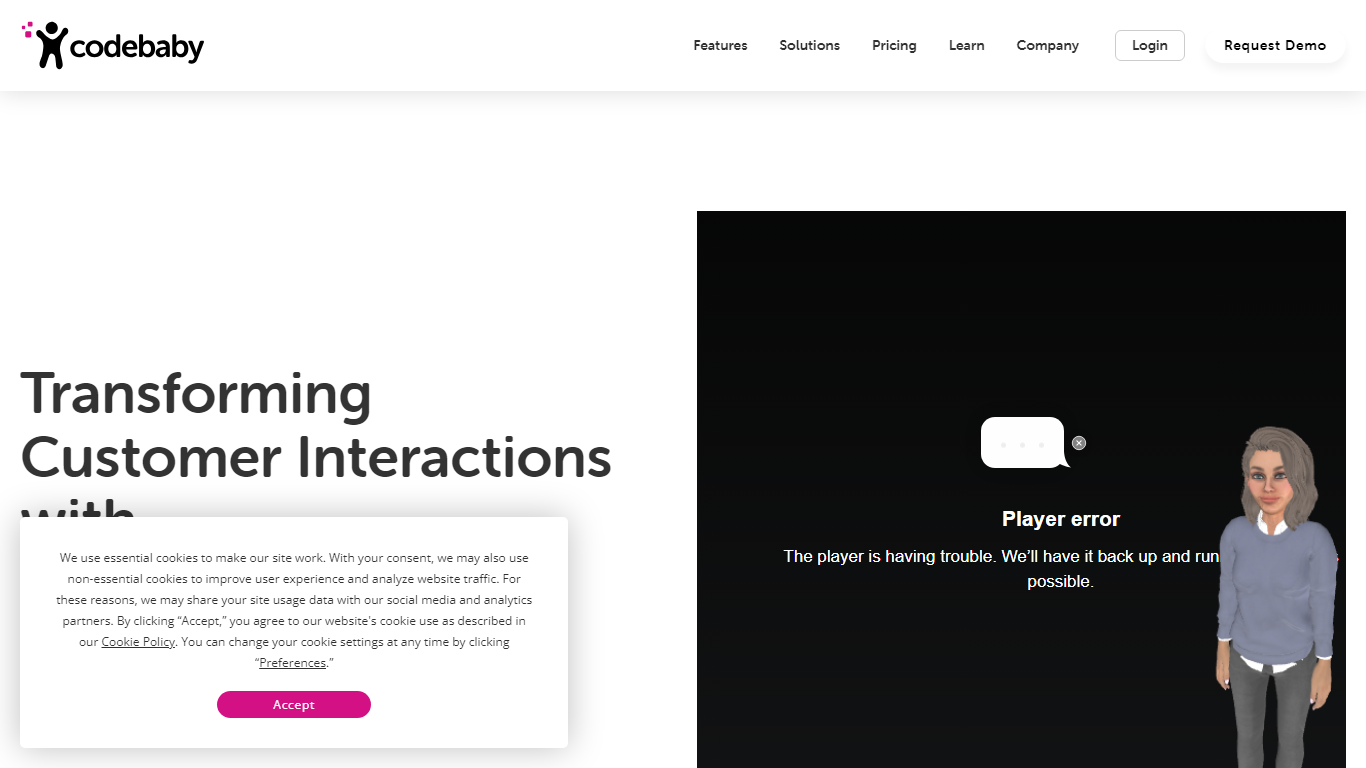
CodeBaby deploys conversational digital human avatars on websites, apps, kiosks, and hologram devices for customer support teams. The avatars speak, gesture, and respond in real time using connected knowledge bases, CRM data, and large language models. Visitors can ask questions in natural language and get guided through support, intake, training, or shopping flows.
Generic chatbots deliver text in a widget. CodeBaby focuses on visible avatars with real-time animation, voice synthesis, and deployment paths that include self-serve avatar building, turnkey managed builds, and Proto Hologram hardware bundles. Use case pages cite 40 to 60 percent ticket deflection for customer support and 20 to 40 percent e-commerce conversion lifts when avatars act as product concierges.
The platform targets enterprises in healthcare, retail, hospitality, education, and corporate training. Documented deployments include CBS Big Brother Season 26 avatars, a PrimarAIcare rural healthcare project in the Dominican Republic, and SHARP Literacy classroom avatar creation for fourth graders. Sales run through demo requests rather than self-serve checkout.
Serwell Upvotes
CodeBaby Upvotes
Serwell Top Features
Auto-generated product roadmap from feedback tickets without manual board setup
Private support tickets visible only to the agent and the requesting customer
Documentation editor with automatic search engine indexing for public help pages
Embeddable AI widget that learns from workspace docs and prior support requests
Custom domain hosting with BlueID authentication and SSO for branded portals
Community Q&A with mark-as-answer posts and product update announcements
CodeBaby Top Features
Supports GPT-4, Claude, Sonnet, and custom large language models as the conversational engine
Uses Amazon Polly and Azure Speech for text-to-speech with standard and neural voice options
Three deployment paths: self-serve avatar builder, turnkey managed solution, and Proto Hologram bundles
Customer support avatars cite 40 to 60 percent ticket volume reduction on routine inquiries
Healthcare intake avatars collect patient history and run evidence-based triage with EHR integration
Embeds on websites via script tag or API connections to CRM and internal databases
Serwell Category
- Customer Support
CodeBaby Category
- Customer Support
Serwell Pricing Type
- Paid
CodeBaby Pricing Type
- Paid