Seth's Blog AI vs DrugCard
Compare Seth's Blog AI vs DrugCard and see which AI Research tool is better when we compare features, reviews, pricing, alternatives, upvotes, etc.
Which one is better? Seth's Blog AI or DrugCard?
When we compare Seth's Blog AI with DrugCard, which are both AI-powered research tools, The upvote count reveals a draw, with both tools earning the same number of upvotes. Your vote matters! Help us decide the winner among aitools.fyi users by casting your vote.
Not your cup of tea? Upvote your preferred tool and stir things up!
Seth's Blog AI
What is Seth's Blog AI?
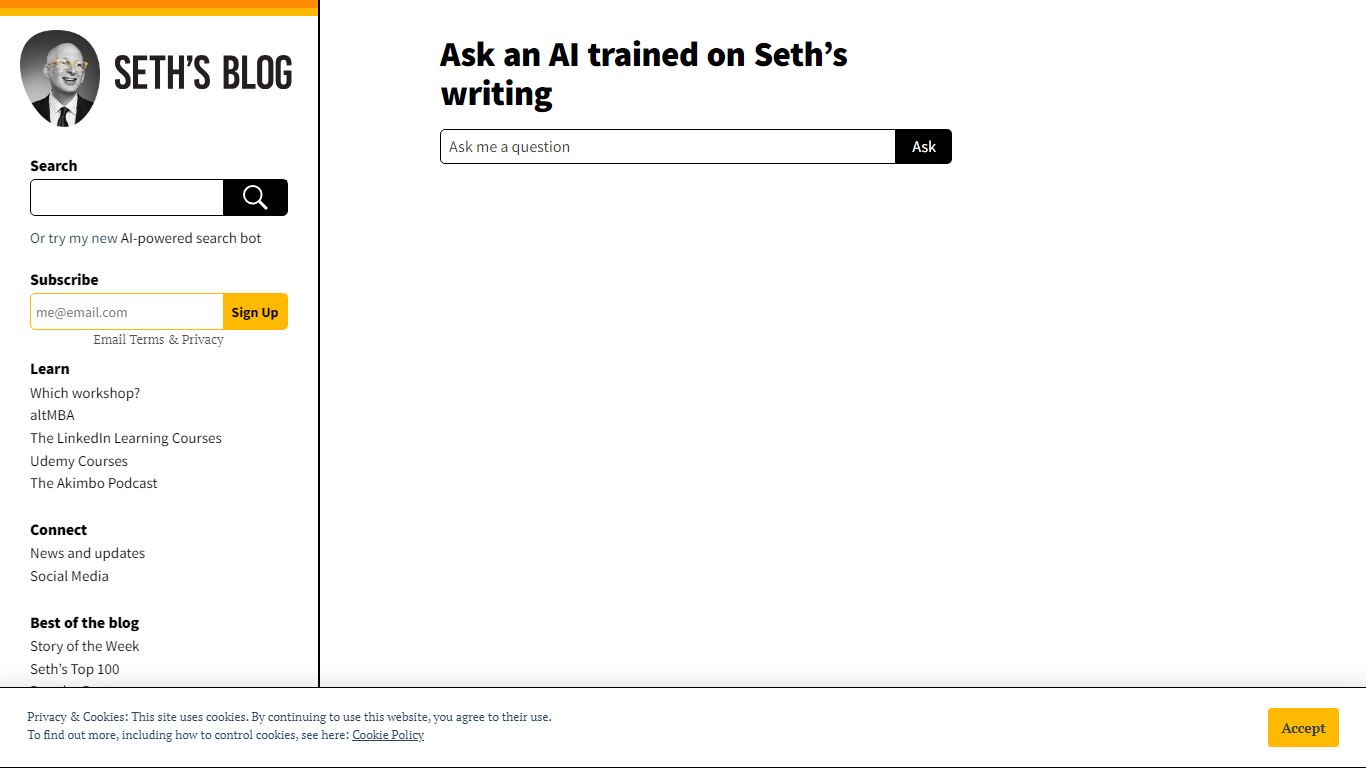
Seth's Blog AI lets you query Seth Godin's blog archive through a chat window trained on his published writing. You type a question about marketing, tribes, or leadership and get an answer drawn from decades of posts on seths.blog. The bot page also links from the main blog search box as an alternative to keyword search.
Most general chatbots answer from the whole web. Seth's Blog AI is scoped to one author's body of work, so responses reflect Seth Godin's specific frameworks on permission marketing, remarkability, and trust rather than generic business advice. That narrow corpus is the trade-off: deep on Seth's ideas, useless for unrelated topics.
Marketers, entrepreneurs, and longtime blog readers use it to research concepts before a meeting, find the post behind a half-remembered idea, or test how Seth might frame a problem. Copy Response is built in, and thumbs-up or thumbs-down feedback helps refine answers after each query.
DrugCard
What is DrugCard?
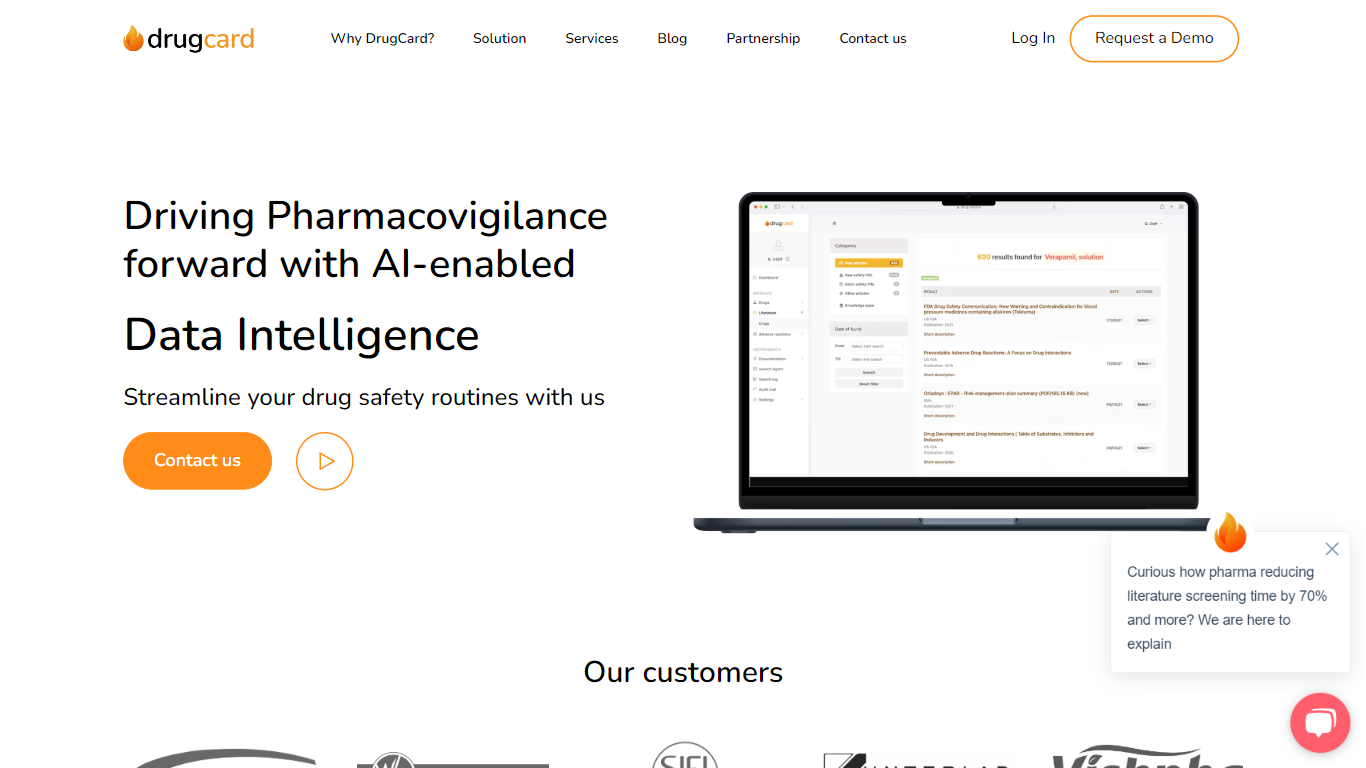
Teams use DrugCard to automate local and global medical literature screening without reading every journal cover to cover. The service monitors 2200+ local journals across 146+ countries, handles 100+ languages, and bundles modules like Simple Search, Regulatory Intelligence, an adverse event database, and eCTDlight. Marketing Authorization Holders, CROs, and PV freelancers are the audiences highlighted on the homepage.
Where generic literature databases stop at keyword alerts, DrugCard focuses on local-language journals and scanned print copies. The vendor claims proprietary OCR reaches up to 99% accuracy on average-quality scans and that customers see 50-70% time savings versus manual screening, with the homepage citing 60% savings and up to 3 minutes per article instead of 35.
Teams buy through demo requests rather than self-serve checkout. DrugCard also sells LQPPV, signal management, PSUR, ICSR, PSMF, and risk management services for orgs that want outsourced pharmacovigilance help alongside the software.
Seth's Blog AI Upvotes
DrugCard Upvotes
Seth's Blog AI Top Features
Trained on Seth Godin's published posts at seths.blog as its sole source corpus
Live at seths.blog/bot/ and linked from the main blog Search sidebar
Copy Response button exports the full answer in one click
Thumbs up and thumbs down controls with optional written feedback per answer
No account signup or payment step on the bot page
DrugCard Top Features
Monitors 2200+ local medical journals across 146+ countries with support for 100+ languages
Proprietary OCR handles poorly scanned hard-copy journals with up to 99% keyword recognition accuracy
DrugCard Platform automates local literature screening with email alerts plus weekly summary reports
Simple Search, Regulatory Intelligence, Adverse Event Database, and eCTDlight modules extend beyond core screening
Customer feedback cites 50-70% time savings, and the homepage lists 60% savings versus human-only screening
New country journal packs typically onboard in 2-3 weeks according to the site FAQ
Seth's Blog AI Category
- Research
DrugCard Category
- Research
Seth's Blog AI Pricing Type
- Free
DrugCard Pricing Type
- Paid