SkimIt.ai vs SciSpace (formerly Typeset)
In the clash of SkimIt.ai vs SciSpace (formerly Typeset), which AI Summarizer tool emerges victorious? We assess reviews, pricing, alternatives, features, upvotes, and more.
When we put SkimIt.ai and SciSpace (formerly Typeset) head to head, which one emerges as the victor?
Let's take a closer look at SkimIt.ai and SciSpace (formerly Typeset), both of which are AI-driven summarizer tools, and see what sets them apart. SciSpace (formerly Typeset) is the clear winner in terms of upvotes. SciSpace (formerly Typeset) has 24 upvotes, and SkimIt.ai has 6 upvotes.
Does the result make you go "hmm"? Cast your vote and turn that frown upside down!
SkimIt.ai
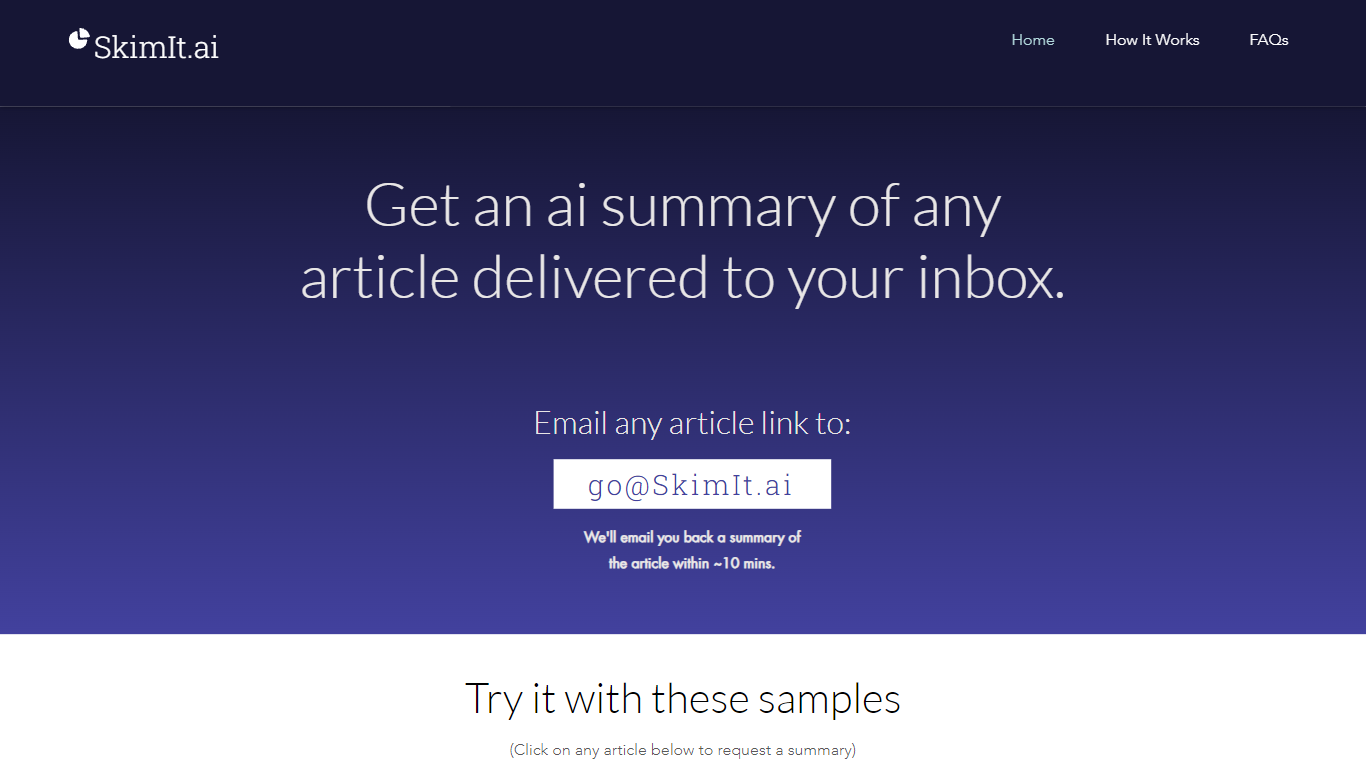

What is SkimIt.ai?
SkimIt.ai is an email summarizer that turns any article link into a short recap delivered to your inbox. You email a URL to [email protected] with the link as the first URL in the message body, and the service replies with a summary in about 10 minutes. There is no app install or account signup on the site.
Browser extensions and reader apps keep you inside another interface. SkimIt stays in email so you can forward links from mobile share sheets and CC friends who get both your message and the generated recap. The trade-off is speed: summaries can take up to 15 minutes when servers are busy, and accuracy is presented as entertainment-grade rather than publication-ready.
Busy readers, founders sharing essays, and teams passing around long posts are the natural audience. OpenAI GPT powers the backend processing, and support questions go to [email protected] if a summary is delayed or lands in spam.
SciSpace (formerly Typeset)
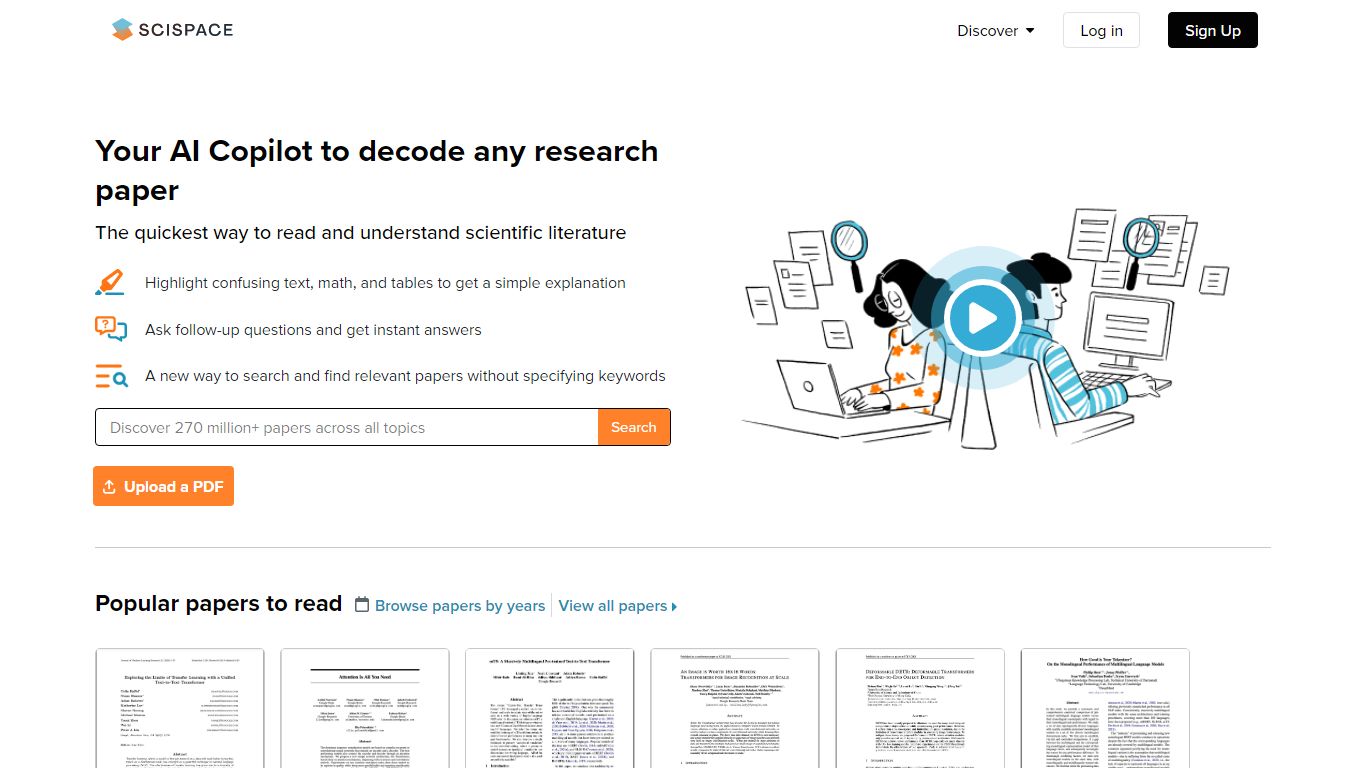
What is SciSpace (formerly Typeset)?
SciSpace, formerly Typeset, is a research workspace where you search a large academic paper index, chat with PDFs, and draft literature reviews with cited sources. The typeset.io URL now lands on scispace.com, which bundles an AI agent, literature review search, paraphraser, citation generator, data extraction, and AI detection in one interface.
General AI chat tools answer from the open web. SciSpace centers the workflow on papers: you can run systematic reviews across 280M+ indexed works, highlight passages for explanations, and move from reading into AI Writer drafts with references. Biomedical Agent, enterprise recruiting, and Chrome or mobile apps extend the same stack for labs and R&D teams.
Graduate students, PhD researchers, and pharma or biotech analysts use SciSpace to screen literature faster, unpack dense PDFs, and produce summaries or manuscripts with traceable citations. The platform reports adoption by 9.6 million researchers and lists SOC 2 compliance on its site.
SkimIt.ai Upvotes
SciSpace (formerly Typeset) Upvotes
SkimIt.ai Top Features
Summaries arrive by email within about 10 minutes of sending the article URL
No app download or signup required on skimit.ai
CC friends on the email so they receive the article and the SkimIt summary
Reads the first URL in the email body regardless of subject line text
Sample article links on the homepage open prefilled mailto requests
OpenAI GPT handles the text processing behind each summary
Stores sender email, CC addresses, and the first URL per request only
SciSpace (formerly Typeset) Top Features
Search and review literature across 280M+ indexed research papers
Chat with PDF highlights for plain-language explanations of dense sections
SciSpace Agent plus Biomedical Agent for guided research tasks
Built-in paraphraser, citation generator, AI detector, and data extraction tools
AI Writer and templates for drafting papers with cited sources
Chrome extension and mobile app for reading outside the browser tab
Premium plans with a 24-hour money-back guarantee on subscriptions
SkimIt.ai Category
- Summarizer
SciSpace (formerly Typeset) Category
- Summarizer
SkimIt.ai Pricing Type
- Free
SciSpace (formerly Typeset) Pricing Type
- Freemium