Skipit.ai vs SciSpace (formerly Typeset)
When comparing Skipit.ai vs SciSpace (formerly Typeset), which AI Summarizer tool shines brighter? We look at pricing, alternatives, upvotes, features, reviews, and more.
In a comparison between Skipit.ai and SciSpace (formerly Typeset), which one comes out on top?
When we put Skipit.ai and SciSpace (formerly Typeset) side by side, both being AI-powered summarizer tools, The users have made their preference clear, SciSpace (formerly Typeset) leads in upvotes. SciSpace (formerly Typeset) has been upvoted 24 times by aitools.fyi users, and Skipit.ai has been upvoted 7 times.
Disagree with the result? Upvote your favorite tool and help it win!
Skipit.ai

What is Skipit.ai?
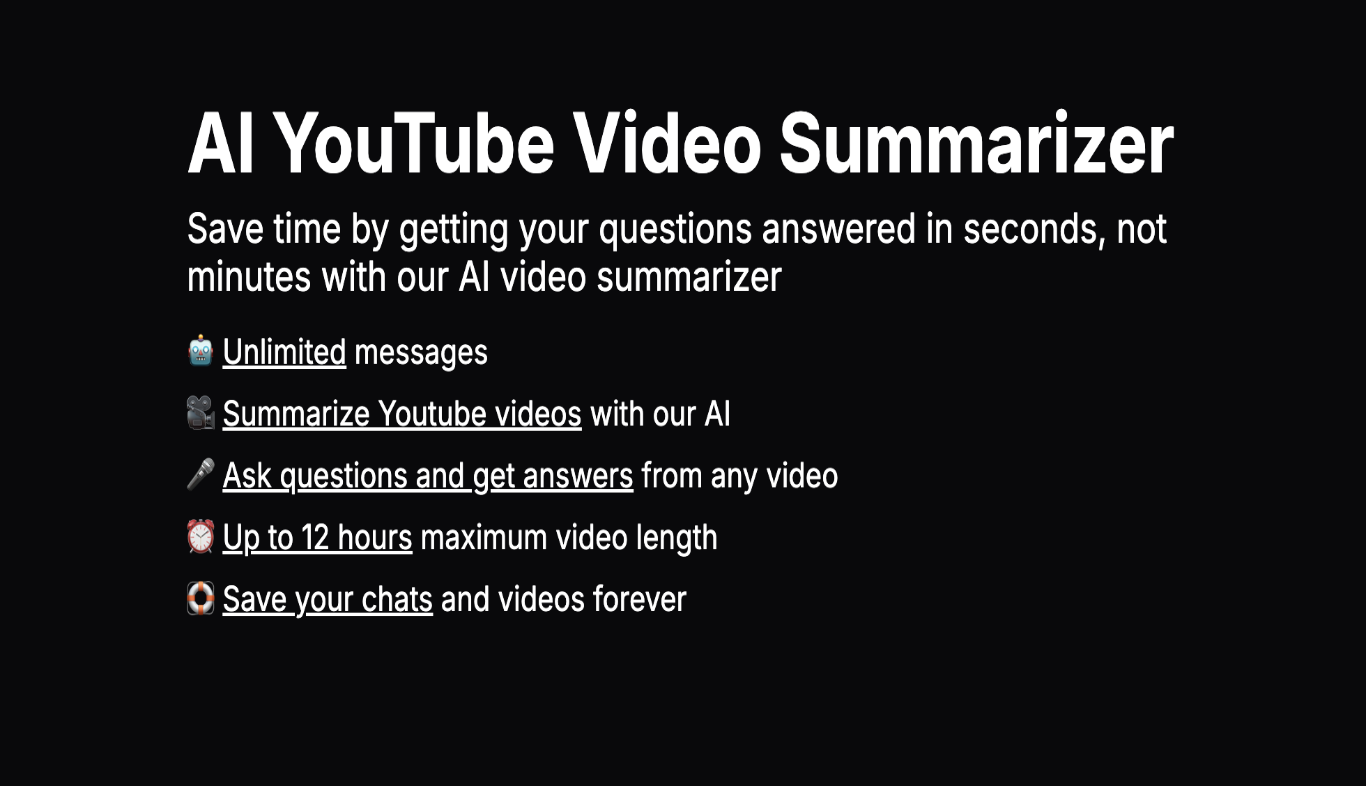
Skipit.ai is an AI-powered tool that instantly summarizes YouTube videos, helping users save hours by extracting key points quickly. It supports videos up to 12 hours long, making it suitable for a wide range of content including tutorials, lectures, and vlogs. Users can ask questions about video content and receive fast, accurate answers without watching the entire video.
The platform offers unlimited chats and saves your chat history and videos for future reference. It features a prompt library and uses the latest AI models to deliver fast responses. Skipit.ai is designed for students, professionals, content creators, and anyone looking to streamline their learning or research process.
Unlike many summarizers, Skipit.ai focuses specifically on YouTube videos, providing a specialized experience that handles long videos with zero rate limits. The service is subscription-based, with monthly and yearly plans that unlock unlimited usage and advanced AI capabilities.
Skipit.ai also emphasizes user privacy and security, with clear policies on data collection and usage. The tool integrates with third-party services for video platforms and payments but maintains control over user data and account security.
Overall, Skipit.ai stands out by combining long video support, interactive Q&A, and saved chat history, making it a practical choice for anyone who wants to get more from video content in less time.
SciSpace (formerly Typeset)
What is SciSpace (formerly Typeset)?
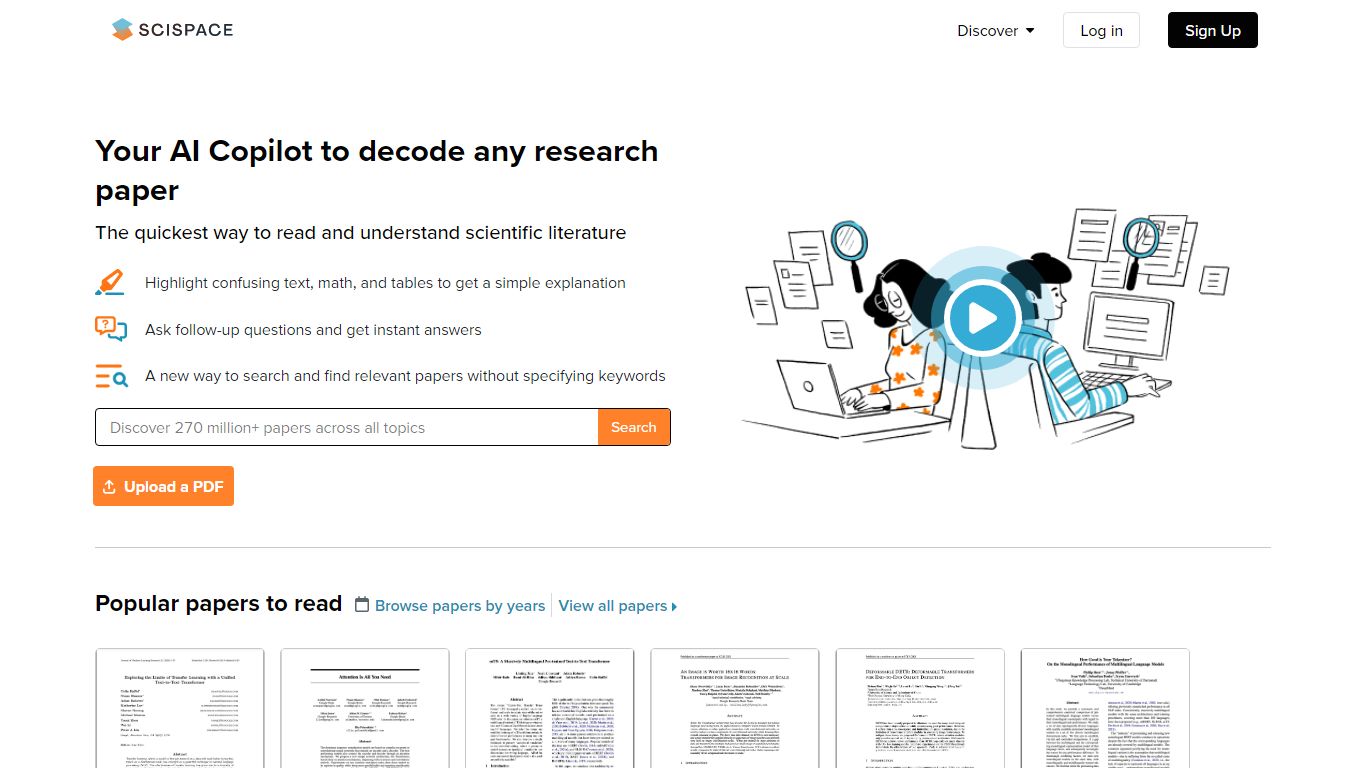
SciSpace, formerly Typeset, is a research workspace where you search a large academic paper index, chat with PDFs, and draft literature reviews with cited sources. The typeset.io URL now lands on scispace.com, which bundles an AI agent, literature review search, paraphraser, citation generator, data extraction, and AI detection in one interface.
General AI chat tools answer from the open web. SciSpace centers the workflow on papers: you can run systematic reviews across 280M+ indexed works, highlight passages for explanations, and move from reading into AI Writer drafts with references. Biomedical Agent, enterprise recruiting, and Chrome or mobile apps extend the same stack for labs and R&D teams.
Graduate students, PhD researchers, and pharma or biotech analysts use SciSpace to screen literature faster, unpack dense PDFs, and produce summaries or manuscripts with traceable citations. The platform reports adoption by 9.6 million researchers and lists SOC 2 compliance on its site.
Skipit.ai Upvotes
SciSpace (formerly Typeset) Upvotes
Skipit.ai Top Features
🎥 Summarize YouTube videos up to 12 hours long for deep content coverage
🤖 Unlimited chats with AI to ask questions and get instant answers
💾 Save your chat history and videos for easy future reference
⚡ Fast AI responses powered by the latest models for quick results
📚 Access a prompt library to customize your summaries and queries
SciSpace (formerly Typeset) Top Features
Search and review literature across 280M+ indexed research papers
Chat with PDF highlights for plain-language explanations of dense sections
SciSpace Agent plus Biomedical Agent for guided research tasks
Built-in paraphraser, citation generator, AI detector, and data extraction tools
AI Writer and templates for drafting papers with cited sources
Chrome extension and mobile app for reading outside the browser tab
Premium plans with a 24-hour money-back guarantee on subscriptions
Skipit.ai Category
- Summarizer
SciSpace (formerly Typeset) Category
- Summarizer
Skipit.ai Pricing Type
- Paid
SciSpace (formerly Typeset) Pricing Type
- Freemium