SpeechText.AI vs Talk to Books
In the battle of SpeechText.AI vs Talk to Books, which AI Search Engine tool comes out on top? We compare reviews, pricing, alternatives, upvotes, features, and more.
Between SpeechText.AI and Talk to Books, which one is superior?
Upon comparing SpeechText.AI with Talk to Books, which are both AI-powered search engine tools, Talk to Books stands out as the clear frontrunner in terms of upvotes. Talk to Books has attracted 23 upvotes from aitools.fyi users, and SpeechText.AI has attracted 6 upvotes.
Want to flip the script? Upvote your favorite tool and change the game!
SpeechText.AI

What is SpeechText.AI?
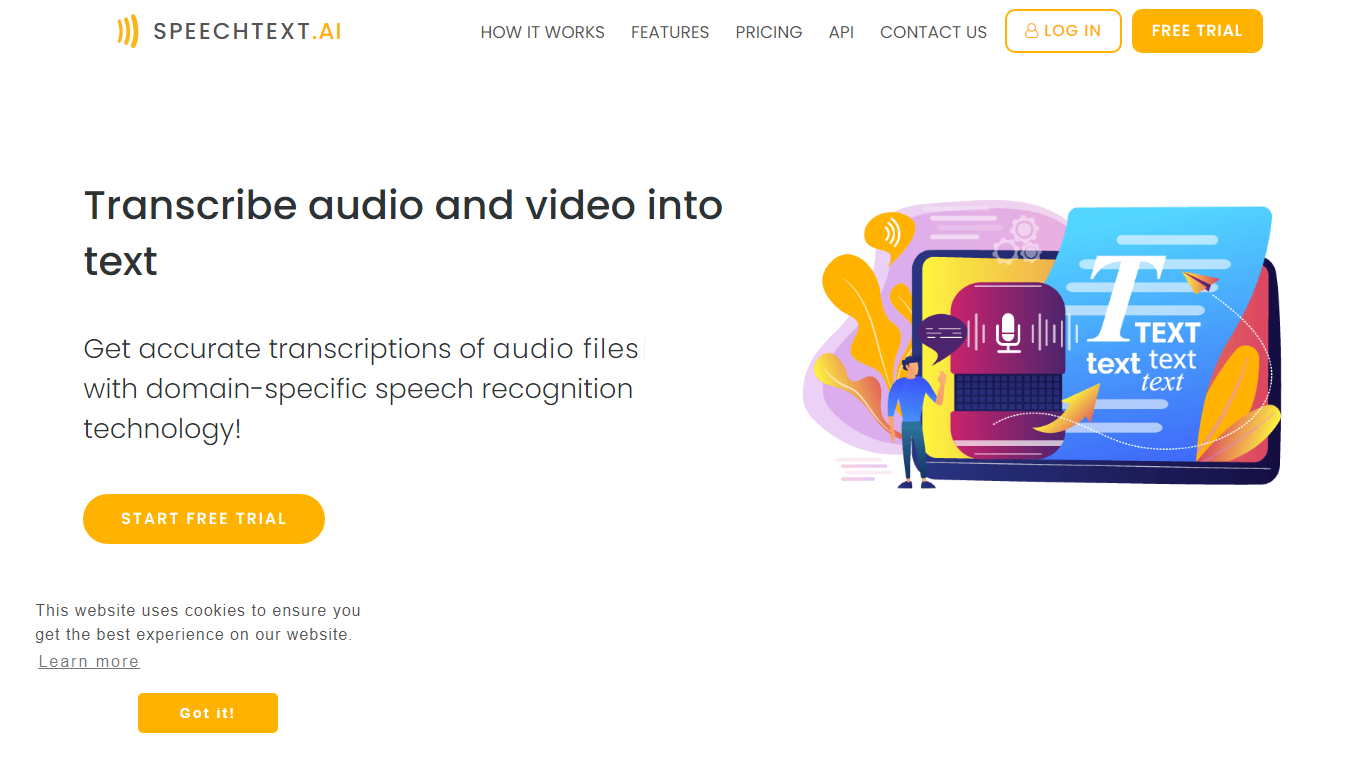
SpeechText.AI turns uploaded audio and video files into editable text through a browser dashboard. You pick an industry domain and audio type before transcribing, which helps the engine handle specialized vocabulary in finance, healthcare, legal, HR, and other fields. The workflow covers upload, domain selection, automatic transcription, in-browser editing, and export to formats like TXT, PDF, DOCX, and SRT.
Most general transcription tools treat every recording the same. SpeechText.AI asks you to classify the source first, whether it is a podcast, interview, conference call, lecture, or meeting record, then routes the file through a model trained on similar audio. That domain and audio-type routing is the main reason to pick it over a one-size-fits-all converter, especially when jargon density matters.
Researchers, journalists, podcast producers, and legal teams use it when they need searchable transcripts with speaker labels and punctuation already applied. The service supports 50+ languages with regional variants, offers a speech-to-text API for developers, and stores data on GDPR-compliant servers hosted in France.
Talk to Books
What is Talk to Books?
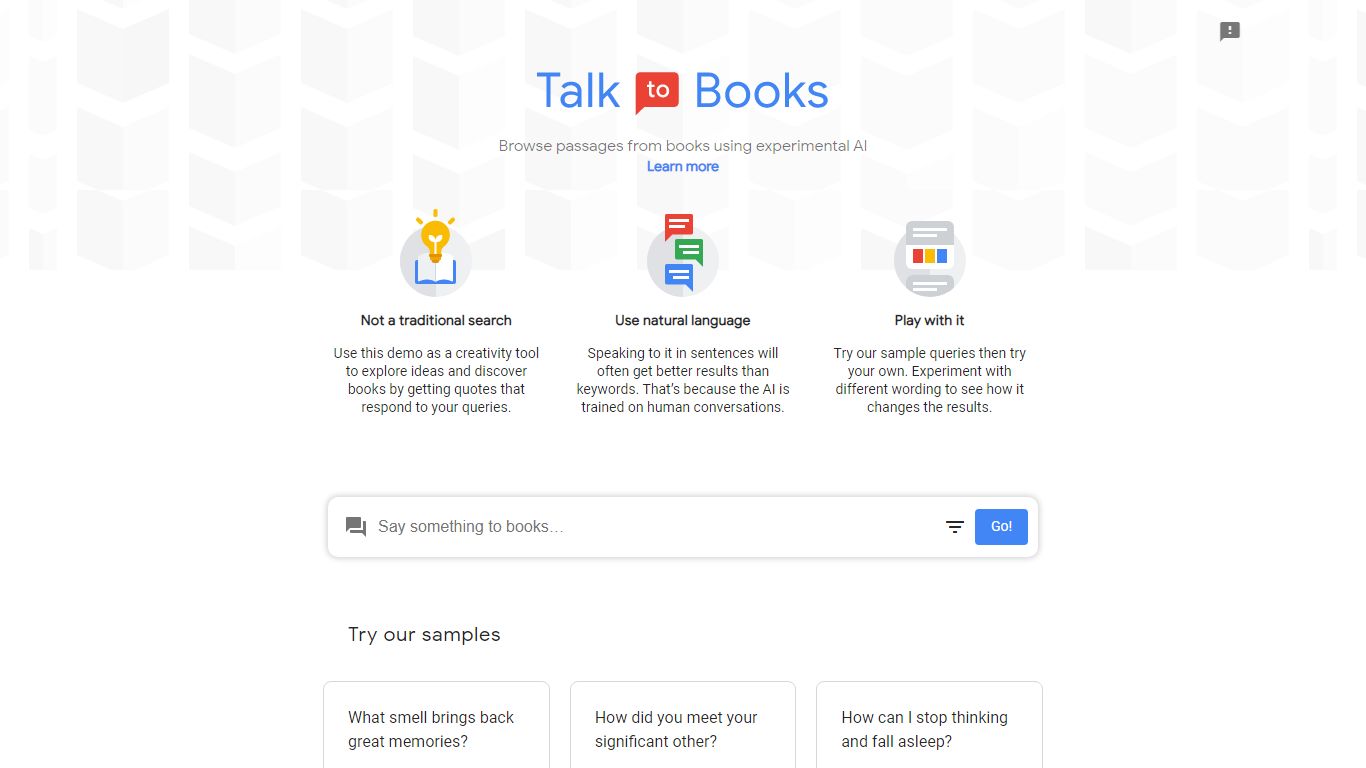
Talk to Books was a Google Research experiment that let you ask natural-language questions and get answers pulled from passages across a large collection of books. You typed a question or statement, and the system returned relevant book excerpts instead of standard web search results. Google has shut the service down, but the site still hosts an archive of sample queries.
The project launched in 2018 as part of Google's Semantic Experiences initiative. It used neural language models for semantic matching and retrieval, showing how conversational queries could surface ideas buried in published books rather than blog posts or forums.
Researchers, students, and curious readers used Talk to Books to explore topics through book-length context. The experiment informed later semantic search features inside Google products such as Shopping, Maps, Gmail, and Hangouts.
SpeechText.AI Upvotes
Talk to Books Upvotes
SpeechText.AI Top Features
Choose industry domains like finance, healthcare, legal, or HR to improve recognition of specialized terms
Select audio types such as interviews, podcasts, conference calls, or lectures before transcribing
Supports 50+ languages with regional variants including English, German, French, Spanish, and Japanese
Speaker identification labels who said what in multi-participant recordings
Achieves a 3.8% word error rate on the LibriSpeech benchmark dataset
Export transcripts as TXT, PDF, DOCX, or SRT subtitle files from the dashboard
Pay-as-you-go credit packs from $10 for 180 minutes with no recurring monthly fee
Talk to Books Top Features
Ask questions in plain English and get book passages back, not web links
Searches across a large corpus of published books using semantic matching
Archived sample queries still viewable on the shutdown notice page
Part of Google's 2018 Semantic Experiences research alongside Semantris
Demonstrated neural retrieval models that later shaped other Google products
SpeechText.AI Category
- Search Engine
Talk to Books Category
- Search Engine
SpeechText.AI Pricing Type
- Freemium
Talk to Books Pricing Type
- Free