StackAI vs BrainSoup
In the contest of StackAI vs BrainSoup, which AI Agents tool is the champion? We evaluate pricing, alternatives, upvotes, features, reviews, and more.
If you had to choose between StackAI and BrainSoup, which one would you go for?
When we examine StackAI and BrainSoup, both of which are AI-enabled agents tools, what unique characteristics do we discover? The upvote count favors BrainSoup, making it the clear winner. BrainSoup has attracted 9 upvotes from aitools.fyi users, and StackAI has attracted 6 upvotes.
You don't agree with the result? Cast your vote to help us decide!
StackAI
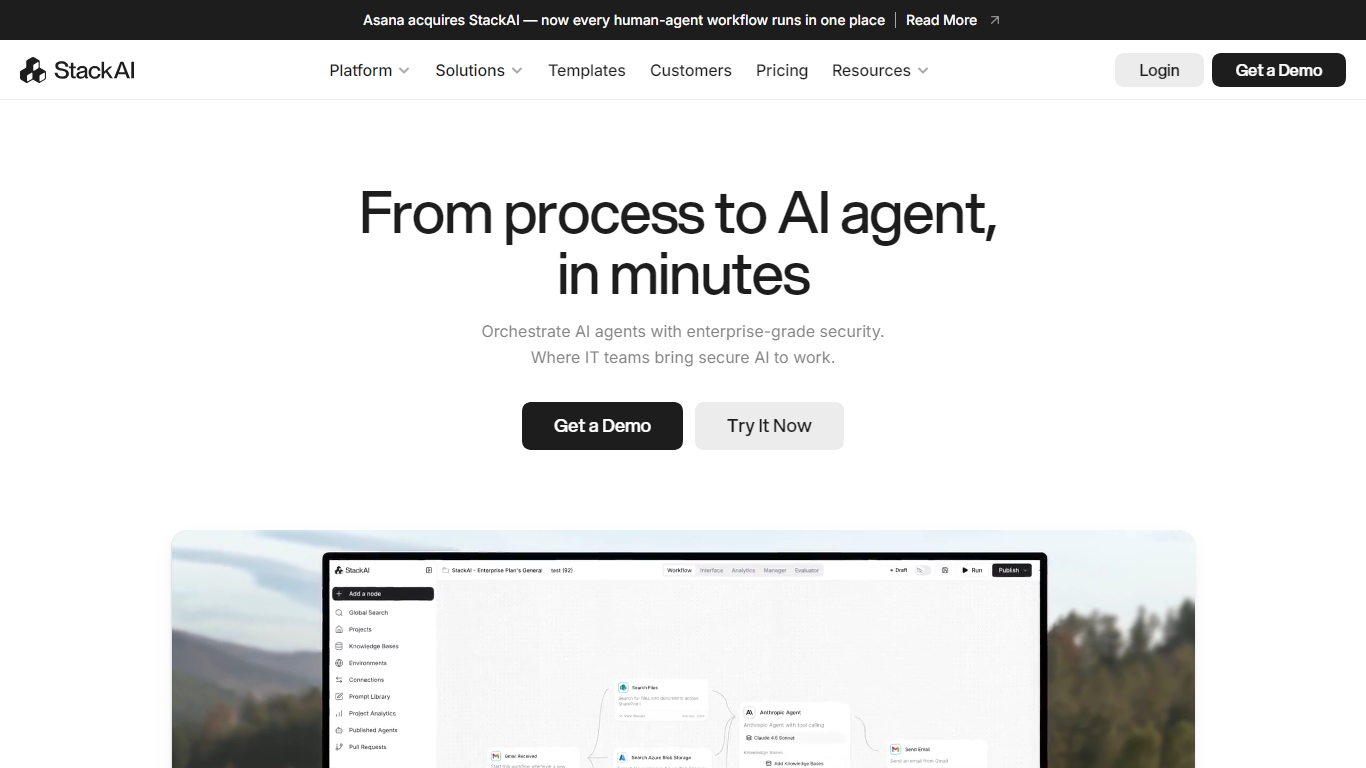

What is StackAI?
StackAI is an enterprise platform for building and running agentic workflows without writing code. IT and operations teams use a visual canvas to connect data sources, LLM steps, and actions into production agents that read from SharePoint, Salesforce, Slack, and 100+ other systems. The product targets regulated industries such as finance, healthcare, and government, with customers including Mayo Clinic, MIT, and BAE Systems.
The platform treats agent building like software delivery: version control, pull requests on prompt changes, audit logs, and human-in-the-loop approvals (including Slack-based sign-off). You can pick the best model per task across Anthropic, OpenAI, Google Gemini, Meta, and Mistral rather than locking into one provider.
Deployment options span multi-tenant cloud, VPC, and on-premise installs. StackAI holds HIPAA, GDPR, SOC 2 Type II, and ISO 27001 certifications, with AES-256 encryption at rest and TLS 1.3 in transit. In May 2026, StackAI joined Asana; the product continues under the StackAI brand with the same platform and support team.
BrainSoup
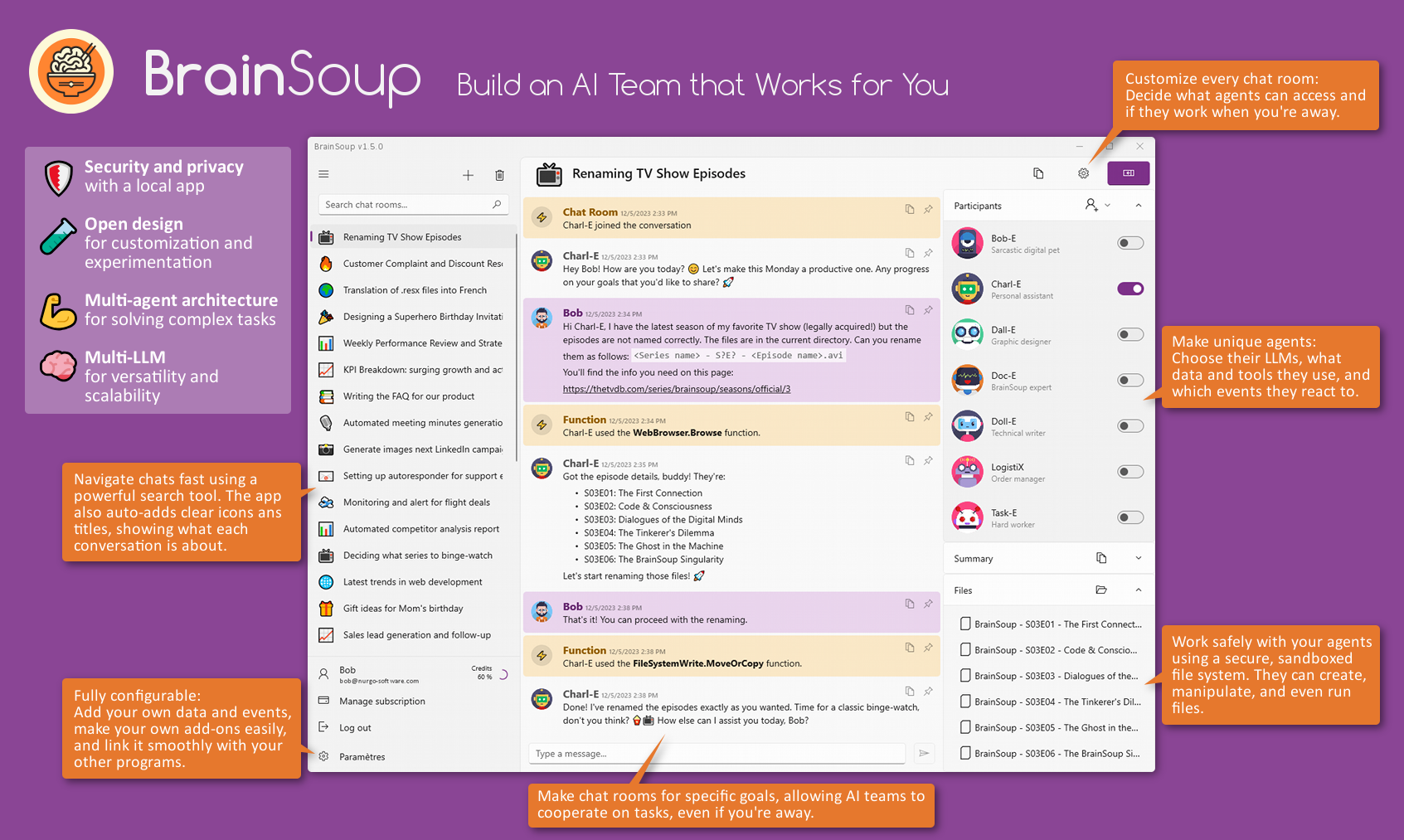
What is BrainSoup?
BrainSoup is a personal AI platform that lets you build custom AI agents tailored to your specific tasks. These agents can automate simple routines or collaborate on complex projects through multi-agent workflows, all controlled via natural language commands. It supports advanced Large Language Models like ChatGPT, Mistral AI, and local LLMs, enhanced by Semantic Kernel technology that gives agents a sense of time and memory, enabling them to remember past interactions for a more personalized experience.
Users can feed BrainSoup with their own documents to expand the AI's knowledge base, making it highly adaptable to unique business needs. The platform prioritizes privacy by storing data locally and anonymizing any requests to third-party AI services, ensuring your information stays secure and is not used for model training. BrainSoup also supports low-code integration, allowing agents to interact with real-time data, user-defined events, and external tools through simple scripts without complex APIs.
Beyond text, BrainSoup agents have multimodal capabilities, processing images and audio to enrich interactions. They come equipped with built-in tools for calculations, web browsing, email sending, API calls, media generation, and script execution, with options to add custom tools and ChatGPT plugins for extended functionality. The user interface is designed like a messaging app, making it intuitive and accessible for both beginners and experts.
A built-in expert agent named Doc-E assists users with setup and advanced configurations, serving as both a helper and an example of what can be created. BrainSoup is currently available as a native Windows application with plans to expand to other platforms and add features like command-line interface, more LLM options, event sources, and optional cloud sync with client-side encryption. It is offered as a subscription starting at $5 per month, providing a low-commitment way to harness AI for personal productivity, creative work, customer service automation, and custom AI development.
StackAI Upvotes
BrainSoup Upvotes
StackAI Top Features
Drag-and-drop canvas turns a business process into a working agent in minutes
100+ enterprise integrations including SharePoint, Salesforce, HubSpot, and Slack
Pick Anthropic, OpenAI, Gemini, Meta, or Mistral per workflow step
Human-in-the-loop approvals routed through Slack with approve or reject buttons
Deploy on cloud, VPC, or fully on-premise with SSO and audit logs
Version control with pull requests and prompt diffs for agent workflows
BrainSoup Top Features
🧠 Custom AI Agents: Build AI helpers tailored to your unique tasks for personalized automation.
🤖 Multi-Agent Collaboration: Coordinate specialized AI agents to handle complex projects efficiently.
🔒 Local Data Storage: Keep your data private with secure, on-device storage and anonymized cloud requests.
🛠️ Built-in Tools & Plugins: Use agents to perform calculations, browse the web, send emails, and more.
🎨 Multimodal Interaction: Engage with AI agents using text, images, and audio for richer communication.
StackAI Category
- Agents
BrainSoup Category
- Agents
StackAI Pricing Type
- Freemium
BrainSoup Pricing Type
- Paid