Starlens vs Cosine
Explore the showdown between Starlens vs Cosine and find out which AI Developer tool wins. We analyze upvotes, features, reviews, pricing, alternatives, and more.
When comparing Starlens and Cosine, which one rises above the other?
When we contrast Starlens with Cosine, both of which are exceptional AI-operated developer tools, and place them side by side, we can spot several crucial similarities and divergences. Interestingly, both tools have managed to secure the same number of upvotes. Your vote matters! Help us decide the winner among aitools.fyi users by casting your vote.
Feeling rebellious? Cast your vote and shake things up!
Starlens
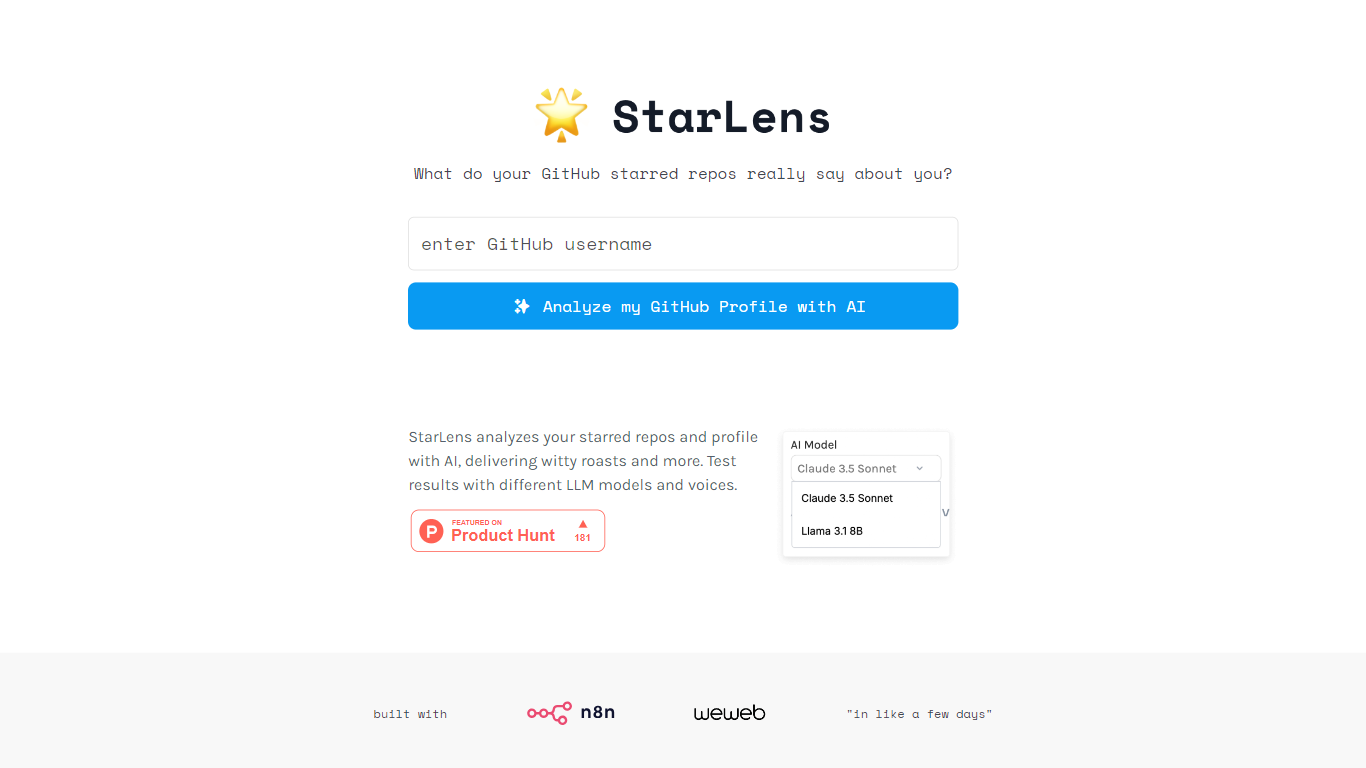

What is Starlens?
The website offers a comprehensive platform designed to enhance productivity and streamline workflows for professionals across various industries. Its core functionality revolves around task management, collaboration tools, and performance tracking, making it an essential tool for teams looking to optimize their operations. The target audience includes project managers, team leaders, and organizations seeking to improve efficiency and communication within their teams. The unique value proposition lies in its user-friendly interface combined with powerful features that cater to both small businesses and large enterprises. Key differentiators include real-time collaboration capabilities, customizable dashboards, and integration with popular third-party applications, setting it apart from competitors in the productivity software market.
Cosine
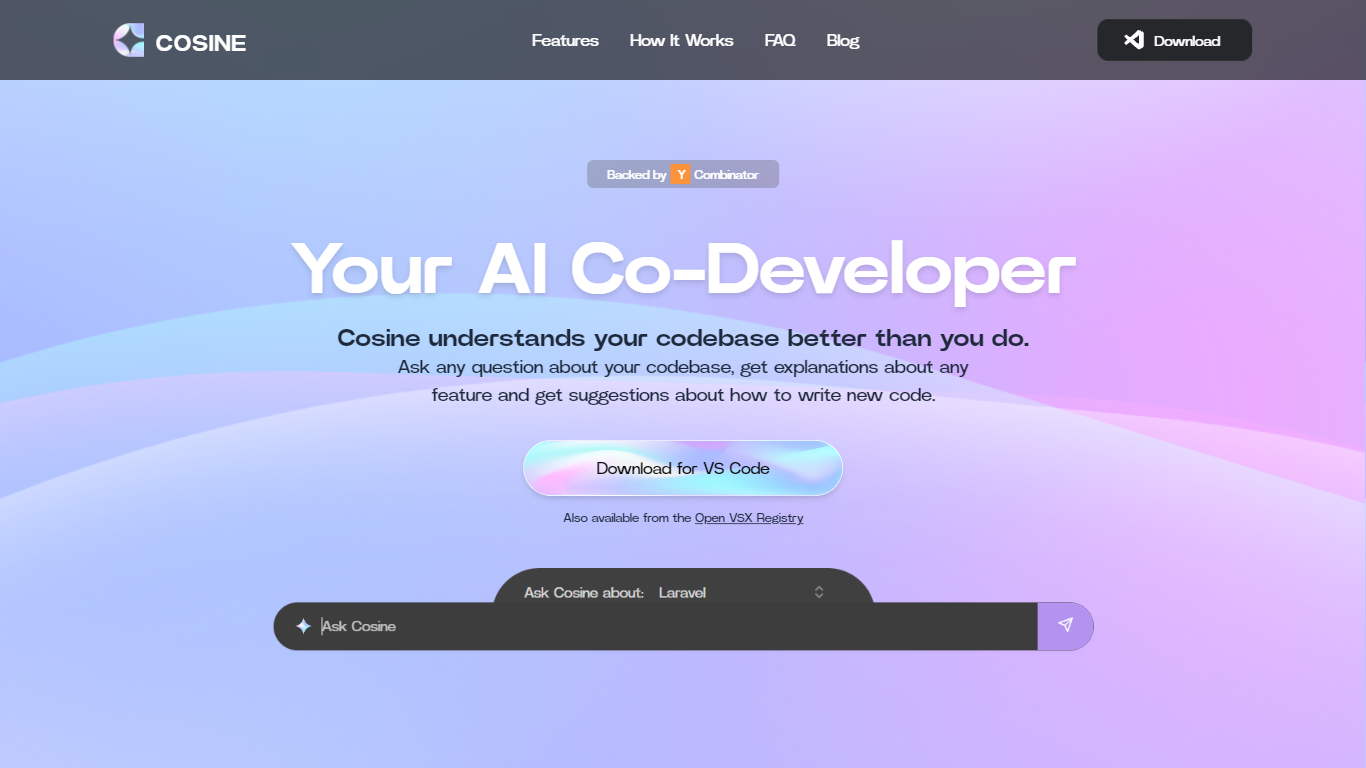
What is Cosine?
Cosine ships the Lumen family of coding models and a developer workspace for teams that want AI close to their repos. You can start in a terminal-native flow with MCP tool access and multi-agent orchestration, or run parallel cloud tasks when PMs and engineers need a shared project view.
General chat models spread training across poetry and trivia; Cosine bets the opposite with Lumen models post-trained on production code from real engineering teams. Lumen Outpost scored 59.3% on Niche-Bench in Cosine's published comparisons, ahead of GPT-5.4 at 42.4%, and the lineup adds Scout for cheap codebase mapping plus a forthcoming Sovereign tier for controlled environments.
Developer teams, platform engineers, and regulated orgs use Cosine when they need deployment choice from public cloud to managed single-tenant or fully air-gapped installs. Pricing starts at $19 per month for 4M credits on the Starter plan, with Team and Enterprise tiers scaling credits and lowering per-million add-on rates.
Starlens Upvotes
Cosine Upvotes
Starlens Top Features
Real-Time Collaboration: Enables team members to work together simultaneously on projects, enhancing communication and reducing delays.
Customizable Dashboards: Users can tailor their dashboards to display relevant metrics and tasks, improving focus and efficiency.
Integration with Third-Party Applications: Seamlessly connects with tools like Slack, Google Drive, and Trello, allowing for a unified workflow.
Performance Tracking: Provides analytics and reporting features to monitor team performance and project progress, facilitating data-driven decision-making.
User-Friendly Interface: Designed with simplicity in mind, ensuring that users can navigate the platform easily without extensive training.
Cosine Top Features
Lumen Outpost scored 59.3% on Niche-Bench in Cosine's published benchmark table
Starter plan includes 4M credits per month starting at $19 with $6.50 per 1M add-on credits
Lumen Scout post-trained from Devstral 123B for low-cost codebase mapping tasks
Terminal-native workflow supports MCP tool access and multi-agent orchestration
Deployment options span public cloud, managed single-tenant, and fully air-gapped installs
Post-training targets enterprise languages including COBOL, Fortran, Verilog, Rust, and complex SQL
Starlens Category
- Developer
Cosine Category
- Developer
Starlens Pricing Type
- Freemium
Cosine Pricing Type
- Freemium