Starlens vs Sixth
Compare Starlens vs Sixth and see which AI Developer tool is better when we compare features, reviews, pricing, alternatives, upvotes, etc.
Which one is better? Starlens or Sixth?
When we compare Starlens with Sixth, which are both AI-powered developer tools, The upvote count shows a clear preference for Sixth. Sixth has received 9 upvotes from aitools.fyi users, while Starlens has received 7 upvotes.
Want to flip the script? Upvote your favorite tool and change the game!
Starlens
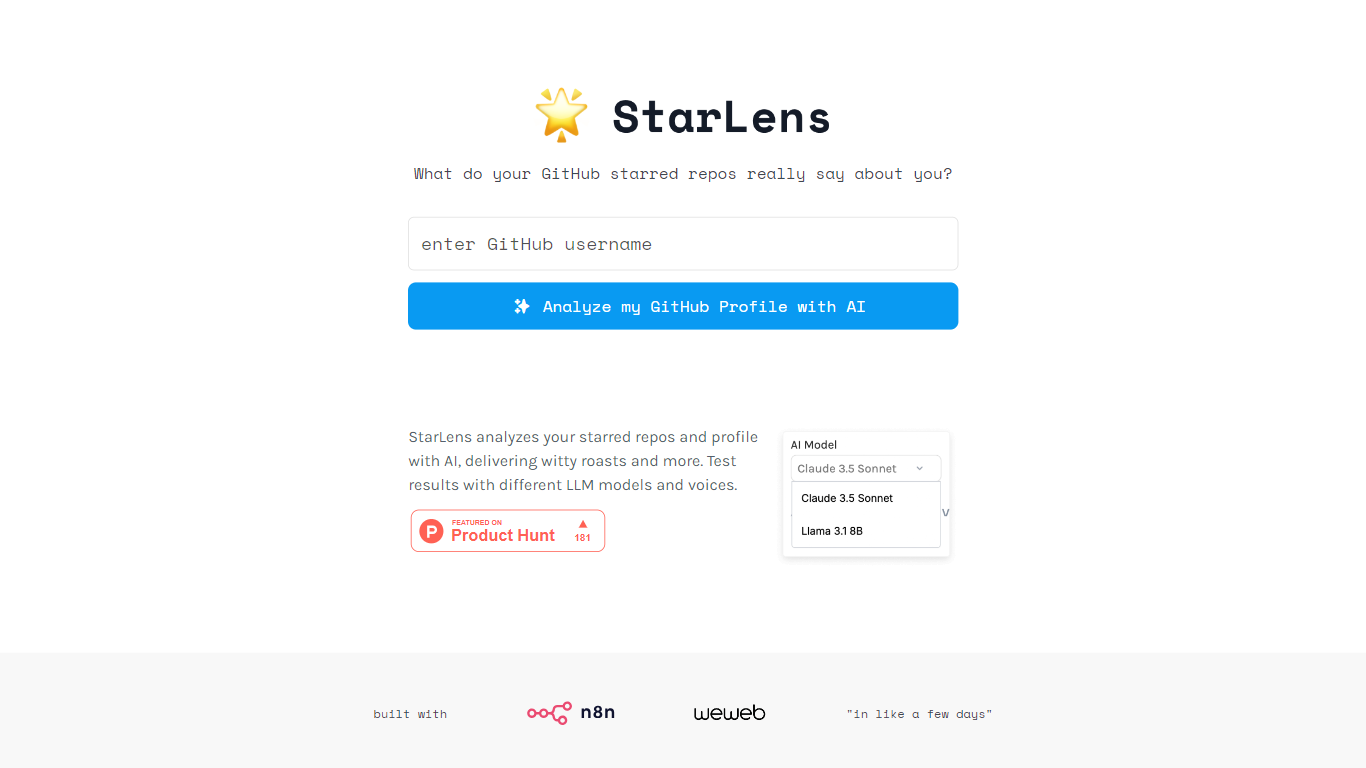

What is Starlens?
The website offers a comprehensive platform designed to enhance productivity and streamline workflows for professionals across various industries. Its core functionality revolves around task management, collaboration tools, and performance tracking, making it an essential tool for teams looking to optimize their operations. The target audience includes project managers, team leaders, and organizations seeking to improve efficiency and communication within their teams. The unique value proposition lies in its user-friendly interface combined with powerful features that cater to both small businesses and large enterprises. Key differentiators include real-time collaboration capabilities, customizable dashboards, and integration with popular third-party applications, setting it apart from competitors in the productivity software market.
Sixth
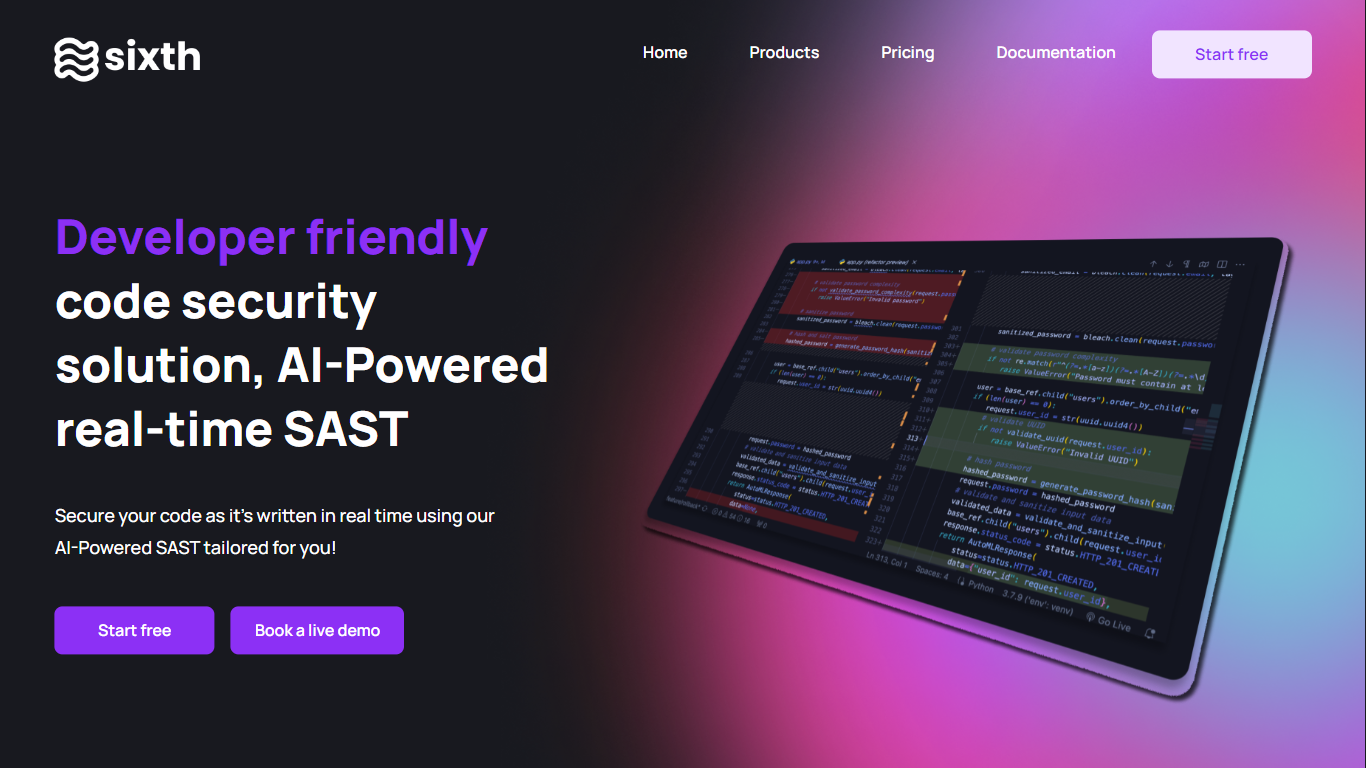
What is Sixth?
Sixth is a developer-focused coding agent that plans, writes, and debugs software inside your editor and through chat. It ships as a web app and a Visual Studio Code extension, and it routes work across frontier models from Anthropic, Google, and OpenAI instead of locking you to one provider.
Where many assistants jump straight to autocomplete, Sixth emphasizes orchestration. Deep Planning Mode drafts a step-by-step strategy before code changes, sub-agents run research and validation in parallel, and Telegram remote control lets you approve tasks from a phone. Paid tiers add MCP server access, with Pro+ listing more than 1,000 integrations.
Individual developers can start on the free tier with monthly agent and completion limits. Pro, Pro+, Ultra, and Teams plans raise usage caps, model access, and support levels, while the Enterprise page adds SOC 2 Type II compliance, SSO, and optional private deployment for regulated teams.
Starlens Upvotes
Sixth Upvotes
Starlens Top Features
Real-Time Collaboration: Enables team members to work together simultaneously on projects, enhancing communication and reducing delays.
Customizable Dashboards: Users can tailor their dashboards to display relevant metrics and tasks, improving focus and efficiency.
Integration with Third-Party Applications: Seamlessly connects with tools like Slack, Google Drive, and Trello, allowing for a unified workflow.
Performance Tracking: Provides analytics and reporting features to monitor team performance and project progress, facilitating data-driven decision-making.
User-Friendly Interface: Designed with simplicity in mind, ensuring that users can navigate the platform easily without extensive training.
Sixth Top Features
Deep Planning Mode maps a step-by-step coding strategy before the agent edits files
Sub-agents run research, writing, and validation tasks in parallel during one session
Free tier includes 50 agent or chat requests and 2,000 completions per month
Pro+ unlocks 1,000+ MCP servers plus models such as GPT-5.6 sol and Gemini 3.6
Telegram remote control lets you monitor, approve, and steer agent work from a phone
Enterprise page lists SOC 2 Type II compliance, SSO, and a 99.99% uptime SLA
Starlens Category
- Developer
Sixth Category
- Developer
Starlens Pricing Type
- Freemium
Sixth Pricing Type
- Freemium