Strix vs Nfig
In the face-off between Strix vs Nfig, which AI Agents tool takes the crown? We scrutinize features, alternatives, upvotes, reviews, pricing, and more.
In a face-off between Strix and Nfig, which one takes the crown?
If we were to analyze Strix and Nfig, both of which are AI-powered agents tools, what would we find? Both tools are equally favored, as indicated by the identical upvote count. You can help us determine the winner by casting your vote and tipping the scales in favor of one of the tools.
Does the result make you go "hmm"? Cast your vote and turn that frown upside down!
Strix
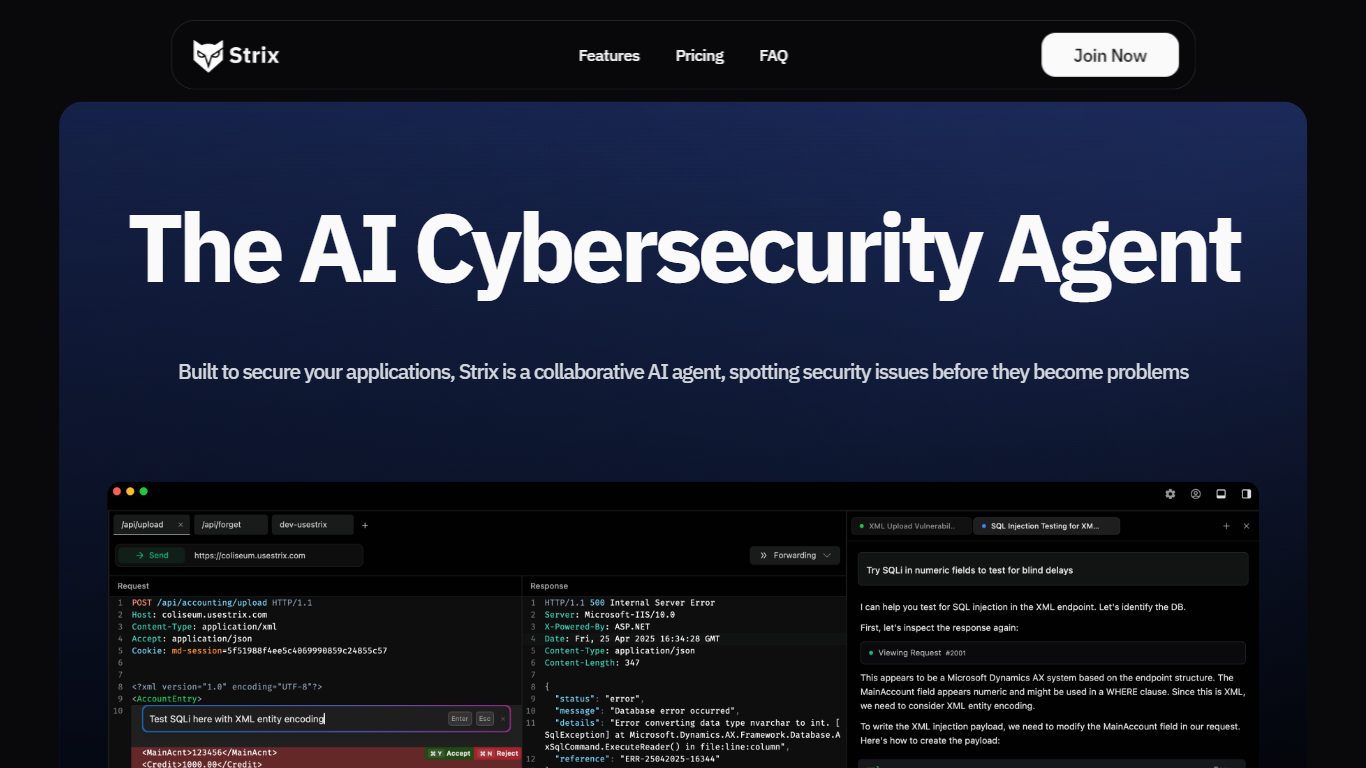

What is Strix?
Strix is an autonomous security agent that runs continuous penetration tests across your code, APIs, web apps, cloud, and infrastructure. It reproduces findings with proof of exploit, prioritizes by real impact, and can open merge-ready pull requests after retesting a fix. The platform also reviews pull requests in CI and blocks vulnerable deploys before they reach production.
Where traditional scanners stop at alerts, Strix ties discovery to validation and remediation in one loop. It tests REST, GraphQL, and gRPC APIs alongside web apps, scans cloud misconfigurations on AWS, Google Cloud, and Azure, and ships an open source edition on GitHub with 51K stars. Enterprise teams can self-host in a VPC or air-gapped environment with zero data retention and bring-your-own-model routing.
Strix fits application security engineers, DevSecOps teams, and platform teams that want year-round external and internal testing without waiting on annual pentest cycles. Integrations cover GitHub, GitLab, Bitbucket, Jira, Linear, and Slack, with an API for automating pentests, schedules, and webhooks.
Nfig
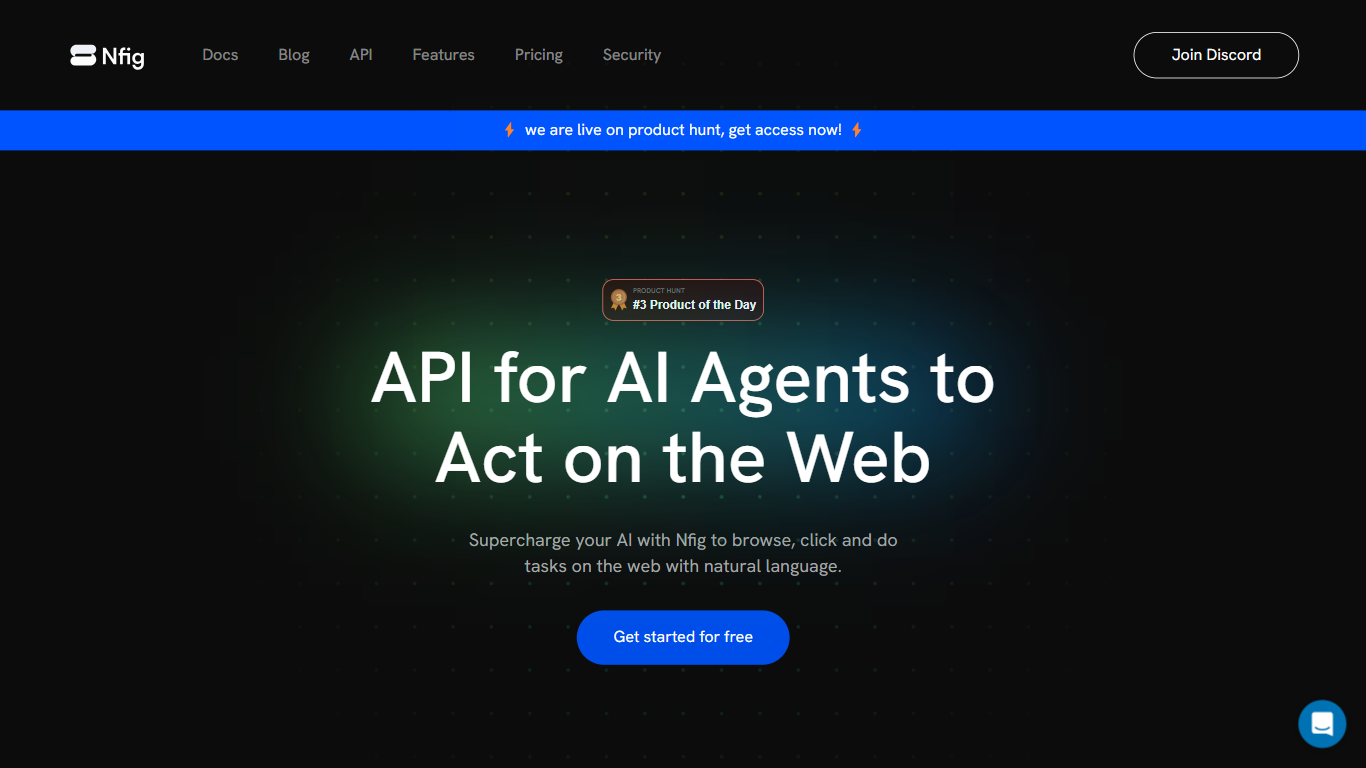
What is Nfig?
Nfig is an agent API that turns natural language into browser actions so AI agents can browse, click, type, and finish tasks on live websites. You send instructions like open a page, search a product, or click a button, and Nfig runs them in a remote cloud browser through its Node.js SDK.
Generic web scrapers pull static HTML. Nfig targets interactive flows that need logins, pop-ups, file uploads, or changing page layouts, with self-healing steps when a site shifts structure. That focus on authenticated, resilient browser control is the trade-off: it is not a general LLM chat API, and it is built around step-based browser automation rather than bulk data extraction alone.
Developers building AI agents for sales demos, in-app customer training, or multi-site research are the core audience. The SDK connects to Playwright-backed remote sessions, docs live at docs.nfig.io, and signup runs through app.nfig.io with a Discord community for support.
Strix Upvotes
Nfig Upvotes
Strix Top Features
Pro plan is $29 per seat per month with pentests billed separately on a pay-per-test basis
Tests REST, GraphQL, and gRPC APIs plus web apps with proof-of-exploit validation for each finding
Reviews pull requests in GitHub, GitLab, and Bitbucket and can block vulnerable deploys in CI/CD
Generates merge-ready fix PRs after retesting that the vulnerability is gone
Enterprise supports VPC, on-prem, or air-gapped deployment with SSO, SCIM, and BYOK model routing
Open source edition on GitHub (usestrix/strix) with 51K stars alongside the hosted Strix platform
Nfig Top Features
Runs browser steps at $0.005 per standard step or $0.015 per Lite step on pay-as-you-go billing
Node.js SDK uses Playwright to control remote cloud browser sessions
Self-healing automations retry when a website layout changes mid-run
Scripts authentication flows for sites that require logins or pop-ups
Proxy usage billed at $12.5 per GB when routing traffic through Nfig
SOC 2 compliant with GDPR alignment stated on the Nfig security page
Ranked #3 Product of the Day on Product Hunt at launch
Strix Category
- Agents
Nfig Category
- Agents
Strix Pricing Type
- Freemium
Nfig Pricing Type
- Freemium