Sublayer vs Codacy Quality
In the clash of Sublayer vs Codacy Quality, which AI Code Assistant tool emerges victorious? We assess reviews, pricing, alternatives, features, upvotes, and more.
When we put Sublayer and Codacy Quality head to head, which one emerges as the victor?
Let's take a closer look at Sublayer and Codacy Quality, both of which are AI-driven code assistant tools, and see what sets them apart. There's no clear winner in terms of upvotes, as both tools have received the same number. Your vote matters! Help us decide the winner among aitools.fyi users by casting your vote.
You don't agree with the result? Cast your vote to help us decide!
Sublayer

What is Sublayer ?
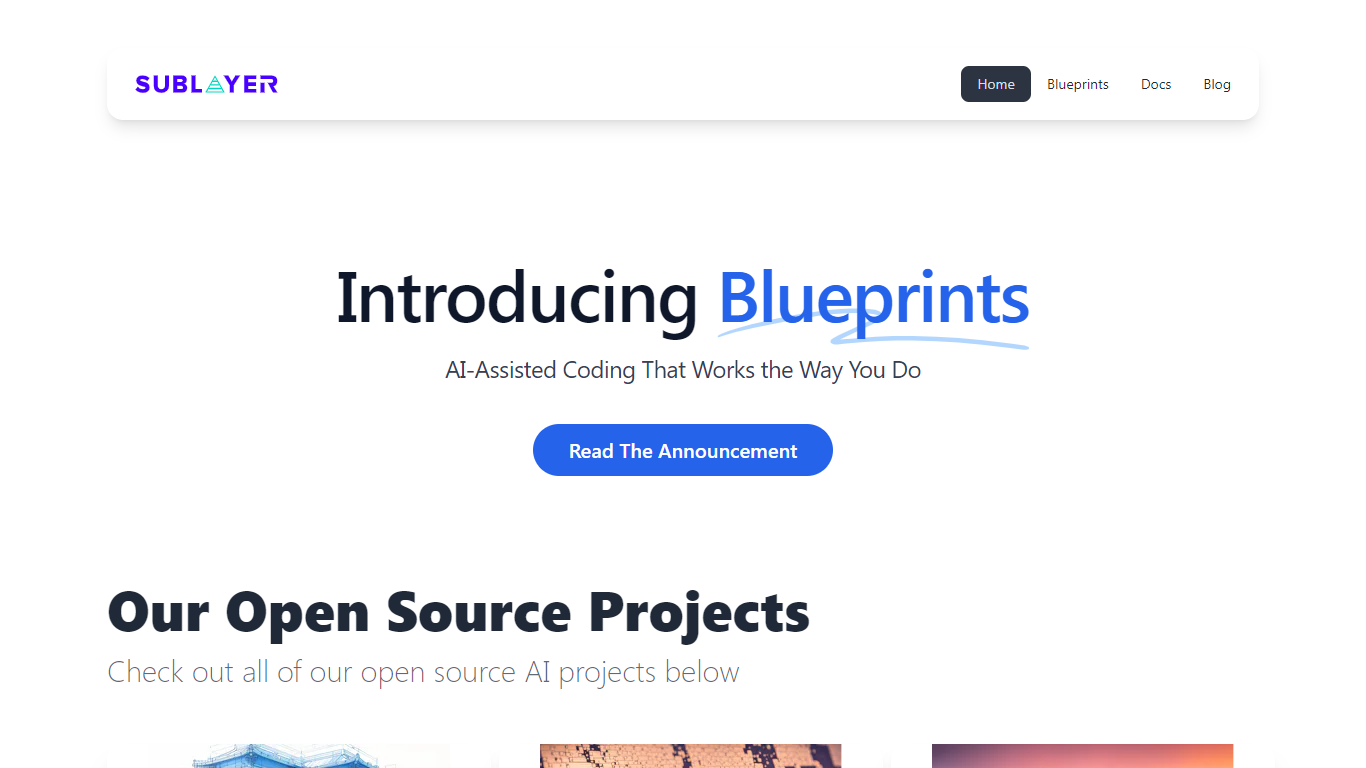
Sublayer is an AI native software studio and lab based in New York. The team builds products, open source tools, community programs, and writing that explore what happens when the cost of making software drops sharply.
Their public work spans shipped apps like Where Is Everyone (attendance intelligence for community organizers) and a catalog of open source Ruby projects on GitHub, including the Sublayer generative AI framework, Blueprints for pattern-based code generation, and CLAG for natural-language CLI commands.
Developers, community organizers, and builders curious about AI-assisted software creation will find experiments, source code, and a Discord community to follow along or contribute.
Codacy Quality
What is Codacy Quality?
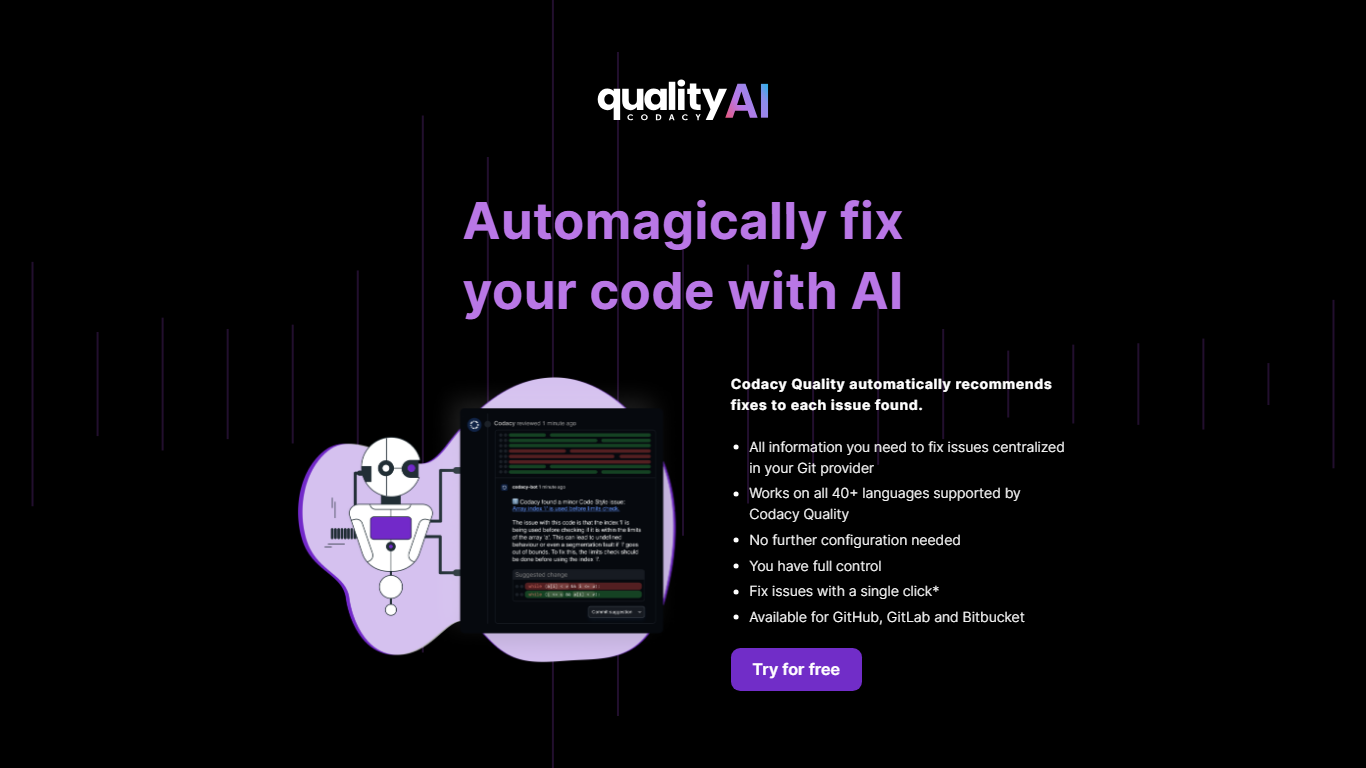
Codacy Quality scans AI-generated and human-written code for security flaws, quality regressions, and policy violations before changes merge. It plugs into GitHub, GitLab, and Bitbucket pull requests, plus VS Code, JetBrains, and Cursor, so fixes surface inside the tools developers already use instead of in a separate dashboard nobody checks.
Where generic linters stop at style rules, Codacy Quality layers SAST, secret scanning, dependency (SCA) checks, infrastructure-as-code rules, and AI-specific guardrails that flag unapproved model calls or policy violations from agent-generated code. Its AI Reviewer adds low-noise pull request comments with ready-to-commit fix suggestions, which matters when teams ship faster with copilots but still need audit-ready evidence.
Engineering leads, security teams, and platform groups at mid-market and enterprise companies use it to standardize coding standards across dozens of languages without assigning someone to babysit every repo. Open-source projects can run it free forever, while private teams start with a 14-day trial and no credit card.
Sublayer Upvotes
Codacy Quality Upvotes
Sublayer Top Features
Runs as an AI native studio and lab with products, open source, writing, and community channels
Ships Where Is Everyone for predicting real event attendance vs RSVP counts
Maintains the open source Sublayer Ruby gem for building generators, actions, tasks, and agents
Offers Blueprints to generate code from patterns already in your codebase via editor plugins
Hosts 35+ public GitHub repos including CLAG, monkeyspaw, VSM, and airb
Publishes the Works on My Machine newsletter on software and AI on Substack
Runs an active Discord community for collaborators and contributors
Codacy Quality Top Features
Scans 49 programming languages with shared coding standards across repositories
AI Reviewer leaves pull request feedback with one-click fix suggestions on GitHub, GitLab, and Bitbucket
Codacy Guardrails runs SAST, SCA, and secret scans inside VS Code, JetBrains, and Cursor as you type
Supports up to 100 private repositories on the cloud-hosted starter tier with unlimited lines of code
Daily CVE and malicious package re-scans keep dependency risk current across legacy codebases
AI Risk Hub enforces org-wide AI coding policies such as unapproved model calls and prompt-injection checks
Sublayer Category
- Code Assistant
Codacy Quality Category
- Code Assistant
Sublayer Pricing Type
- Free
Codacy Quality Pricing Type
- Freemium