SummarizeYT vs SciSpace (formerly Typeset)
Explore the showdown between SummarizeYT vs SciSpace (formerly Typeset) and find out which AI Summarizer tool wins. We analyze upvotes, features, reviews, pricing, alternatives, and more.
When comparing SummarizeYT and SciSpace (formerly Typeset), which one rises above the other?
When we contrast SummarizeYT with SciSpace (formerly Typeset), both of which are exceptional AI-operated summarizer tools, and place them side by side, we can spot several crucial similarities and divergences. With more upvotes, SciSpace (formerly Typeset) is the preferred choice. SciSpace (formerly Typeset) has attracted 24 upvotes from aitools.fyi users, and SummarizeYT has attracted 6 upvotes.
Not your cup of tea? Upvote your preferred tool and stir things up!
SummarizeYT


What is SummarizeYT?
SummarizeYT is a Chrome extension that adds YouTube video summaries while you browse. Click a thumbnail and it returns a ChatGPT-generated recap of the video so you can skip long intros and get to the main points faster.
Unlike standalone summary websites where you paste a link, SummarizeYT works directly on YouTube pages as you scroll. It targets viewers who research tutorials, lectures, and reviews but do not have time to watch every upload end to end.
The extension is powered by OpenAI GPT-3 and ChatGPT, lists about 1,000 Chrome Web Store users, and carries a 3.4 out of 5 rating from 527 reviews. The developer states it does not collect or sell user data.
SciSpace (formerly Typeset)
What is SciSpace (formerly Typeset)?
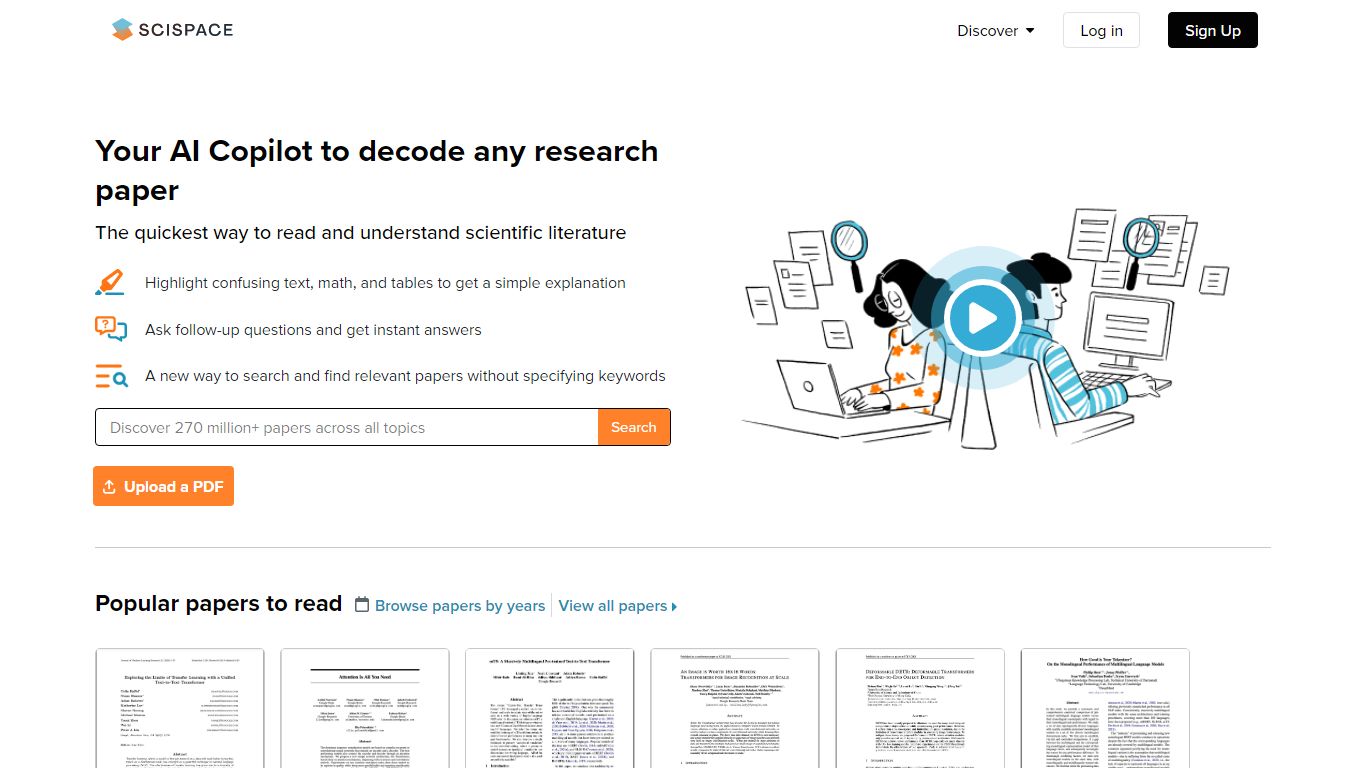
SciSpace, formerly Typeset, is a research workspace where you search a large academic paper index, chat with PDFs, and draft literature reviews with cited sources. The typeset.io URL now lands on scispace.com, which bundles an AI agent, literature review search, paraphraser, citation generator, data extraction, and AI detection in one interface.
General AI chat tools answer from the open web. SciSpace centers the workflow on papers: you can run systematic reviews across 280M+ indexed works, highlight passages for explanations, and move from reading into AI Writer drafts with references. Biomedical Agent, enterprise recruiting, and Chrome or mobile apps extend the same stack for labs and R&D teams.
Graduate students, PhD researchers, and pharma or biotech analysts use SciSpace to screen literature faster, unpack dense PDFs, and produce summaries or manuscripts with traceable citations. The platform reports adoption by 9.6 million researchers and lists SOC 2 compliance on its site.
SummarizeYT Upvotes
SciSpace (formerly Typeset) Upvotes
SummarizeYT Top Features
Summarize YouTube videos directly from thumbnails while browsing YouTube
Powered by OpenAI GPT-3 and ChatGPT for second-scale recap generation
Chrome Web Store version 0.1.9 updated April 2026 with 5.28 MiB install size
Developer discloses no data collection, sale, or creditworthiness use
Free Chrome extension with one-click install from summarizeyt.com
SciSpace (formerly Typeset) Top Features
Search and review literature across 280M+ indexed research papers
Chat with PDF highlights for plain-language explanations of dense sections
SciSpace Agent plus Biomedical Agent for guided research tasks
Built-in paraphraser, citation generator, AI detector, and data extraction tools
AI Writer and templates for drafting papers with cited sources
Chrome extension and mobile app for reading outside the browser tab
Premium plans with a 24-hour money-back guarantee on subscriptions
SummarizeYT Category
- Summarizer
SciSpace (formerly Typeset) Category
- Summarizer
SummarizeYT Pricing Type
- Free
SciSpace (formerly Typeset) Pricing Type
- Freemium