summary.arguflow.gg vs SciSpace (formerly Typeset)
Compare summary.arguflow.gg vs SciSpace (formerly Typeset) and see which AI Summarizer tool is better when we compare features, reviews, pricing, alternatives, upvotes, etc.
Which one is better? summary.arguflow.gg or SciSpace (formerly Typeset)?
When we compare summary.arguflow.gg with SciSpace (formerly Typeset), which are both AI-powered summarizer tools, The upvote count favors SciSpace (formerly Typeset), making it the clear winner. SciSpace (formerly Typeset) has received 24 upvotes from aitools.fyi users, while summary.arguflow.gg has received 7 upvotes.
Disagree with the result? Upvote your favorite tool and help it win!
summary.arguflow.gg
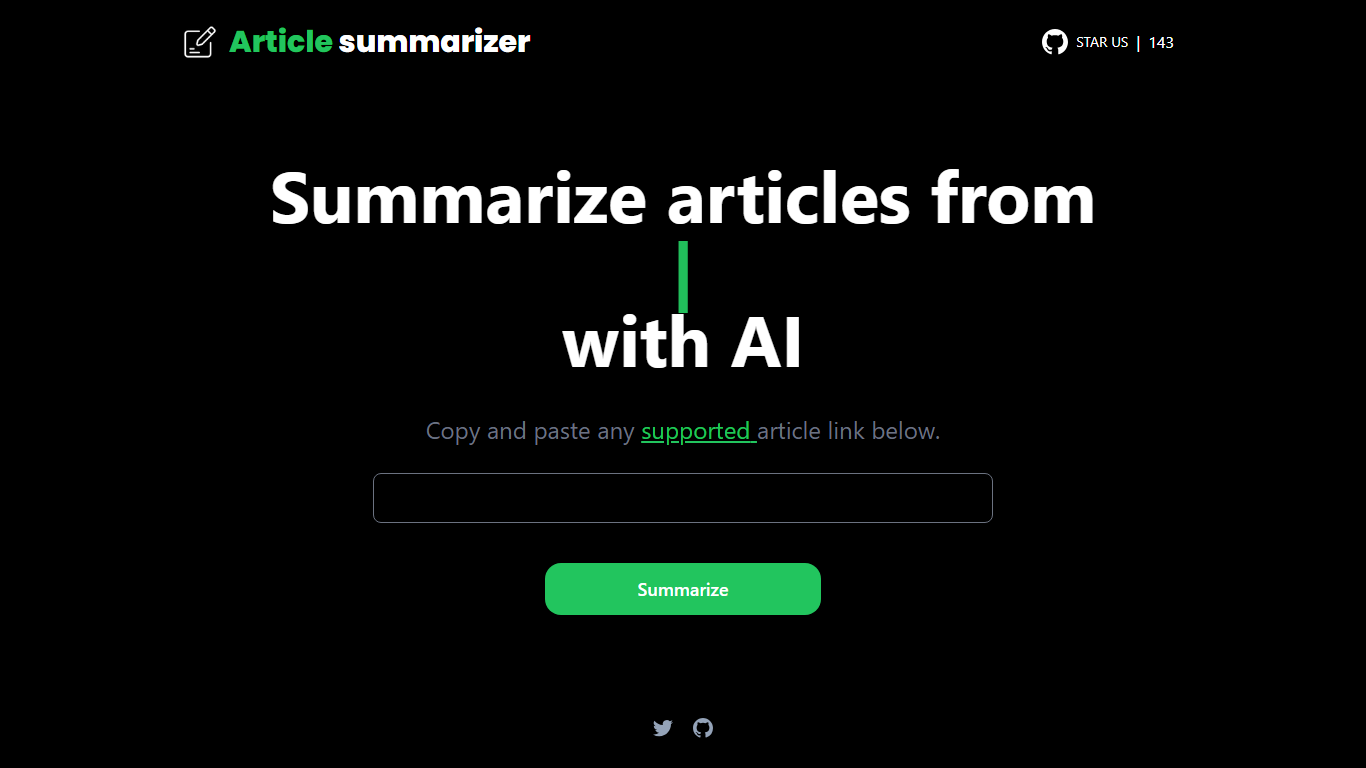

What is summary.arguflow.gg?
Experience the power of AI with our Article Summarizer tool that simplifies content digestion by summarizing articles in mere seconds. Ideal for students, professionals, and anyone looking to quickly grasp the essence of lengthy articles, this tool is a time-saver. Just copy and paste any supported article link, and let the AI work its magic to provide you with a concise summary.
Our intuitive platform is designed for ease, making the process of summarizing articles seamless and hassle-free. The Article Summarizer tool is equipped to handle a wide range of articles, giving you the key points without any fluff. Whether you're conducting research, studying for exams, or just want to catch up on reading, our service ensures you stay informed and efficient.
SciSpace (formerly Typeset)
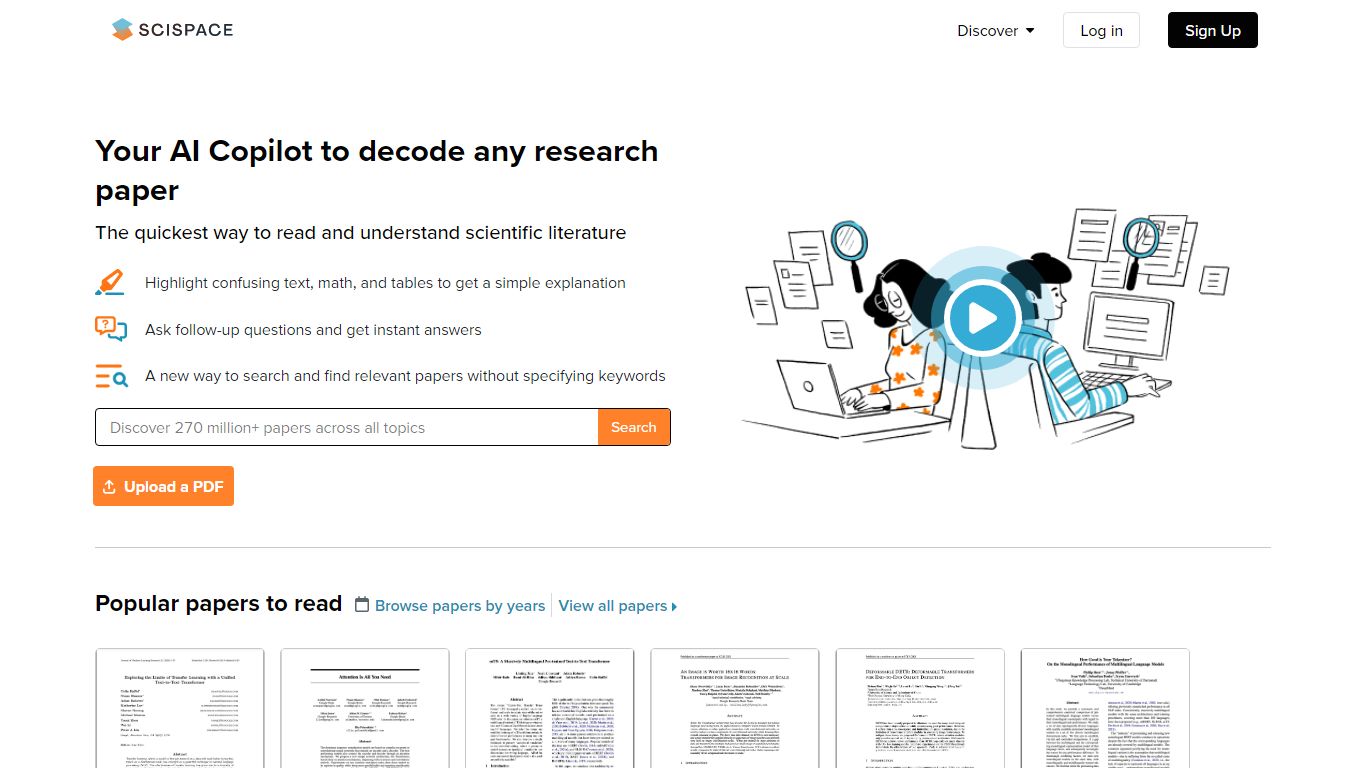
What is SciSpace (formerly Typeset)?
SciSpace, formerly Typeset, is a research workspace where you search a large academic paper index, chat with PDFs, and draft literature reviews with cited sources. The typeset.io URL now lands on scispace.com, which bundles an AI agent, literature review search, paraphraser, citation generator, data extraction, and AI detection in one interface.
General AI chat tools answer from the open web. SciSpace centers the workflow on papers: you can run systematic reviews across 280M+ indexed works, highlight passages for explanations, and move from reading into AI Writer drafts with references. Biomedical Agent, enterprise recruiting, and Chrome or mobile apps extend the same stack for labs and R&D teams.
Graduate students, PhD researchers, and pharma or biotech analysts use SciSpace to screen literature faster, unpack dense PDFs, and produce summaries or manuscripts with traceable citations. The platform reports adoption by 9.6 million researchers and lists SOC 2 compliance on its site.
summary.arguflow.gg Upvotes
SciSpace (formerly Typeset) Upvotes
summary.arguflow.gg Top Features
Quick Summarization: Instantly condense articles into essential points.
User-Friendly Interface: Easily copy and paste links for summarization.
Wide Article Support: Capable of summarizing a diverse range of articles.
Efficient Reading: Save time and stay informed with summarized content.
AI-Powered: Leverage the latest AI technology for accurate summaries.
SciSpace (formerly Typeset) Top Features
Search and review literature across 280M+ indexed research papers
Chat with PDF highlights for plain-language explanations of dense sections
SciSpace Agent plus Biomedical Agent for guided research tasks
Built-in paraphraser, citation generator, AI detector, and data extraction tools
AI Writer and templates for drafting papers with cited sources
Chrome extension and mobile app for reading outside the browser tab
Premium plans with a 24-hour money-back guarantee on subscriptions
summary.arguflow.gg Category
- Summarizer
SciSpace (formerly Typeset) Category
- Summarizer
summary.arguflow.gg Pricing Type
- Free
SciSpace (formerly Typeset) Pricing Type
- Freemium