SvectorDB vs DATAKU
Compare SvectorDB vs DATAKU and see which AI Data Science tool is better when we compare features, reviews, pricing, alternatives, upvotes, etc.
Which one is better? SvectorDB or DATAKU?
When we compare SvectorDB with DATAKU, which are both AI-powered data science tools, The upvote count shows a clear preference for DATAKU. The number of upvotes for DATAKU stands at 7, and for SvectorDB it's 6.
Does the result make you go "hmm"? Cast your vote and turn that frown upside down!
SvectorDB

What is SvectorDB?
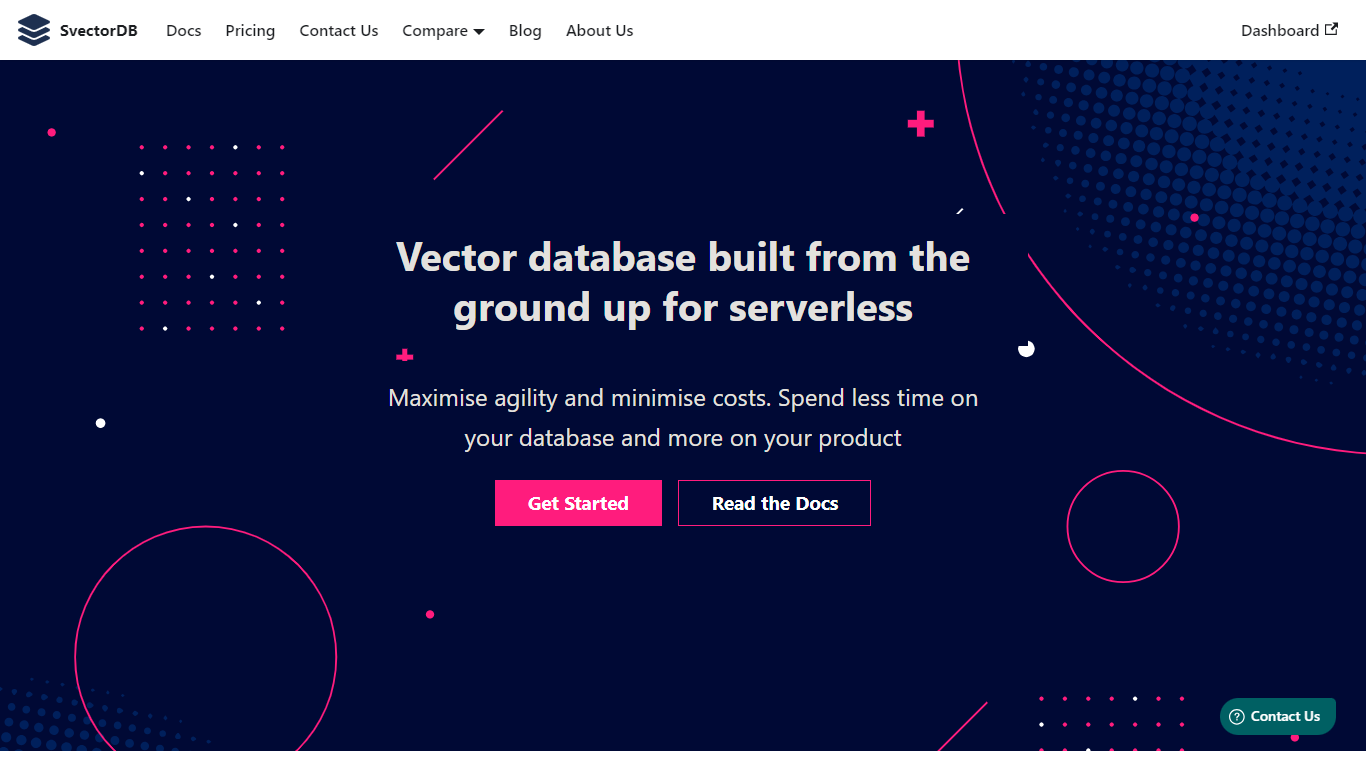
SvectorDB is a serverless vector database built for AWS. It stores vectors, keys, and values, then runs similarity search and hybrid filters so you can ship recommendation engines, semantic search, and RAG without running your own database cluster.
The service uses pay-per-request pricing with no provisioning or scaling steps. Upserts and deletes show up immediately, and you can filter results with Lucene-style key-value queries alongside vector distance. Built-in text and image embedders cover common models, or you can bring your own vectors from any source.
Official clients ship for JavaScript/TypeScript and Python, with an OpenAPI spec for other languages. Sandbox databases let you start free with up to 10 indexes and 5,000 records each, and CloudFormation templates fit into existing AWS workflows.
DATAKU
What is DATAKU?
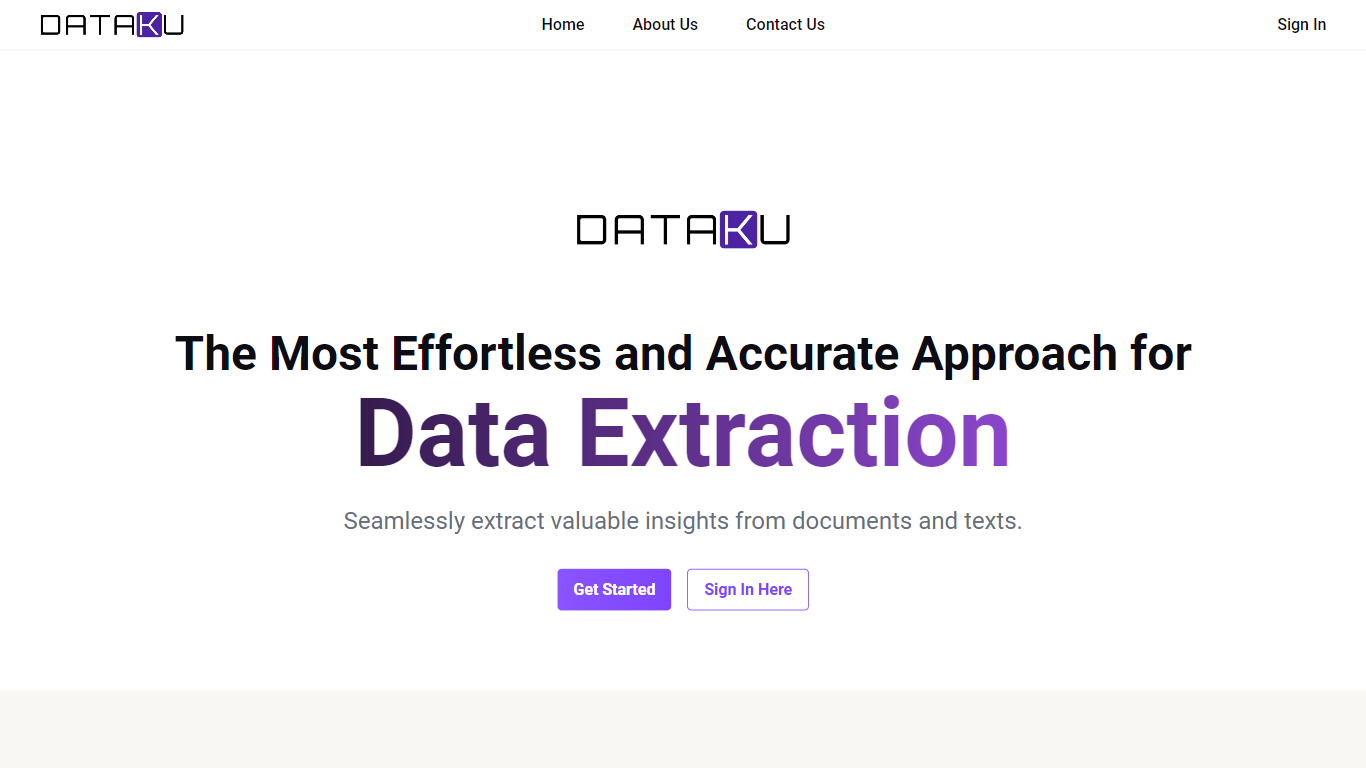
DATAKU is a data science site that tracks AI benchmarks, API pricing, and model releases, then packages the numbers into free calculators and downloadable datasets. The homepage archives articles on inference costs, funding rounds, and head-to-head model comparisons, while the Tools section hosts eight utilities such as an LLM cost calculator, benchmark decoder, and model graveyard.
Most AI news sites summarize press releases. DATAKU cross-references provider docs, leaderboard scores, and its own pricing tables, which is why the downloadable datasets page lists 48-row pricing histories and 62-row benchmark score tables under CC BY 4.0 licenses.
Data analysts, ML engineers, and buyers use DATAKU when they need cost-per-token math, benchmark context, or CSV exports instead of marketing claims. The About page describes the project as benchmark and pricing tracking run by a former Tokyo data analyst.
SvectorDB Upvotes
DATAKU Upvotes
SvectorDB Top Features
Hybrid search mixes vector similarity with Lucene-style key-value filters
Upserts and deletes land instantly with no eventual consistency lag
Built-in embedders handle text and images, or bring your own vectors
Pay only per read, write, and stored GB with no minimum fees
Sandbox tier gives 10 free databases at 5,000 records each, no card needed
CloudFormation templates plug into existing AWS infrastructure setups
JavaScript, Python, and OpenAPI clients cover most integration paths
DATAKU Top Features
LLM Cost Calculator estimates API spend across OpenAI, Anthropic, Google, Meta, and Mistral models
Benchmark Decoder explains what benchmarks measure and which models score highest
AI Training Data Tracker documents sources and cutoff dates for 18+ major models
Model Graveyard archives 25+ deprecated models with replacement notes
Downloadable datasets include 48-row pricing history and 62-row benchmark tables (CC BY 4.0)
AI Energy Calculator estimates watts, kWh, and CO2 per model query
SvectorDB Category
- Data Science
DATAKU Category
- Data Science
SvectorDB Pricing Type
- Freemium
DATAKU Pricing Type
- Free