Switch Transformers vs Stellaris AI
In the battle of Switch Transformers vs Stellaris AI, which AI Large Language Model (LLM) tool comes out on top? We compare reviews, pricing, alternatives, upvotes, features, and more.
Between Switch Transformers and Stellaris AI, which one is superior?
Upon comparing Switch Transformers with Stellaris AI, which are both AI-powered large language model (llm) tools, Both tools are equally favored, as indicated by the identical upvote count. Every vote counts! Cast yours and contribute to the decision of the winner.
Not your cup of tea? Upvote your preferred tool and stir things up!
Switch Transformers
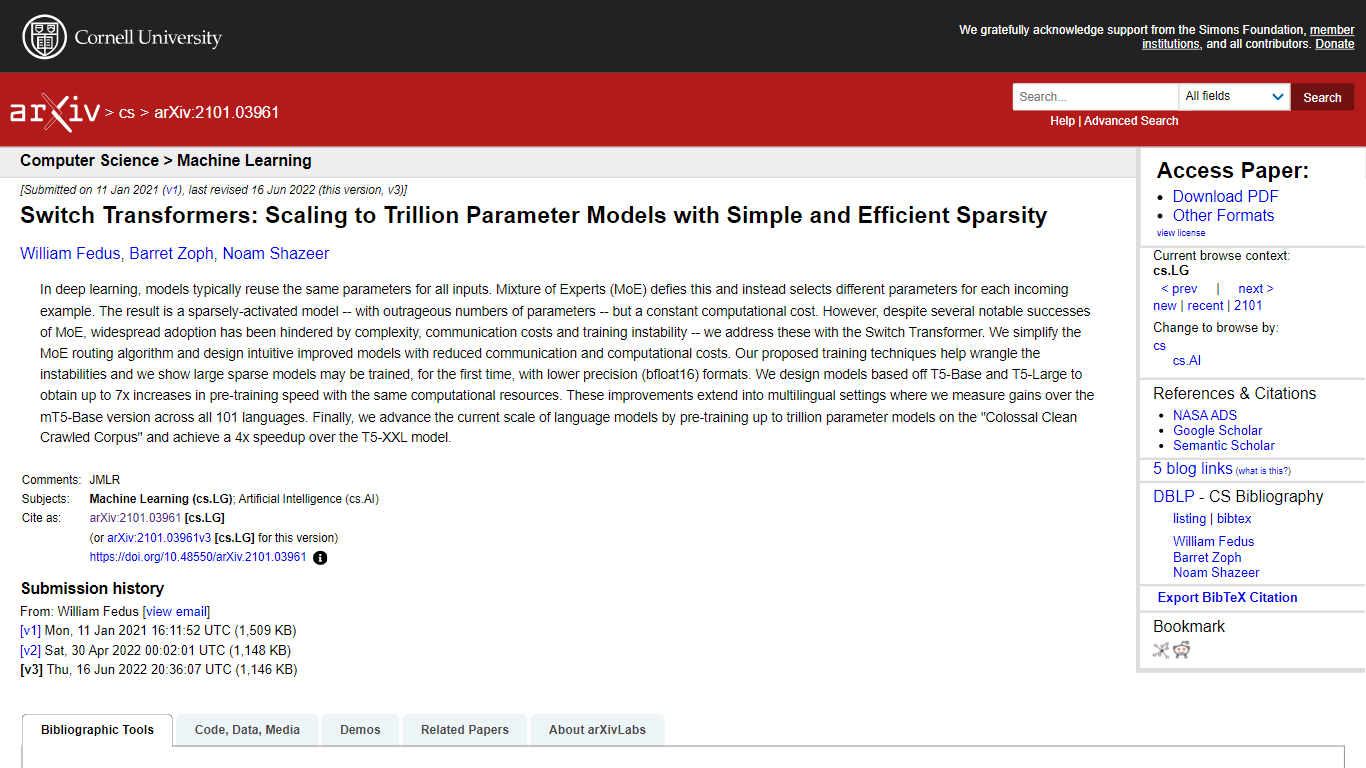

What is Switch Transformers?
Switch Transformers introduce a sparse Mixture of Experts architecture that routes each input to a single expert, reducing communication overhead while scaling to trillion-parameter language models with constant compute cost. The paper from Google researchers William Fedus, Barret Zoph, and Noam Shazeer simplifies MoE routing, improves training stability, and reports up to 7x faster pre-training than dense T5 models on the same compute budget.
The approach builds on the T5 architecture and supports multilingual training across 101 languages. Switch Transformers also enable training with bfloat16 precision for faster, more stable large-scale runs. The work targets researchers and engineers who need to scale NLP models without proportional increases in hardware cost.
Published on arXiv as a research paper, Switch Transformers documents methods for efficient sparse activation rather than a commercial SaaS product. The paper and PDF are freely available for download and citation.
Stellaris AI
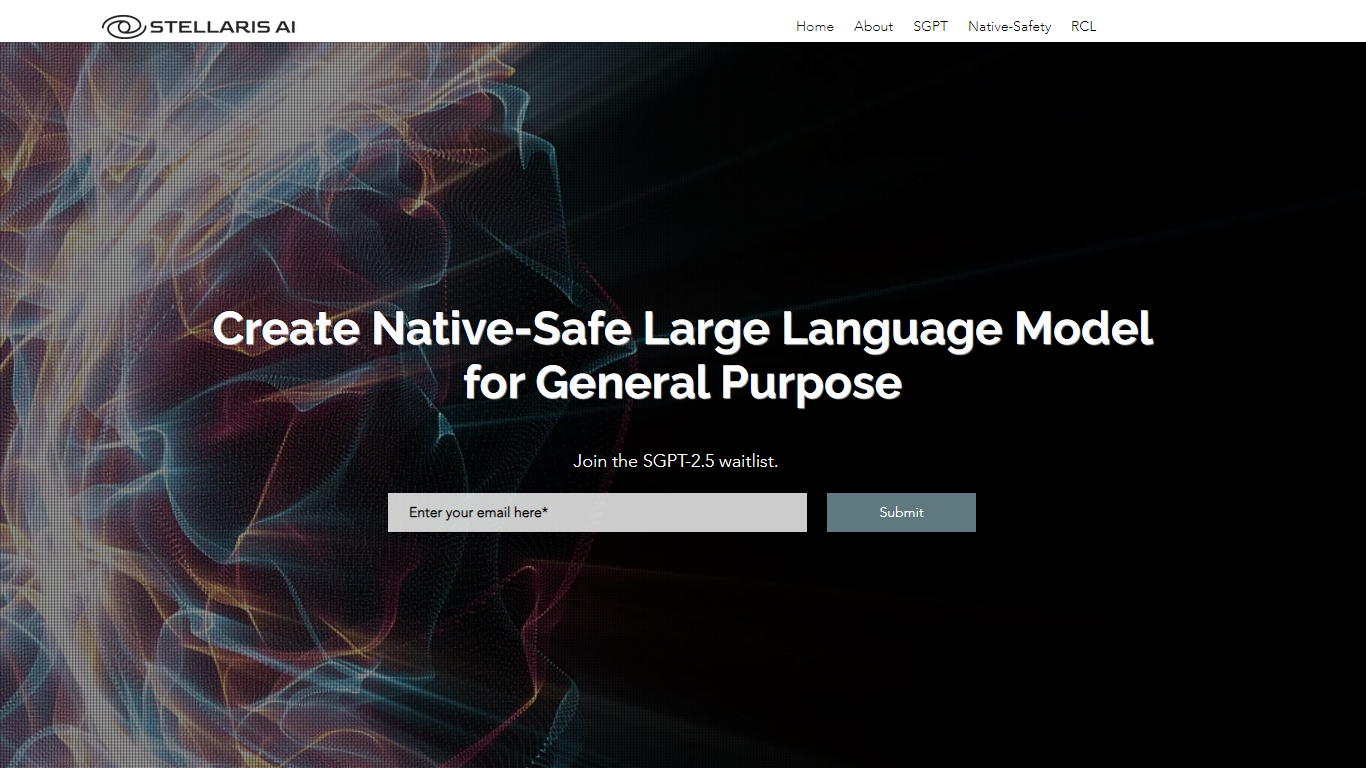
What is Stellaris AI?
Stellaris AI builds large language models marketed around native safety and human-like reasoning for real-world tasks. Its flagship SGPT line targets text and code generation, knowledge Q&A, logical reasoning, and analytics at a scale the company describes as hundreds of billions of parameters. The public site centers on a waitlist for SGPT-4.5 rather than a self-serve chat product you can open today.
Where many LLM labs bolt safety filters on after training, Stellaris AI frames safety as part of the model stack through strict source referencing and harm minimization in the architecture. It also highlights Real-time Context Learning (RCL) for adapting answers with live knowledge, a combination aimed at teams that want cited outputs instead of unchecked generation.
Researchers, enterprise AI teams, and early adopters join the SGPT-4.5 waitlist for first access. The company cites 10+ years of research and three core product pillars: Stellaris GPT, Native Safety, and RCL.
Switch Transformers Upvotes
Stellaris AI Upvotes
Switch Transformers Top Features
Sparse activation routes each input to one expert for constant compute
Simplified MoE routing reduces communication between model parts
Scales to trillion-parameter models on the T5 architecture
Supports multilingual training across 101 languages
Enables faster pre-training with bfloat16 precision
Stellaris AI Top Features
SGPT models described at 100B+ parameters for text, code, and reasoning tasks
Native Safety framework with strict source referencing and harm minimization
Real-time Context Learning (RCL) for live knowledge integration
Three product pillars: Stellaris GPT, Native Safety, and RCL
SGPT-4.5 waitlist open for early access signups on the homepage
Switch Transformers Category
- Large Language Model (LLM)
Stellaris AI Category
- Large Language Model (LLM)
Switch Transformers Pricing Type
- Free
Stellaris AI Pricing Type
- Freemium