TableSprint vs Korbit
Explore the showdown between TableSprint vs Korbit and find out which AI Code Assistant tool wins. We analyze upvotes, features, reviews, pricing, alternatives, and more.
In a face-off between TableSprint and Korbit, which one takes the crown?
When we contrast TableSprint with Korbit, both of which are exceptional AI-operated code assistant tools, and place them side by side, we can spot several crucial similarities and divergences. The upvote count is neck and neck for both TableSprint and Korbit. Be a part of the decision-making process. Your vote could determine the winner.
Think we got it wrong? Cast your vote and show us who's boss!
TableSprint
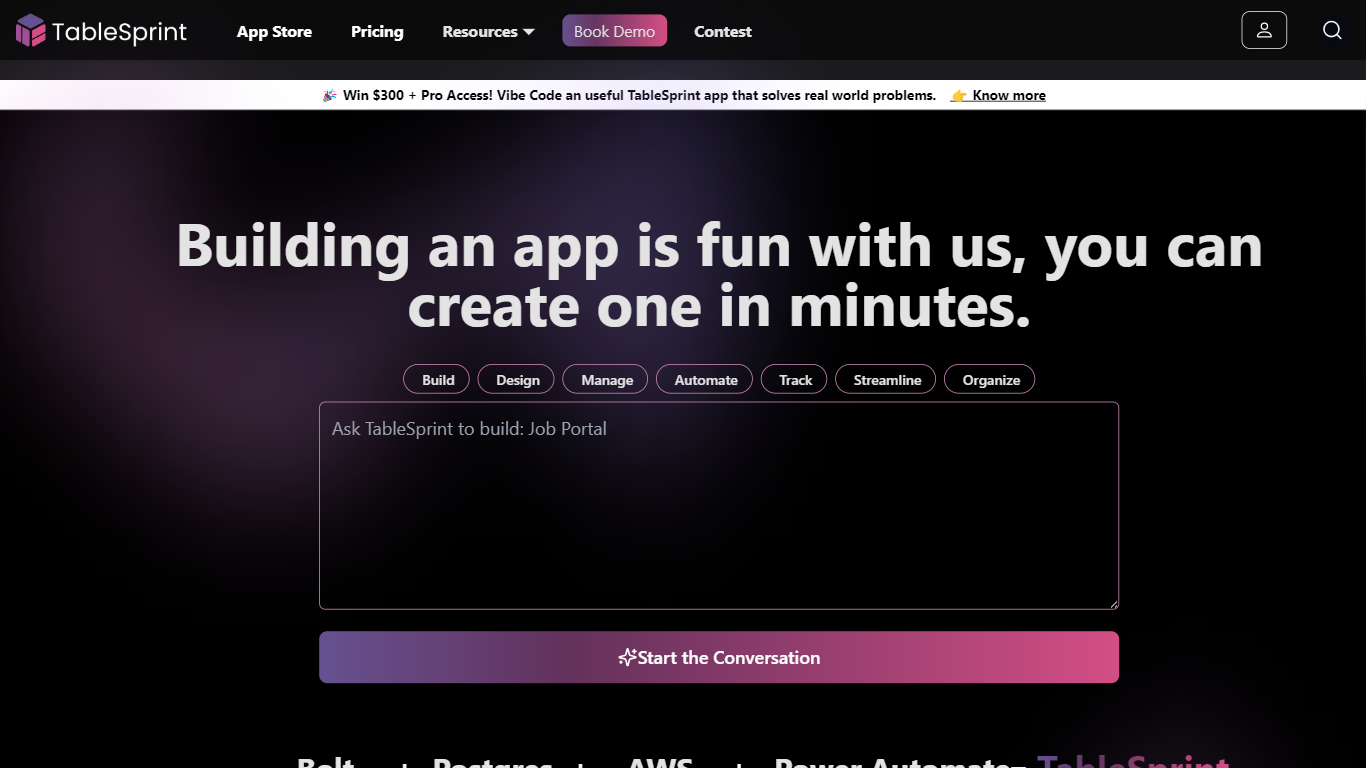

What is TableSprint?
TableSprint lets founders, sales, ops, and enterprise teams deploy voice, chat, email, and workflow agents without engineering bandwidth. The workspace also includes worksheets, forms, live dashboards, admin panels, and mobile views so custom internal apps and agents share one database. The app store ships ready-made agents for outbound SDR calls, chat support, invoicing, and media editing, each tagged free or premium.
Most teams buy a low-code builder and bolt on agent tools later. TableSprint merges agent deployment with worksheets, forms, permissions, and instant deploy in the same stack. Docs pitch replacing five tools and building an operations platform in two weeks instead of six months, with one chat agent claiming up to 60% fewer support tickets.
Founders, sales, ops, and enterprise teams that need agents in production fast fit TableSprint best. It targets teams without spare engineering bandwidth who still want voice and chat automation beside internal apps and live dashboards.
Korbit
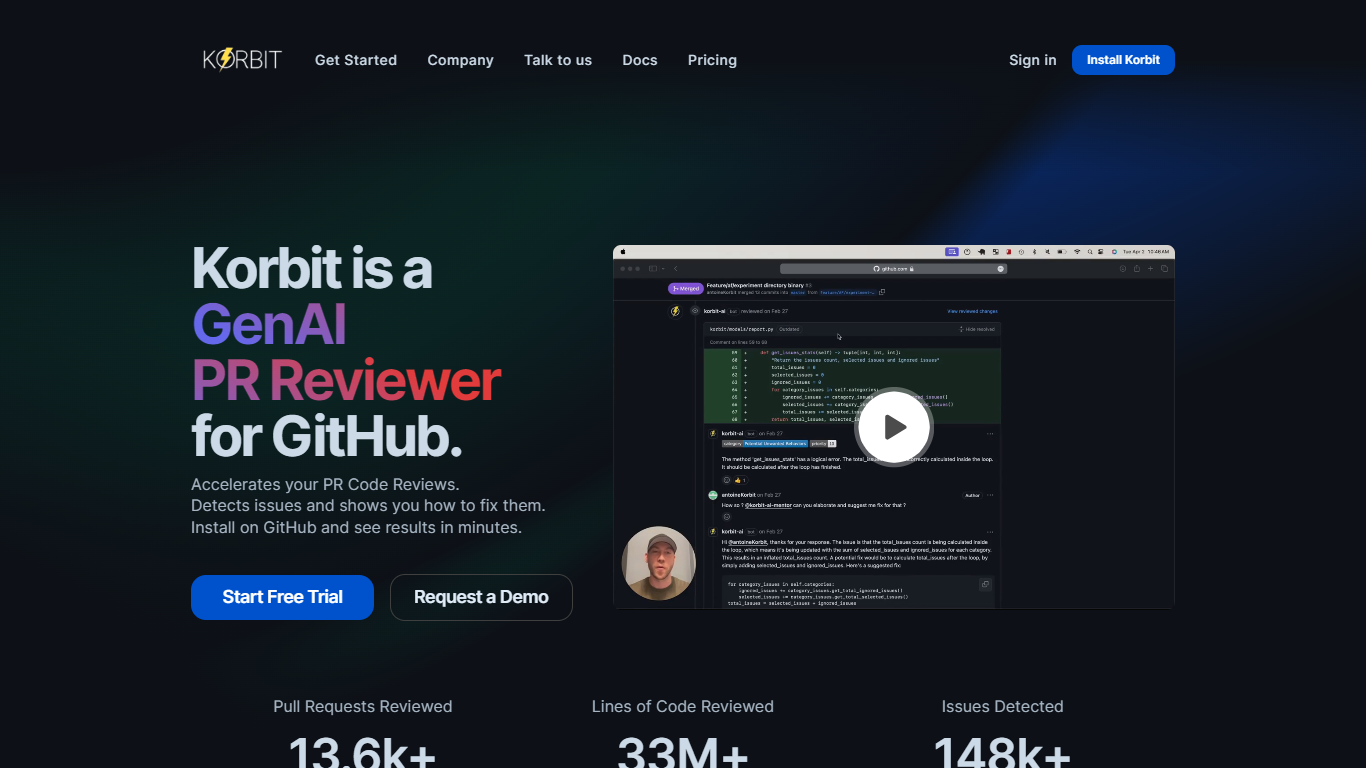
What is Korbit?
Korbit is an AI code reviewer that plugs into pull requests on GitHub, GitLab, and Bitbucket. It scans diffs before human reviewers open them, flags functional, security, and design issues, and leaves inline comments with replacement code. The same bot drafts PR descriptions and review summaries so reviewers see context without rereading every changed file.
Static analyzers flag rule violations; Korbit leans on project context instead. It weighs past team feedback, custom severity settings, and similar dismissed issues to cut noise. Korbit Insights turns review history into stand-up reports, sprint recaps, release notes, and 1:1 summaries, and lets you ask which merged change might explain a crash or compliance gap.
Engineering teams at AppLovin, YouVersion, and ServiceNow use it to unblock senior reviewers and catch logical bugs in dense TypeScript. Junior developers get threaded explanations inside the PR. Open source maintainers get Korbit Max free on public repos. Paid plans start with a 14-day Max trial, then Pro at $12 per git author per month on annual billing.
TableSprint Upvotes
Korbit Upvotes
TableSprint Top Features
App store lists free and premium agents for sales calls, support, and media editing
Chat Support Agent claims up to 60% fewer support tickets with 24/7 FAQ handling
Customer testimonial cites replacing 5 tools and shipping an ops platform in 2 weeks
Funding data lists $1 million raised, founded 2024, and about 10 employees
Outbound Calling SDR agent runs proactive sales calls and books demos into your calendar
Korbit Top Features
Reviews pull requests on GitHub, GitLab, and Bitbucket with inline fix suggestions and threaded bot replies
Pro plan costs $12 per git author per month on annual billing, or $15 month-to-month
Every new team gets a 14-day Korbit Max trial with no credit card required
Korbit Insights generates sprint recaps, stand-up reports, release notes, and 1:1 summaries from PR activity
Supports 13+ programming languages with customizable issue categories and severity levels
Pro tier runs 2 concurrent PR scans with automatic queueing when both slots are busy
TableSprint Category
- Code Assistant
Korbit Category
- Code Assistant
TableSprint Pricing Type
- Freemium
Korbit Pricing Type
- Freemium