TableSprint vs Warp
In the contest of TableSprint vs Warp, which AI Code Assistant tool is the champion? We evaluate pricing, alternatives, upvotes, features, reviews, and more.
If you had to choose between TableSprint and Warp, which one would you go for?
When we examine TableSprint and Warp, both of which are AI-enabled code assistant tools, what unique characteristics do we discover? Warp is the clear winner in terms of upvotes. The upvote count for Warp is 8, and for TableSprint it's 6.
Does the result make you go "hmm"? Cast your vote and turn that frown upside down!
TableSprint
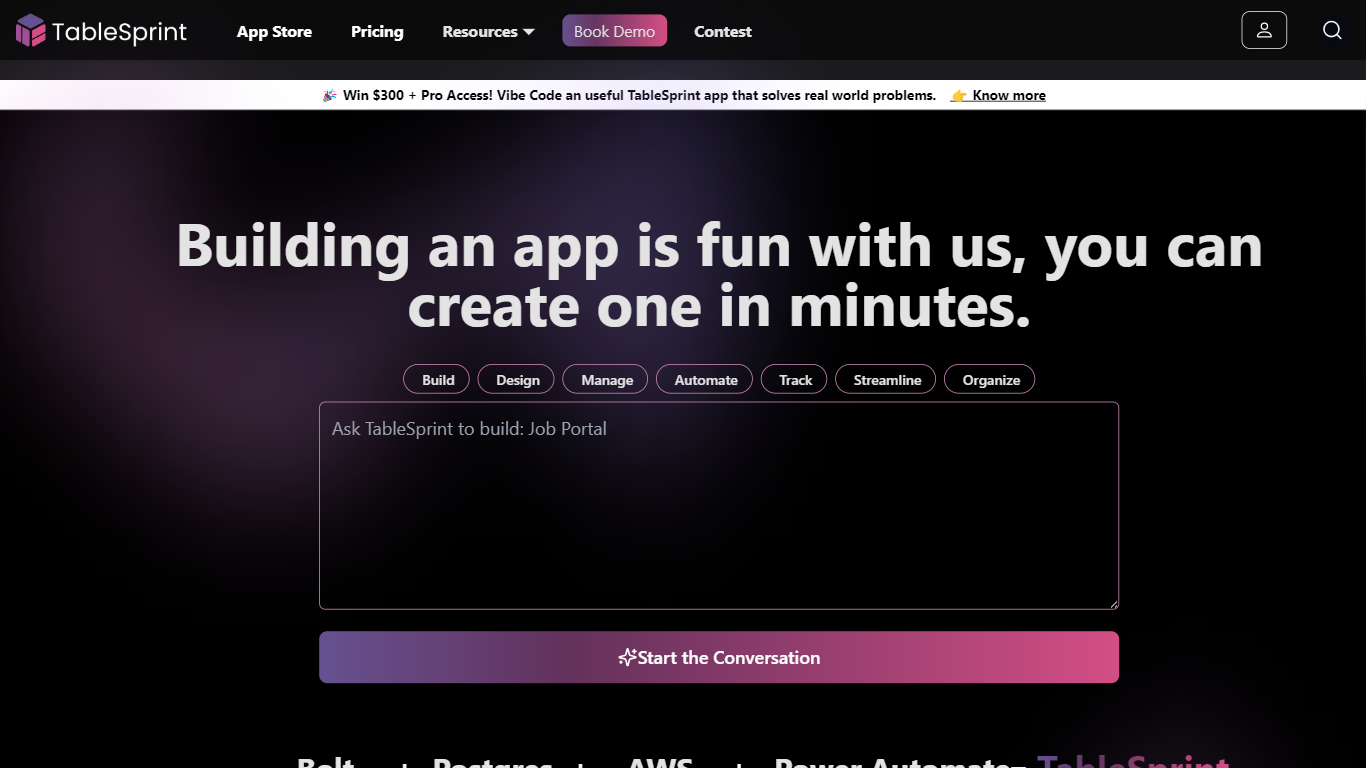

What is TableSprint?
TableSprint lets founders, sales, ops, and enterprise teams deploy voice, chat, email, and workflow agents without engineering bandwidth. The workspace also includes worksheets, forms, live dashboards, admin panels, and mobile views so custom internal apps and agents share one database. The app store ships ready-made agents for outbound SDR calls, chat support, invoicing, and media editing, each tagged free or premium.
Most teams buy a low-code builder and bolt on agent tools later. TableSprint merges agent deployment with worksheets, forms, permissions, and instant deploy in the same stack. Docs pitch replacing five tools and building an operations platform in two weeks instead of six months, with one chat agent claiming up to 60% fewer support tickets.
Founders, sales, ops, and enterprise teams that need agents in production fast fit TableSprint best. It targets teams without spare engineering bandwidth who still want voice and chat automation beside internal apps and live dashboards.
Warp
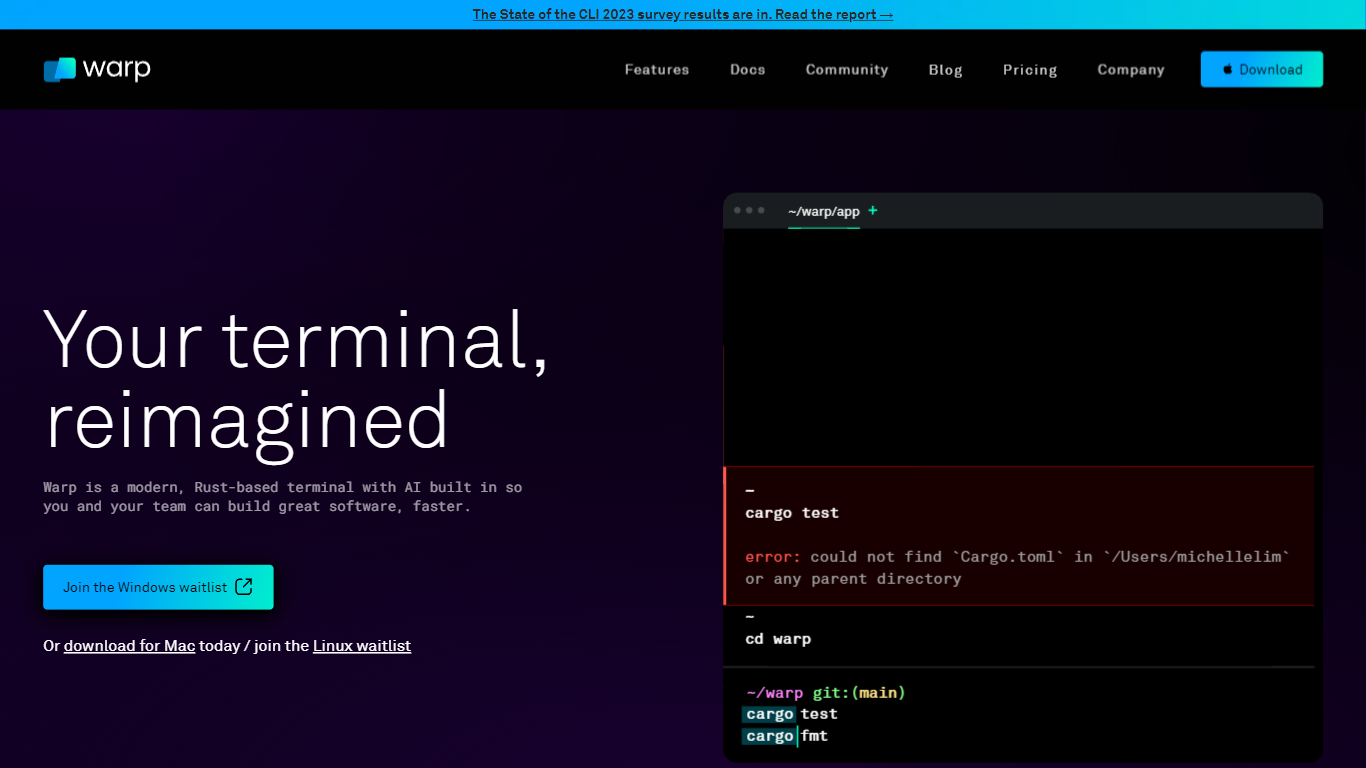
What is Warp?
Warp is a modern terminal and agent platform for developers who want coding agents inside their shell workflow. You get Warp Terminal as an open-source environment, Warp Agent for multi-model coding assistance, and Oz for launching cloud agents from the CLI or SDK. The stack covers local editing, code review panels, bug investigation, and team governance from one vendor.
iTerm and stock Terminal stay dumb panes; Warp rebuilt the shell around blocks, suggestions, and embedded agents. You can bring your own inference keys on the Free plan or buy included credits on Build ($20/month with 1,500 credits) and Max ($200/month with 18,000 credits). Business adds SAML SSO at $50 per user per month for teams up to 25 seats.
Software engineers at startups and Fortune 500 companies use Warp to run CLI agents, index multi-repo codebases, and route between OpenAI, Anthropic, Google, and xAI models without leaving the terminal. The site cites 800,000 developers on Warp Agent and positions Warp Terminal as now open source under an Oz-managed workflow.
TableSprint Upvotes
Warp Upvotes
TableSprint Top Features
App store lists free and premium agents for sales calls, support, and media editing
Chat Support Agent claims up to 60% fewer support tickets with 24/7 FAQ handling
Customer testimonial cites replacing 5 tools and shipping an ops platform in 2 weeks
Funding data lists $1 million raised, founded 2024, and about 10 employees
Outbound Calling SDR agent runs proactive sales calls and books demos into your calendar
Warp Top Features
Warp Terminal is open source with blocks-based UI and native agent integration
Warp Agent supports multi-repo indexing and models from OpenAI, Anthropic, Google, xAI, GLM 5.2, and DeepSeek V4
Free plan at $0 per month includes core terminal, Warp Agent CLI, and bring-your-own inference
Build plan starts at $20 per month with 1,500 credits of included agent usage
Business plan at $50 per user per month adds SAML SSO for teams up to 25 seats
Oz platform launches cloud agents via SDK, CLI, or handoff from Warp Terminal
TableSprint Category
- Code Assistant
Warp Category
- Code Assistant
TableSprint Pricing Type
- Freemium
Warp Pricing Type
- Freemium