Tarota AI vs Selfgazer
Explore the showdown between Tarota AI vs Selfgazer and find out which AI Astrology tool wins. We analyze upvotes, features, reviews, pricing, alternatives, and more.
When comparing Tarota AI and Selfgazer, which one rises above the other?
When we contrast Tarota AI with Selfgazer, both of which are exceptional AI-operated astrology tools, and place them side by side, we can spot several crucial similarities and divergences. The community has spoken, Selfgazer leads with more upvotes. Selfgazer has received 7 upvotes from aitools.fyi users, while Tarota AI has received 6 upvotes.
Not your cup of tea? Upvote your preferred tool and stir things up!
Tarota AI
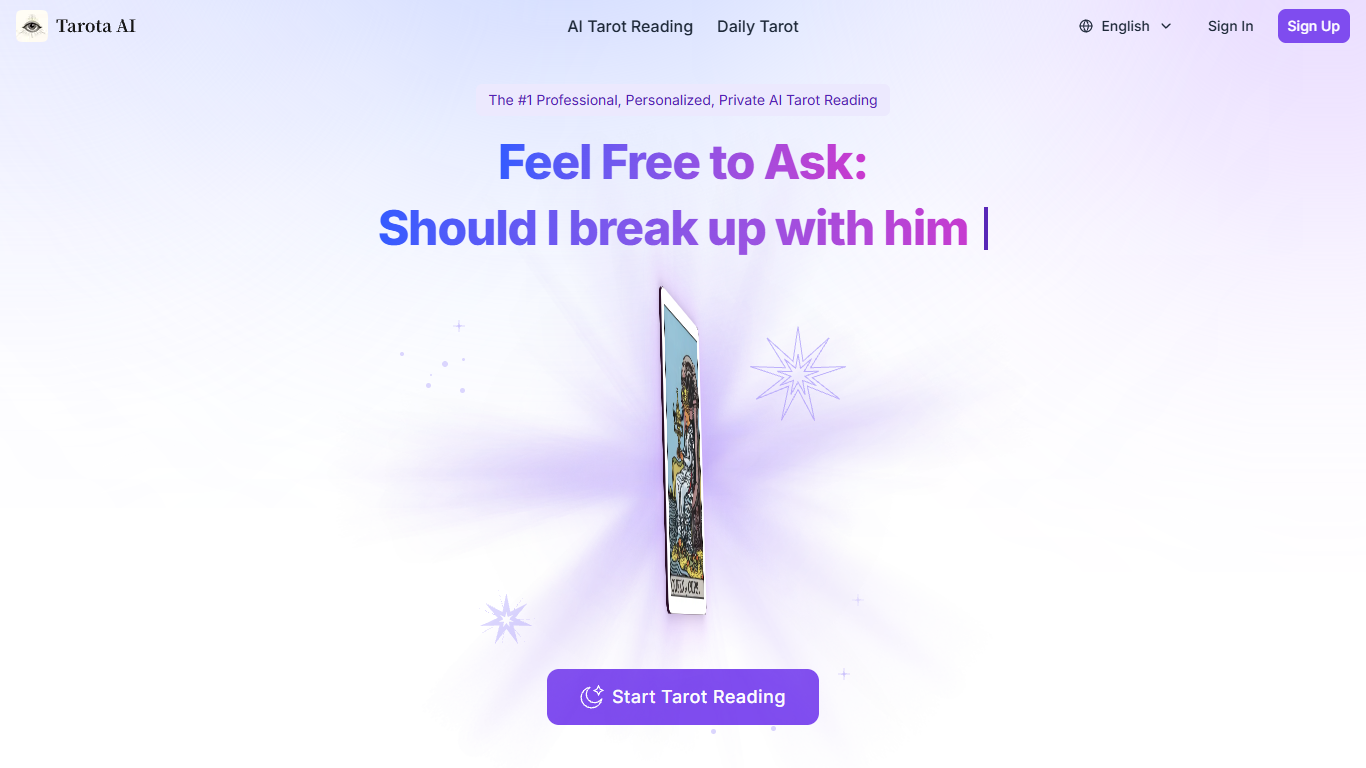

What is Tarota AI?
Tarota AI delivers astrology-style tarot readings in the browser for questions about love, work, money, studies, and relationships. You type what you want clarity on, pick a spread, and get card interpretations tied to your situation instead of generic definitions pulled from a reference chart.
Where many tarot apps stop at a single card dump, Tarota AI leans on selectable reader personas, preset layouts like Celtic Cross, and open-ended follow-up questions that turn a reading into a conversation. That back-and-forth model suits people who want to probe one card or theme without restarting the whole spread.
A separate daily mode draws one card per day with saved history for reviewing past energy readings. Readings stay private to your account, the interface supports more than ten languages, and new users get a limited free allotment before Tarot Membership unlocks additional AI reading credits.
Selfgazer
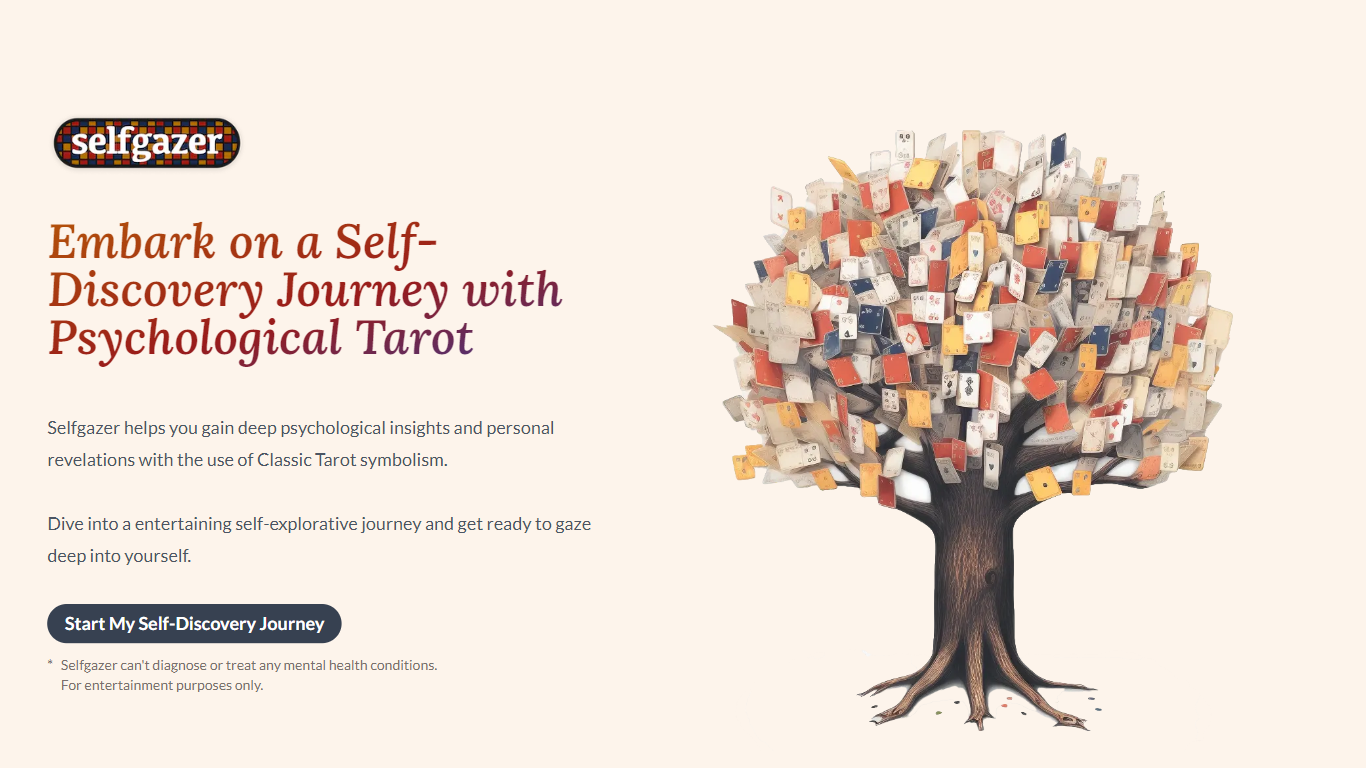
What is Selfgazer?
Selfgazer combines astrology, tarot, I Ching, and Bazi readings inside one self-reflection app built on Jungian psychology. You can generate a birth chart, pull guided tarot spreads, consult the Selfgazer Oracle, and read weekly horoscopes tied to your natal placements.
Most astrology apps stop at sun-sign horoscopes or generic chatbot text. Selfgazer runs chart math on Swiss Ephemeris, the same engine professional astrologers use, then layers Jungian interpretive frameworks across tarot, synastry, and I Ching consultations in a single interface.
People exploring shadow work, relationship compatibility, or daily spiritual practice use Selfgazer for birth chart analysis, synastry comparisons, emotional check-ins, and a large library of essays on archetypes and divination. The site notes it cannot diagnose or treat mental health conditions.
Tarota AI Upvotes
Selfgazer Upvotes
Tarota AI Top Features
Daily tarot draws one card per day with saved history to review past energy
Questions and interpretations available in more than ten languages
Preset spreads include Celtic Cross plus custom layouts for specific questions
Choose among tarot reader personas, each with a distinct interpretive style
Ask follow-up questions after a reading for deeper conversational guidance
Covers relationship, career, academic, and personal growth question categories
Selfgazer Top Features
Birth chart analysis uses Swiss Ephemeris, the professional astrological computation engine
Selfgazer Oracle blends astrology, tarot, and I Ching guidance with interactive follow-up dialogue
Weekly horoscope readings compare current planetary transits to your stored natal chart
Guided tarot and I Ching modules include emotional check-ins for psychological integration
Synastry analysis compares two charts for relationship compatibility through the Oracle
Bazi chart readings use birth time to map traditional Chinese destiny and character patterns
Tarota AI Category
- Astrology
Selfgazer Category
- Astrology
Tarota AI Pricing Type
- Freemium
Selfgazer Pricing Type
- Freemium