Typecast vs MusicLM
In the clash of Typecast vs MusicLM, which AI Audio Generation tool emerges victorious? We assess reviews, pricing, alternatives, features, upvotes, and more.
When we put Typecast and MusicLM head to head, which one emerges as the victor?
Let's take a closer look at Typecast and MusicLM, both of which are AI-driven audio generation tools, and see what sets them apart. Both tools have received the same number of upvotes from aitools.fyi users. You can help us determine the winner by casting your vote and tipping the scales in favor of one of the tools.
Does the result make you go "hmm"? Cast your vote and turn that frown upside down!
Typecast
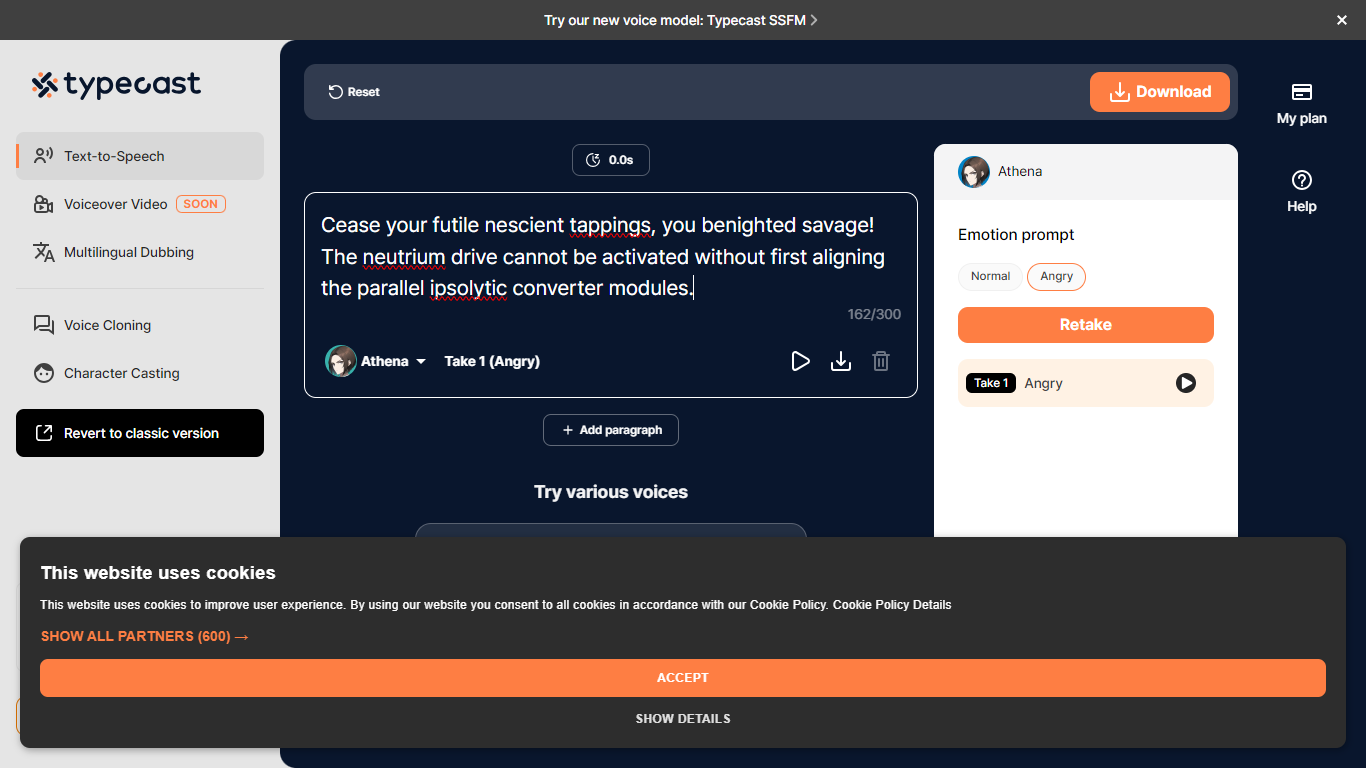

What is Typecast?
Typecast is an AI voice generator built for creators, developers, and enterprises who need speech that sounds natural and carries real emotion. You type a script, pick from 700+ voices recorded by professional voice actors, and get audio you can fine-tune for pitch, speed, and delivery.
What sets Typecast apart is Smart Emotion, which reads your script's context and adjusts tone automatically. The platform runs on the SSFM model, developed over nine years of speech research, with support for 35+ languages and voice cloning from short audio samples.
Beyond the web editor, Typecast offers a text-to-speech API, a mobile app for iOS and Android, and a video editor for turning scripts into finished content. Brands like Hyundai, LG, and Krafton use it for ads, audiobooks, podcasts, training videos, and conversational AI.
MusicLM
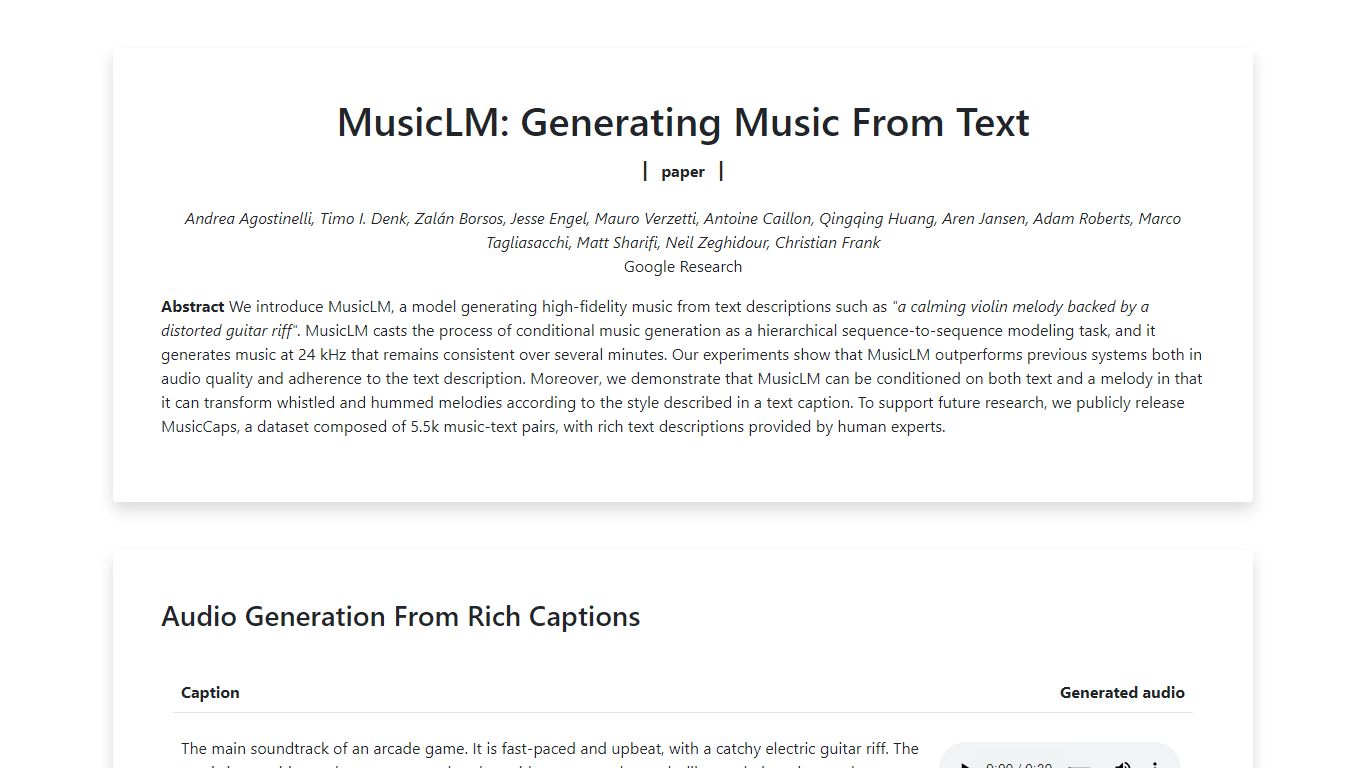
What is MusicLM?
MusicLM is a Google Research audio generation model that creates music from text captions at 24 kHz. The public examples page hosts sample clips for prompts like arcade soundtracks, reggaeton-EDM fusions, and relaxing jazz, plus longer story-mode generations that shift styles across timed segments. Google released the MusicCaps dataset of 5,500 music-text pairs alongside the paper.
Unlike consumer apps that ship one prompt box, MusicLM was published as a research demo with pre-generated samples rather than a login product. Its headline trick is joint text-and-melody conditioning: you can hum or whistle a tune and have the model re-render it in a new genre described in text. Story mode chains multiple captions so the music evolves across sections.
MusicLM matters as the research foundation behind Google's later Lyria music models, but this page is for listening to published examples, not creating new tracks interactively. Researchers and musicians study it for long-form consistency, painting-to-music conditioning, and melody transfer results documented in the 2023 paper.
Typecast Upvotes
MusicLM Upvotes
Typecast Top Features
700+ AI voices from real voice actors, each with its own personality and tone
Smart Emotion reads your script and adjusts tone, speed, and delivery in one click
Clone your voice from a 5-second sample and use it across 35+ languages
Fine-tune pitch, speed, intonation, and intensity on every line of your script
Text-to-speech API with 200ms streaming latency and SDKs for Python, JavaScript, and Go
MusicLM Top Features
Generates music at 24 kHz from rich text captions
Story mode chains multiple text prompts across timed segments
Text-and-melody conditioning transforms hummed or whistled tunes into new styles
Painting caption conditioning pairs artwork descriptions with generated audio
Long-generation examples cover melodic techno, swing, and relaxing jazz
MusicCaps dataset includes 5,500 expert-written music-text pairs
Typecast Category
- Audio Generation
MusicLM Category
- Audio Generation
Typecast Pricing Type
- Freemium
MusicLM Pricing Type
- Free