Videoleap vs Timebolt
Dive into the comparison of Videoleap vs Timebolt and discover which AI Video Editing tool stands out. We examine alternatives, upvotes, features, reviews, pricing, and beyond.
When comparing Videoleap and Timebolt, which one rises above the other?
When we compare Videoleap and Timebolt, two exceptional video editing tools powered by artificial intelligence, and place them side by side, several key similarities and differences come to light. The upvote count shows a clear preference for Timebolt. The number of upvotes for Timebolt stands at 18, and for Videoleap it's 7.
You don't agree with the result? Cast your vote to help us decide!
Videoleap


What is Videoleap?
Videoleap turns phone clips into Reels, TikToks, and YouTube Shorts through a mobile timeline editor and a browser workflow from Lightricks. You can start from premade templates, then trim, merge, add filters, drop in royalty-free music, or run generative edits like object removal, background swap, and text-to-video. The homepage frames it as short-form video editing without opening a desktop NLE.
CapCut owns the free mobile editor crowd, but Videoleap leans harder into template-first creation and Lightricks-style generative effects. The site highlights AI Scenes, D&D Avatars, AI Selfie, and AI Infinite Zoom alongside classic trim, merge, and speed controls. Several advanced cutout and subtitle tools are marked iOS only, so Android users get a narrower feature set than the marketing grid suggests.
Creators, social media managers, and small businesses are the stated audience, with copy citing 300k+ businesses and 95M+ downloads. A 7-day free trial is advertised sitewide, with paid plans shown at $10 per month or $70 per year ($5.83 per month billed annually). If you post daily to Instagram or TikTok and want template packs plus one-tap effects, Videoleap targets that workflow more than long-form film editing.
Timebolt
What is Timebolt?
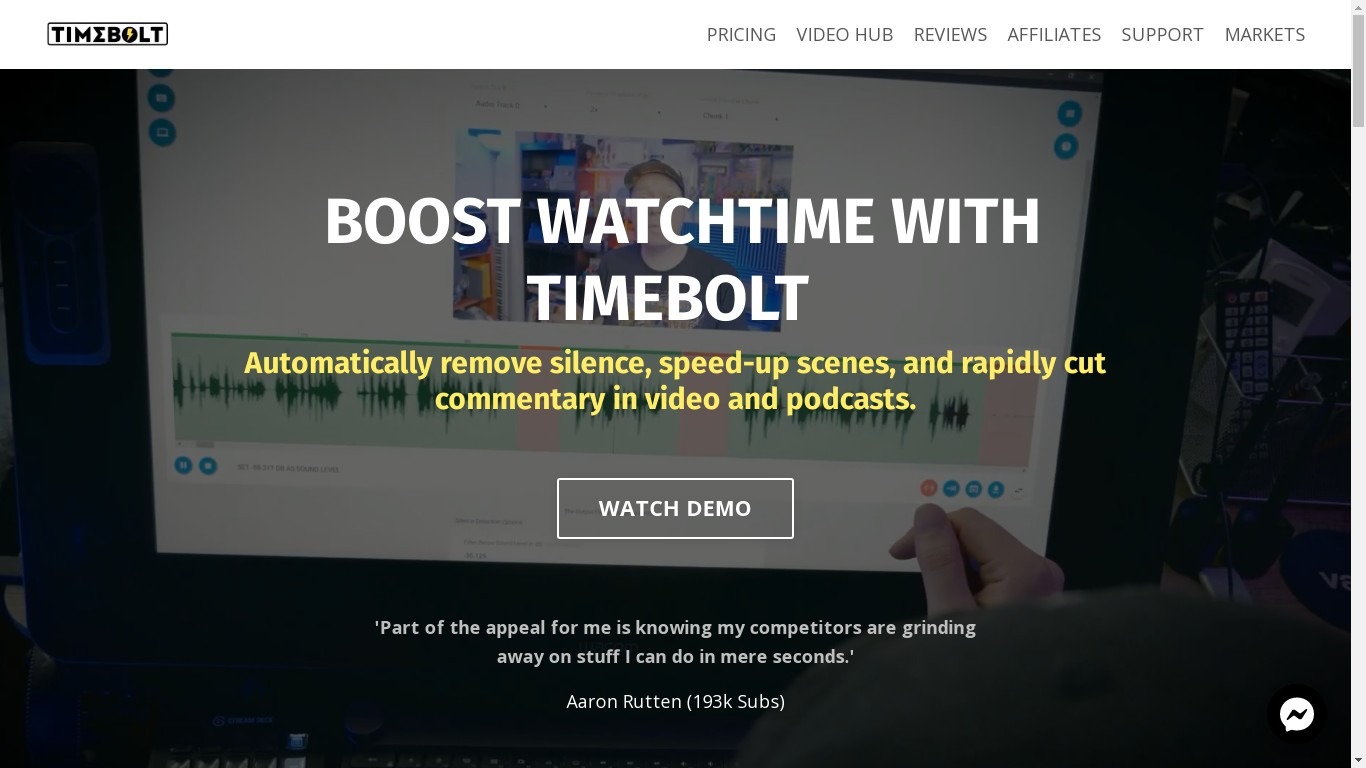
Timebolt is a desktop video editor built around waveform-first jump cuts for podcasts, interviews, and screen recordings. It strips silence, filler words, and bad takes with 0.01 second cut control, then exports timelines to Premiere Pro, Final Cut Pro, DaVinci Resolve, or Camtasia without re-cutting by hand.
Most text-based AI editors guess where pauses live and leave hundreds of missed cuts per hour. Timebolt measures the audio waveform first, which is why its benchmark claims zero mistakes left per hour while rivals like Descript and Gling still need manual cleanup. That trade-off favors editors who want frame-tight cuts over a chat-style transcript workflow.
Podcasters, YouTubers, and course creators use Timebolt to shrink raw talking-head footage before publishing. Post-production teams also route Riverside multicam sessions through Timebolt XML exports so senior editors finish polish work in their preferred NLE.
Videoleap Upvotes
Timebolt Upvotes
Videoleap Top Features
Premade video templates for Reels, TikTok, and YouTube intros
7-day free trial advertised on the homepage with cancel-anytime copy
Annual plan listed at $70 per year ($5.83 per month) on the templates page
AI subtitle generator and object removal tools in the editor suite
95M+ downloads and 4.6-star rating from 790K+ users cited on site
Native iOS and Android apps plus browser-based editing tools
Royalty-free music library for adding audio tracks to clips
Timebolt Top Features
0.01 second cut control on waveform-based silence removal
Processes an hour of footage in about 13 seconds for jump cuts
Exports XML timelines to Premiere Pro, Final Cut Pro, and DaVinci Resolve
UMCHECK removes filler words automatically from recorded speech
Free 4K screen capture tool for Mac and Windows
Benchmark reports zero missed cuts per hour versus hundreds on rival AI editors
Videoleap Category
- Video Editing
Timebolt Category
- Video Editing
Videoleap Pricing Type
- Freemium
Timebolt Pricing Type
- Freemium