Warp vs Tabnine
When comparing Warp vs Tabnine, which AI Code Assistant tool shines brighter? We look at pricing, alternatives, upvotes, features, reviews, and more.
In a comparison between Warp and Tabnine, which one comes out on top?
When we put Warp and Tabnine side by side, both being AI-powered code assistant tools, The users have made their preference clear, Warp leads in upvotes. The upvote count for Warp is 8, and for Tabnine it's 4.
Not your cup of tea? Upvote your preferred tool and stir things up!
Warp

What is Warp?
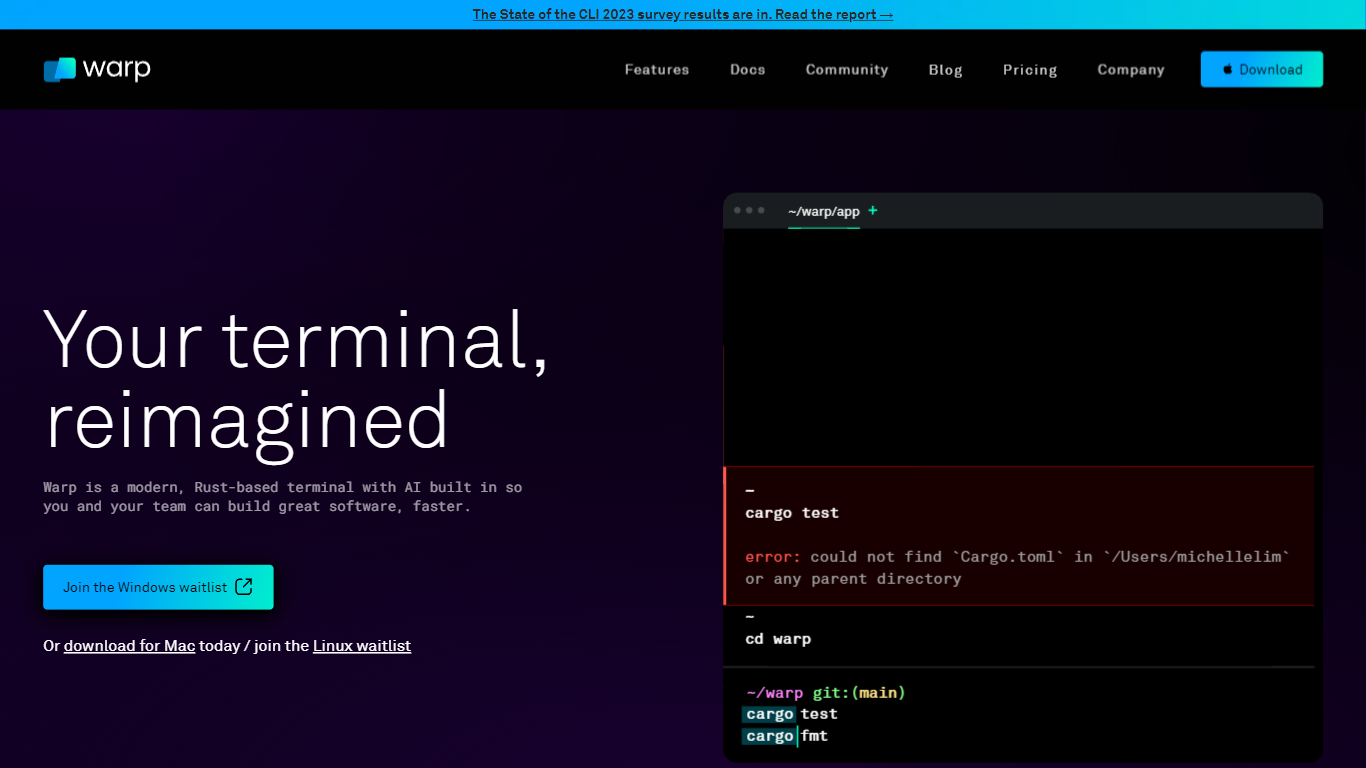
Warp is a modern terminal and agent platform for developers who want coding agents inside their shell workflow. You get Warp Terminal as an open-source environment, Warp Agent for multi-model coding assistance, and Oz for launching cloud agents from the CLI or SDK. The stack covers local editing, code review panels, bug investigation, and team governance from one vendor.
iTerm and stock Terminal stay dumb panes; Warp rebuilt the shell around blocks, suggestions, and embedded agents. You can bring your own inference keys on the Free plan or buy included credits on Build ($20/month with 1,500 credits) and Max ($200/month with 18,000 credits). Business adds SAML SSO at $50 per user per month for teams up to 25 seats.
Software engineers at startups and Fortune 500 companies use Warp to run CLI agents, index multi-repo codebases, and route between OpenAI, Anthropic, Google, and xAI models without leaving the terminal. The site cites 800,000 developers on Warp Agent and positions Warp Terminal as now open source under an Oz-managed workflow.
Tabnine
What is Tabnine?
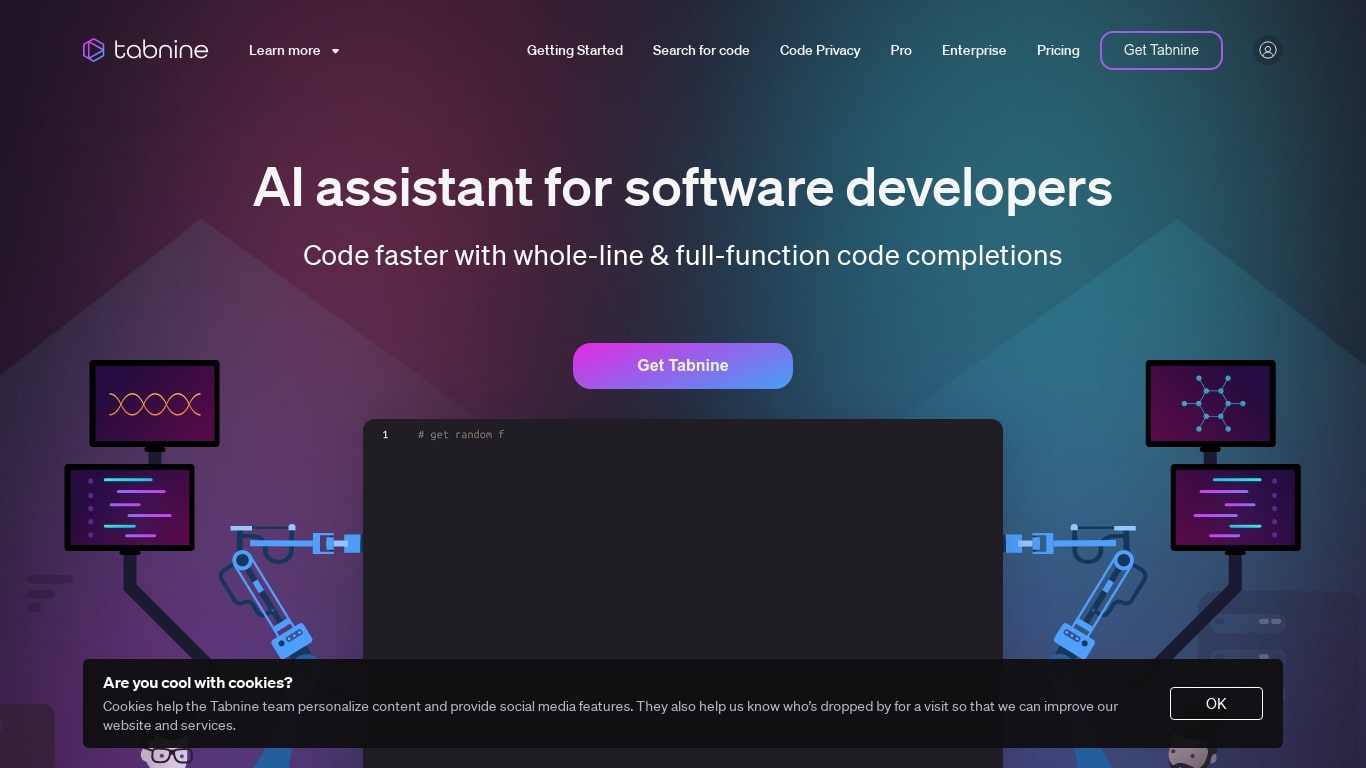
Tabnine is a code assistant that runs inside your IDE with inline completions, multi-line function suggestions, and chat grounded in your repository context. It connects to GitHub, GitLab, Bitbucket, or Perforce so suggestions reflect your architecture instead of generic public code patterns. Teams can deploy it as SaaS, in a VPC, on-premises, or fully air-gapped with zero code retention policies.
Most coding copilots optimize for speed on public repos, while Tabnine sells enterprise control: centralized governance, provenance tracking, SSO, and model choice across OpenAI, Anthropic, Google, Meta, and Mistral endpoints. The Agentic Platform adds CLI agents, MCP tool access, and the Enterprise Context Engine for Jira and Confluence-aware workflows. Tricentis acquired Tabnine in 2025, positioning it inside broader quality-engineering stacks.
Engineering teams in regulated industries use Tabnine when privacy and audit trails matter as much as autocomplete speed. Code Assistant costs $39 per user per month on annual billing, and the Agentic Platform with context engine and CLI agents costs $59 per user per month.
Warp Upvotes
Tabnine Upvotes
Warp Top Features
Warp Terminal is open source with blocks-based UI and native agent integration
Warp Agent supports multi-repo indexing and models from OpenAI, Anthropic, Google, xAI, GLM 5.2, and DeepSeek V4
Free plan at $0 per month includes core terminal, Warp Agent CLI, and bring-your-own inference
Build plan starts at $20 per month with 1,500 credits of included agent usage
Business plan at $50 per user per month adds SAML SSO for teams up to 25 seats
Oz platform launches cloud agents via SDK, CLI, or handoff from Warp Terminal
Tabnine Top Features
Inline and multi-line code completions inside major IDEs with chat support
Index private repositories from GitHub, GitLab, Bitbucket, or Perforce Helix Core
Deploy as SaaS, VPC, on-premises, or fully air-gapped with zero code retention
Agentic Platform adds MCP-connected agents and a terminal-native Tabnine CLI
Code Assistant plan starts at $39 per user per month on annual billing
Warp Category
- Code Assistant
Tabnine Category
- Code Assistant
Warp Pricing Type
- Freemium
Tabnine Pricing Type
- Paid